
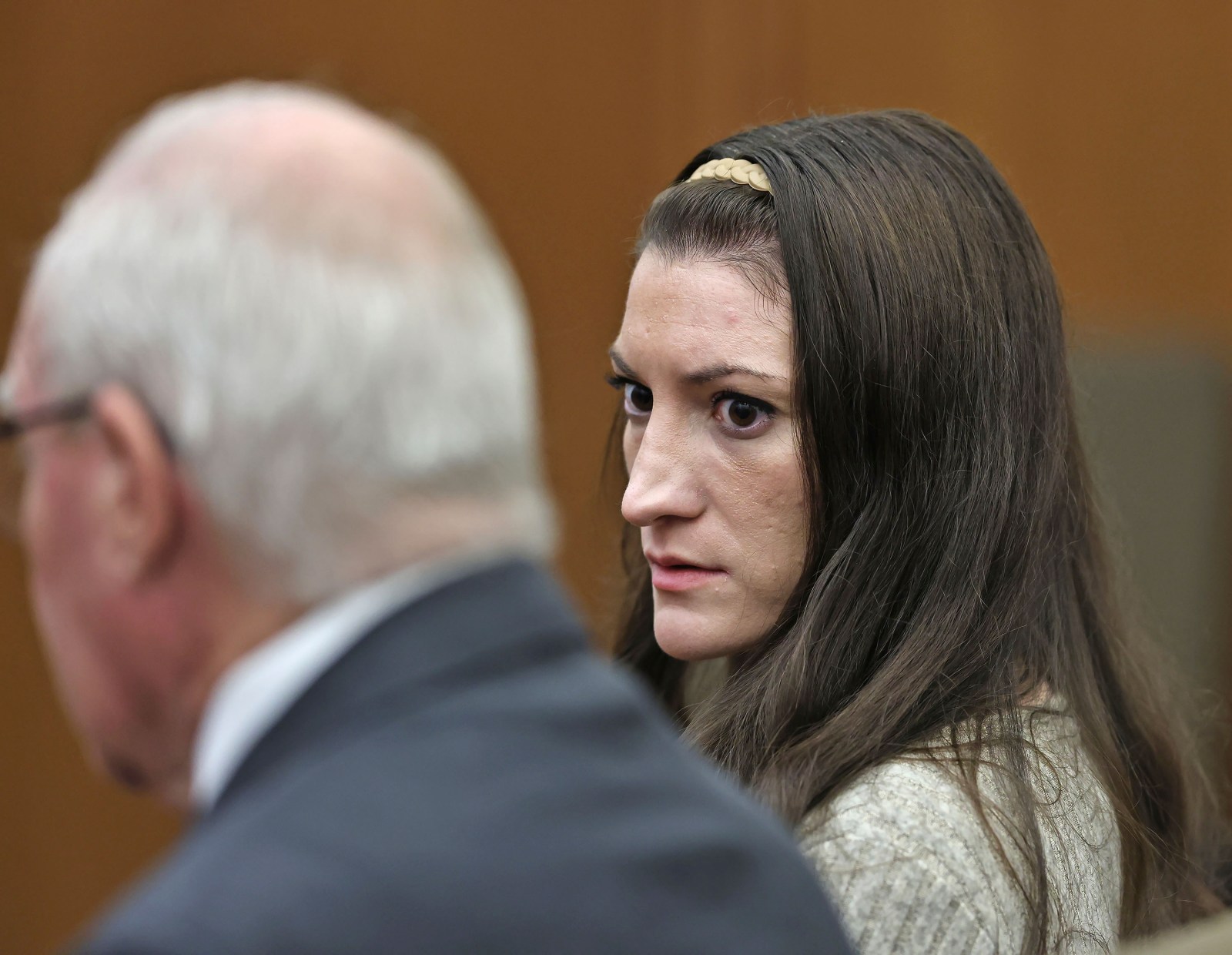
Lindsay Clancy Jury Deadlock
The jury responsible for deciding Lindsay Clancy’s fate has reached an impasse, unable to come to a unanimous verdict. Despite this, deliberations continue. Following over 17 hours across four days, a note was sent to Plymouth Superior Court Judge William Sullivan indicating the jury’s struggle to reach a decision. Judge Sullivan has instructed them to keep deliberating instead of declaring an immediate mistrial.
This deadlock follows a roughly six-week trial featuring testimony from over 80 witnesses and more than 300 exhibits. The main issue revolves around whether Clancy is criminally accountable for the murder of her three children in January 2023. Her defense claims postpartum psychosis was a factor, while prosecutors insist the actions were deliberate.
How Long Can the Jury Legally Deliberate?
In Massachusetts, there is no specific rule dictating the number of hours or days a jury must deliberate to reach a verdict. A jury may continue as long as the judge believes further efforts could lead to unanimity. This explains Judge Sullivan’s decision to return the jury to their task without ending the case due to the deadlock.
However, should it become clear that unanimity is unattainable, the judge can declare a mistrial based on a hung jury. This would conclude the trial without a verdict on the unresolved charges and potentially lead to a retrial.
The jury’s current deliberation duration is not considered unusually lengthy for a case of this complexity.
Comparisons to Longest Jury Deliberations
Even if the jury deliberates for days or weeks, it won’t approach the record for longest deliberations on record. Guinness World Records cites a 1992 California civil case as the longest, with jurors deliberating for approximately 4 1/2 months concerning Shirley and Jason McClure’s lawsuit against Long Beach officials. The jury eventually awarded substantial damages.
A more pertinent comparison to Clancy’s case is the McMartin Preschool trial. After nearly three years, the jury deliberated for about nine weeks and acquitted Peggy McMartin Buckey, while deadlock remained on 13 counts against Ray Buckey.
A precedent exists for nine-week criminal jury deliberations; however, Clancy’s case reaching such a duration would be extraordinary.
Cases with Quick Deliberations
Some high-stakes criminal trials yielded swift verdicts. During the 1995 O.J. Simpson murder trial, the jury delivered not-guilty verdicts after less than 4 1/2 hours of deliberation. Similarly, the Robert Durst murder trial in 2021 saw a verdict reached in around seven hours over three days.
Conversely, other cases necessitated longer deliberations. For instance, the Scott Peterson jury took around seven days in 2004 to convict him of murdering his wife, Laci Peterson, and their unborn child. These examples illustrate the unpredictable nature of jury deliberation duration, as both simple and complex trials may see swift or prolonged decisions.
Menendez Brothers’ Jury Deadlock
A relevant comparison is the first Menendez brothers’ trial from 1993-94, which involved separate juries and lasted 11 days until deadlocks led to mistrials. The brothers were later retried and convicted in 1996.
Similarly, a deadlocked jury does not imply acquittal. A mistrial could result if the jury remains divided, allowing for a potential retrial.
Expert Opinions on Jury Deliberation Length
Research advises against interpreting jury deliberation length as indicative of verdict outcomes. Studies find that evidence strength best predicts conviction likelihood, with factors connected to deliberation time being weaker indicators.
Trials with extensive evidence, numerous charges, and complex issues generally see longer deliberations. Mock jury studies reveal that lengthy discussions can signify thorough evidence examination or inefficiencies and disagreements.
What Happens if Deadlock Persists?
Should the jury continue unable to unite on a verdict, Judge Sullivan might declare a mistrial. Prosecutors may opt for a retrial of unresolved charges. A mistrial due to a genuine deadlock is not equivalent to an acquittal.
The jury may ultimately reach a verdict, extend deliberations, or conclude unanimity is unattainable.