
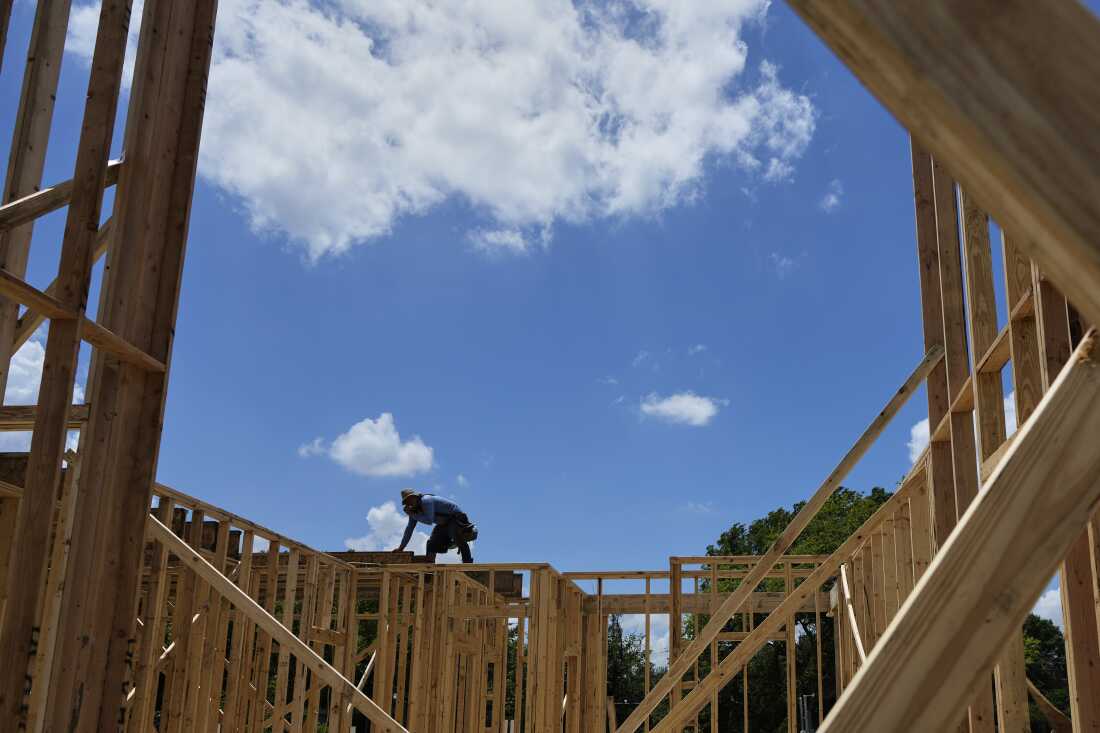
Construction workers continue building a new home in Richardson, Texas, reflecting a broader initiative to make homeownership affordable across the U.S.
In recent Washington developments, lawmakers from all political backgrounds have prioritized a bill aimed at reducing homeownership costs. Titled the 21st Century Road to Housing Act, the legislation successfully passed in the House by a vote of 358 to 32 after winning Senate approval with strong bipartisan support. President Trump is expected to sign the bill shortly.
Senator Elizabeth Warren, D-Mass., a key supporter of the bill, discussed its significance with NPR. She emphasized the urgent need to lower housing prices, a concern echoed by constituents nationwide. “Every time every member of Congress goes back home they hear how urgent it is to bring down home prices. And that’s what the bill does,” she stated.
Several obstacles have contributed to the difficulty many U.S. buyers face in purchasing homes. Data from Redfin suggests that a typical family requires an annual income of roughly $117,000 to afford a standard home, a figure that outstrips the earnings of most households.
Additionally, mortgage rates have risen, elevating monthly ownership costs. Earlier in the year, borrowing costs fell but conflicts, particularly the war in Iran, drove them up again. The nationwide average currently sits around 6.5%. Inflation further complicates matters by diminishing families’ purchasing power, exceeding wage growth.
Addressing Housing Supply Shortages
The U.S. faces a notable housing supply shortage. Last year, Realtor.com estimated a deficit of over 4 million housing units needed to meet demand. Jeanna Kenney, an economist at Villanova University, emphasized the importance of boosting supply: “Supply is the key problem here. Anything you can do to make supply easier is going to be helpful in the long term.”
Ban on Corporate Investors
Among the bill’s provisions is a controversial measure banning corporate investors from acquiring additional single-family homes for rental once they already own at least 350 houses. Supporters claim this prevents corporate landlords from outbidding families by buying properties en masse, yet these investors constitute approximately 3% of the single-family rental market.
Some experts, like Ross Marchand from the Taxpayers Protection Alliance, argue the ban might decrease the available home supply as investors often rejuvenate otherwise unsellable homes. However, Senator Warren highlighted that investors significantly impact markets like those in Atlanta, raising prices for local buyers.
Streamlining Homebuilding Regulations
The legislation simplifies homebuilder regulations, facilitating easier access to federal financing without introducing new funds. Homebuilders can bypass some environmental reviews when constructing between pre-reviewed buildings.
Additionally, a grant program encourages communities to develop “pattern books” of preapproved housing designs, expediting construction approval. The bill also modifies regulations for manufactured homes, eliminating the permanent chassis requirement to save construction costs, which can range from $5,000 to $10,000.
Kate Wood, a lending expert, pointed out, “Not having that chassis immediately wipes several thousand dollars off that price — and this is already a type of home that is significantly less expensive than a traditional stick-built home.” These changes promote affordable home designs with added features, such as second stories or basements.
The act incentivizes local governments to increase homebuilding by offering federal benefits to those that expand housing availability. “If you don’t build more housing, you should lose those incentives. And they should go to the places where you’re building more housing,” stated Sen. Tim Scott, R-S.C.
Challenges Beyond Federal Legislation
Federal influence on homebuilding is limited. Local governments play a significant role, and private builders face external challenges, including high labor and supply costs. Congress cannot impact mortgage rates directly. Rising inflation means the Federal Reserve might increase interest rates later this year.
Though federal action alone lacks comprehensive control over housing, this bill represents the most significant effort to enhance affordability in decades. Experts believe it will improve the accessibility of homeownership. Amanda Crist of Greater Nashville Realtors noted that for many, property ownership remains an elusive dream, stressing the necessity of the bill’s affordability measures.
Senator Warren remarked on the legislation’s historical significance: “It has just been more than 30 years since the federal government has done anything but sit by and say, ‘Damn, the price of housing sure has gone up.’ Finally, we are actually moving.”