
Chicago’s Maritime Economy at the Calumet River
At the mouth of the Calumet River in Chicago’s industrial Southeast Side, workers manage the loading and unloading of steel, sugar, and lumber. This port is central to the city’s maritime economy but currently faces labor tensions.
Labor Dispute and Political Implications
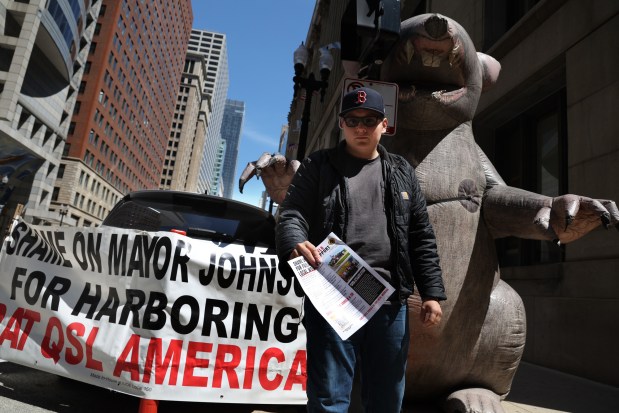
Two unions are contesting who should represent the stevedores working for QSL America, a private company at the publicly owned port. This conflict has political ramifications for Mayor Brandon Johnson, a former labor organizer anticipating reelection. The International Union of Operating Engineers Local 150 has workers on strike for over a year, but others continue under a new agreement with the International Longshoremen’s Association (ILA). Johnson’s engagement with ILA workers has led to accusations from Local 150, labeling the ILA supporters as strikebreakers and critiquing Johnson for meeting them.
Union Conflicts and Legal Proceedings
Local 150’s contention is that QSL America unfairly recognized the ILA after their strike commenced. This triggered federal review by the National Labor Relations Board (NLRB). Though Johnson’s administration contacted Local 150, the relations remain strained. Local 150 has placed an inflatable Scabby the Rat outside City Hall, representing their protest against the alleged strikebreakers.
Disparate Union Decisions
The Longshoremen defend their position, asserting the workers deliberately chose ILA representation. Meanwhile, Local 150 claims regulatory findings hint at illegal assistance from QSL to the ILA, though no formal complaints have emerged. Disputes persist regarding union strategies and worker safety issues. Allegations of safety concerns under QSL’s supervision are prominent yet contested.
Safety Concerns and Union Actions
Operating Engineers picketers highlight faulty equipment and inadequate training. OSHA citations prompted QSL to settle and fix safety issues with penalties totaling nearly $53,000. Safety remains a tension point, with ILA implementing new protective measures via committee initiatives.
Port Workers’ Diverse Experiences
Workers express divergent experiences at the port, with some valuing the ILA and QSL collaboration while others criticize the circumstances prompting strikes.
Legal Complexities and Union Mechanics
Organizing complexities arise from varied union election and recognition processes. A neutral officer verified majority ILA support without an official vote. Critics argue this dynamic feels top-down, with unions disputing over legitimacy and representation.
Challenges and Future Prospects
Local 150 criticized QSL’s role in determining union affiliation, contrary to member choice. Meanwhile, ILA insists it adheres to true union practices, countering claims of “company union” implications. Academics scrutinize the drawn-out conflict’s effect on the broader labor movement.
The Illinois International Port District remains neutral, supporting organizational rights without intervening.
Impact on Workers and the Labor Movement
As union participation wanes across the private sector in the U.S., disputes like this highlight ongoing challenges. Experts stress the need for cooperation over competition to strengthen worker rights.