
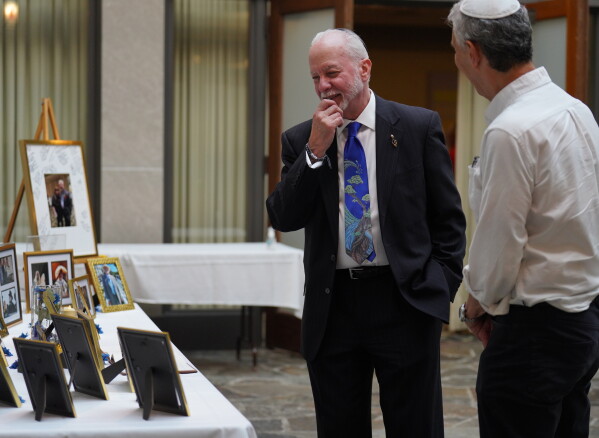
As dusk settles over Kochi’s historic Jew Town, Keith Hallegua walks to the Paradesi Synagogue, wearing a gray kippah. It is Shavuot, the Jewish festival honoring God’s delivery of the Torah to Moses. Hallegua arrives knowing he will pray alone, lacking the minyan required for communal service. He stands as the synagogue’s last local attendee, the sole Jew left in Jew Town.
Elias “Babu” Josephai, across the city at Kadavumbagam Synagogue, recalls his grandmother’s “chukkunda”—fried dough balls prepared for Shavuot. “It was everything back then,” he says, wiping his tears. These last Jews in Kochi cherish remaining fragments of a past that has largely disappeared.
In the 1950s, many from Kochi’s Jewish community, mainly settled in Israel, leaving behind their structures and cemeteries. Hallegua and Josephai stayed, now symbolizing the concluding chapter for Cochin Jews who peacefully coexisted with Hindu, Muslim, and Christian residents for centuries. Fewer than 5,000 Jews live in India today.
Challenges and Divisions
The history of Cochin Jews includes religious freedom and internal divisions over class and color. Hallegua belongs to the Paradesi Jews, descendants of Sephardic Jews from Spain and Portugal fleeing persecution in the 16th century. They brought enslaved people whose descendants, known as Meshuchrarim Jews, faced lower societal status.
Josephai is a Malabari Jew, tracing his ancestry over 2,000 years. Despite past divisions, these barriers dissolved as the Cochin Jews emigrated. Still, remnants affect their legacy. Though Hallegua and Josephai seldom meet, they take immense pride in their heritage. Josephai revived the Kadavumbagam Synagogue, often conducting rare services alone, mourning the absence of community.
At Paradesi Synagogue, tourists and visitors join services to fulfill the quorum. “I ask God why this has happened,” Hallegua says with sorrow, “but there’s no answer.”
Efforts to Preserve History
Tourists visit Paradesi Synagogue; its corridor connects to the main hall featuring Chinese porcelain tiles, Belgian crystal chandeliers, and a teakwood Torah ark. Women’s seating is upstairs. Visitors leave shoes at the entrance, adhering to local customs.
Synagogue trustee M.C. Praveen, a Hindu who grew up amidst the Jewish community, strives to safeguard their history. “I want future generations to know the history here,” Praveen explains. He collaborates with former residents and their descendants. Trustee Shulamit Kotzer, now in Israel, dreams of establishing a hotel in the area, tied closely to her birthplace.
A newly opened museum showcases Kochi’s Jewish history, displaying a significant document—a 1000 CE charter granting the community religious freedom.
Broader Preservation Initiatives
Praveen is joined by Thaha Ibrahim, a Muslim preserving Jewish culture. He maintains Sarah Cohen’s embroidery shop, learning and passing on Cochin Jewish embroidery to his son. He describes the effort as about “human connection,” not religion.
In Ernakulam, Josephai oversees Malabari Jewish heritage. He restored the 12th-century Kadavumbagam Synagogue, aided by various faith communities. Muslims, Christians, and Hindus contributed to renovations. Maintaining prayers and traditions fulfills a promise Josephai made to his grandmother.
Josephai hopes a Jewish organization will assume responsibility for the synagogue after him. “This is our fate,” he states.
Thapan Dubayehudi, once Kochi’s resident, commends Josephai as a “one-man army”. He cherishes memories shared with Josephai during Hanukkah in the synagogue.
Identity and Legacy
Hallegua remains in Jew Town to uphold familial obligations. “I never thought I’d be the last Jew here,” he reflects. His mind brims with memories: singing tunes that blend Sephardic chants with local elements, savoring his mother’s dishes, and recalling preparations for Passover.
Hallegua is rooted in his land and history. “I was born a Jew in India and I shall die in India, a Jew,” he asserts.
Supported by The Conversation US, this story is part of AP’s religion coverage, funded by Lilly Endowment Inc. The AP holds full accountability for its content.