
By June 19, 2026, the Trump administration informed a federal judge that the Kennedy Center is undecided about offering a full array of performances or more restricted programming in the months to come. This decision follows a court order mandating the institution remain operational. U.S. District Judge Christopher Cooper blocked the administration’s plan to close the Kennedy Center for renovations until 2028, responding to a lawsuit from Democratic Rep. Joyce Beatty of Ohio. He also reversed an attempt to add President Trump’s name to the center.
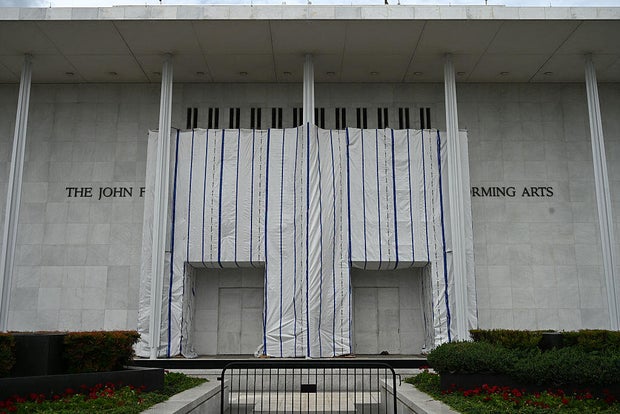
Judge Cooper instructed the administration to update him on its construction plans and developments related to renovations by a specific Friday. He also required explanations for public access, programming, and operations plans after July 5, the intended start date for closure. A tarp currently covers the facade of the John F. Kennedy Memorial Center for the Performing Arts as of June 14, 2026.
In a recent filing, Kennedy Center Executive Director Matt Floca stated the board will meet in mid-July to choose among three options: complete closure to allow repairs, partial closure with some public access and limited programming, or phased closures with more continued programming. Justice Department attorneys requested more time to respond to Rep. Beatty, noting the Kennedy Center’s undecided path. Both parties plan to file a joint status report after the board meeting.
The government’s lawyers indicated plans to pursue capital repairs, highlighting that Judge Cooper’s order did not mandate rescheduled programming or the pursuit of new shows. However, Beatty’s lawyers accused the government of stagnation, warning that inaction was leading the Kennedy Center into inactivity. They cited the end of ‘Shear Madness,’ a popular play, arguing more could be done to retain or replace programming.
Beatty’s legal team asked for weekly updates on efforts to resume programming and proposed discussing discovery schedules for the lawsuit. Beyond programming issues, the Kennedy Center’s naming has sparked controversy. Trump’s name was removed following Judge Cooper’s order after federal courts rejected last-minute requests to keep it. The administration also removed all references to Trump from digital platforms and materials.
Despite these changes, photos show the Kennedy Center facade remains partially covered. Beatty’s lawyers criticized the decision to leave the tarp, accusing the administration of prioritizing personal interests over the center’s integrity.
These changes were prompted by Cooper’s ruling, which blocked closure plans and ordered the removal of Trump’s name. Cooper found the Kennedy Center’s board exceeded its authority in renaming the institution unilaterally. He allowed necessary repairs to proceed and did not rule out future closures but emphasized responsible decision-making.
President Trump’s involvement with the Kennedy Center began during his second term. He replaced board members with advisors, family, and supporters, and the board elected him chair. It then voted to rename the center to include his name. Legal experts noted that Congress must authorize such a change, and Cooper concurred.
Initially, Trump signaled compliance with Cooper’s ruling, expressing willingness to work with Congress. However, as the deadline for name removal approached, the Justice Department sought an order pause, which was denied.