
Increasing Reliance on Private Law Firms
Texas Attorney General Ken Paxton has increasingly contracted private law firms to represent the state, opting for costly outside attorneys instead of the in-house legal team. This approach has drawn criticism due to Paxton’s personal or political ties to some of these lawyers. In several instances, these firms have connections with Paxton through past defenses or political donations.
Personal and Political Connections
One attorney, Zina Bash, who formerly worked as senior counsel on Paxton’s team, billed $24,570 for one day’s work after moving to private practice. Previously, her work would have cost taxpayers $641. Another example is Tony Buzbee, who defended Paxton during his impeachment trial. Furthermore, some firms contracted by Paxton have senior attorneys who donated to his political campaign.
Comparison with Other States
Paxton has signed more contingent-fee contracts than attorneys general in other large states. Since 2015, New York and California have not awarded such contracts, while Pennsylvania awarded one. During the same period, Paxton’s office approved 13. Paxton’s office has relied heavily on these contracts, a strategy questioned by experts due to a potential conflict of interest.
Case against Meta
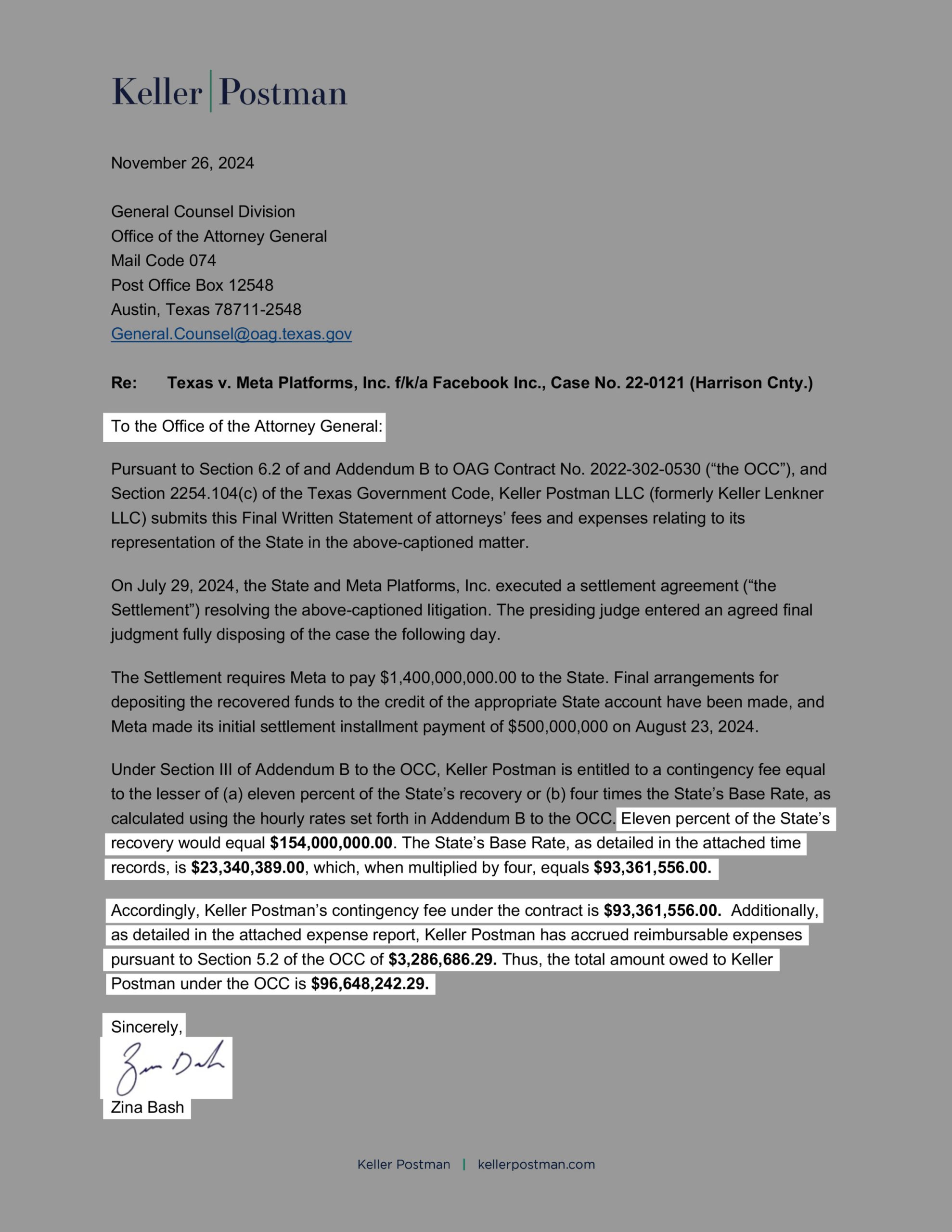
Bash’s firm, Keller Postman, played a key role in a lawsuit against Meta, alleging privacy violations. This lawsuit ended with a $1.4 billion settlement. Keller Postman billed $97 million, with Bash’s work contributing $3.6 million. This sum represents the largest fee charged by outside counsel under Paxton’s administration.
Paxton’s Justifications and Criticism
While Paxton defends his practice of hiring outside firms, stating a lack of in-house resources, critics question the logic behind outsourcing large volumes of work. Texas Attorney General’s office is one of the largest, with over 700 attorneys, making this reliance on external counsel unusual.
Historical Context and Concerns
The strategy resembles a controversial history. Dan Morales, a former Texas attorney general, faced scandal over similar practices. Critics point out Paxton’s outsourcing strategy began after a whistleblower scandal, questioning its ethical stance.
Advantages for Selected Attorneys
Paxton’s approach has benefited a few selected attorneys, often those with personal ties to him. For example, Buzbee’s firm was chosen for an antitrust case against investment firms. This decision, while legal, raises questions of favoritism.
Contractual Relations and Donations
There are concerns about how contracts were awarded, often lacking an open, competitive process. Some firms’ senior attorneys made contributions to Paxton’s campaign, which raises questions about the potential influence of political donations.
The Path Forward
Experts suggest that a competitive, open process for awarding contracts could prevent accusations of favoritism. Other states like Florida have regulations that enforce transparency and set caps on contingent-fee payouts, which Texas lacks.
Despite ongoing controversy, some officials, such as Doug Peterson from Nebraska, emphasize the importance of regulation over financial penalties in settlements to protect state residents more effectively.