
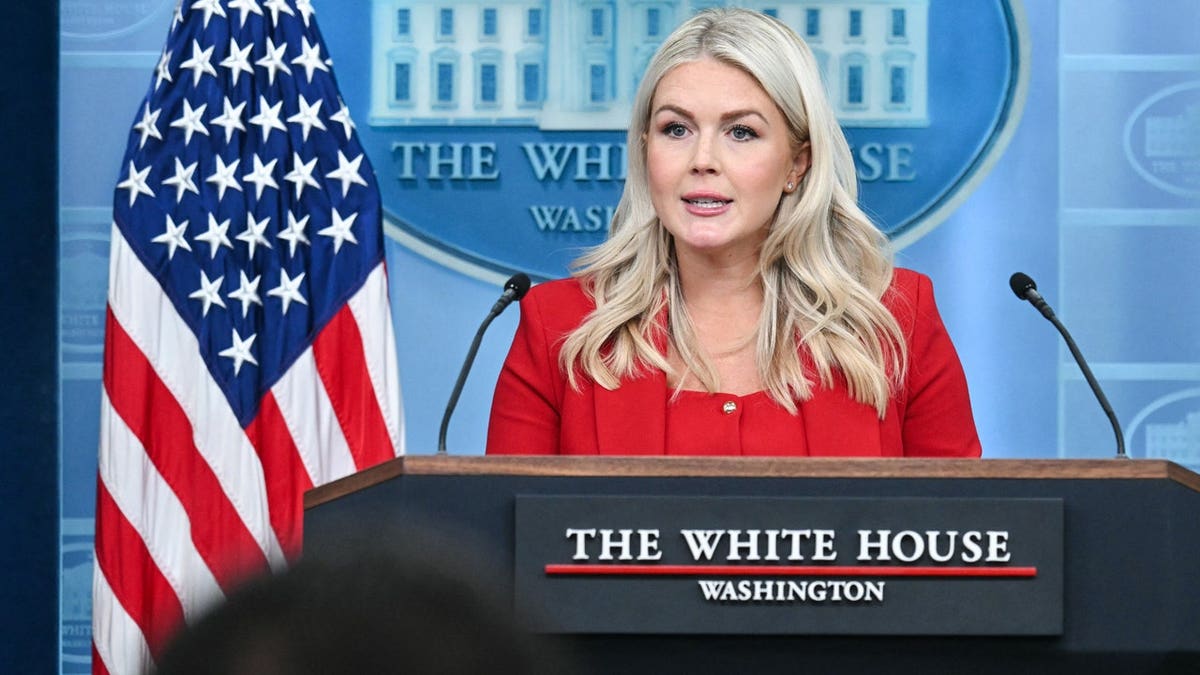
At the end of this month, White House press secretary Karoline Leavitt will conclude a tenure viewed by many as among the most effective in the office’s 97-year history. Her notable legacy includes opening the briefing room to independent media.
Leavitt approached her role with poise and skill, a challenging task given that she communicated for President Donald Trump, who is known for his frequent and extensive communication. She consistently aligned her message with his, while maintaining professionalism.
Leavitt’s confidence and ability to handle stressful situations became her trademark. Even when she engaged in light-hearted exchanges with reporters, it rarely led to tension.
White House Press Secretary Karoline Leavitt during a press briefing in Washington, DC.
Leavitt’s legacy extends beyond her press briefings. Her commitment to giving small indie news outlets and social media influencers a platform symbolizes a shift in media accessibility. She ensured each press conference began with a question from the ‘new media seat,’ a practice initially met with skepticism by traditional media. This shift allowed rising voices to engage with the White House.
Instances of traditional reporters confronting new media members, demanding they move, illustrated the resistance to change. However, the inclusivity of different media transformed the ecosystem of the White House press.
Reporters at a White House press briefing raise their hands to ask questions.
The opening of the briefing room to influencers and independent journalists met with occasional challenges, such as early missteps in information dissemination. Yet, it often brought attention to subjects the legacy media overlooked, broadening the scope of inquiry.
Leavitt understood the press briefing room as a mutual channel for the administration and the public. Influencers, despite being mocked, maintain a direct connection with audiences, particularly younger demographics.
Andrew Kolvet from Turning Point USA highlighted Leavitt’s influence. He noted her efforts in pushing legacy media to adapt while facilitating new media voices. Her exchanges with the media often became viral, reaching younger audiences extensively.
The new media seat inside the James S. Brady Press Briefing Room offers opportunities for new voices.
Bringing figures like Andy Ngo, who have spotlighted Antifa activities, into the media fold helped highlight stories that resonate with non-traditional audiences. This inclusion sometimes led to critical legal outcomes.
Leavitt’s openness to diverse media voices is expected to continue beyond her tenure. Whether future administrations uphold this practice, it has paved the way for greater representation in media coverage at the White House.
Leavitt’s communication prowess aligns her with notable predecessors like Tony Snow and Ari Fleischer. Yet, her enduring impact lies in diversifying the media representation, reflecting a significant evolution in White House press dynamics.