
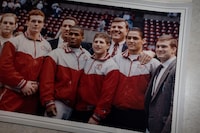
Jim Jordan, known to his Ohio State wrestlers as “Jimmy,” earned their admiration with his Olympic-level wrestling prowess and disciplined lifestyle. During Jordan’s nine seasons as assistant coach, his wrestlers respected his technique, from single-leg takedowns to his distinctive victory strut, yet feared sparring with him due to his relentless pressure. His intensity mirrored his political career, where he is a powerful Republican figure, staunch Trump supporter, and House Judiciary Committee chairman.
Jordan’s aggressive style in wrestling and politics became evident when Mike Schyck, a freshman recruit in 1988, faced his intensity on the mat. Jordan pursued Schyck to the mat’s edge, challenging him till he was overwhelmed. His approach reflected his political tactics in Washington, where he demonstrated similar persistent aggression.
While Jordan gained prominence, his time as a coach coincided with Ohio State’s scandal involving Dr. Richard Strauss, who molested numerous students. Jordan insisted he was unaware of Strauss’s actions, a stance many wrestlers found implausible. Despite the controversy, Jordan’s wrestling legacy and political maneuvering continue to polarize.
Jordan’s rise began from modest roots in St. Paris, Ohio, where he honed his wrestling skills under his father’s tutelage. By high school, he became a state champion, eventually winning NCAA titles at the University of Wisconsin. His relentless drive earned him both respect and scrutiny.
In politics, Jordan maintained his combative style, often clashing with colleagues, including former Speaker John Boehner, and later, aligning with Donald Trump. He opposed compromises, favoring staunch conservative principles. Jordan’s tactics, however, weren’t without criticism, especially during the Capitol riots on January 6, 2021, where his role came under scrutiny.
Jordan’s stance on the Ohio State scandal and unwavering support for Trump continued to fuel debates. His insistence on relentless aggression shaped both his wrestling coaching in Ohio and his political endeavors, leaving him revered by some and contested by others, encapsulating his career’s dual nature of discipline and controversy.