
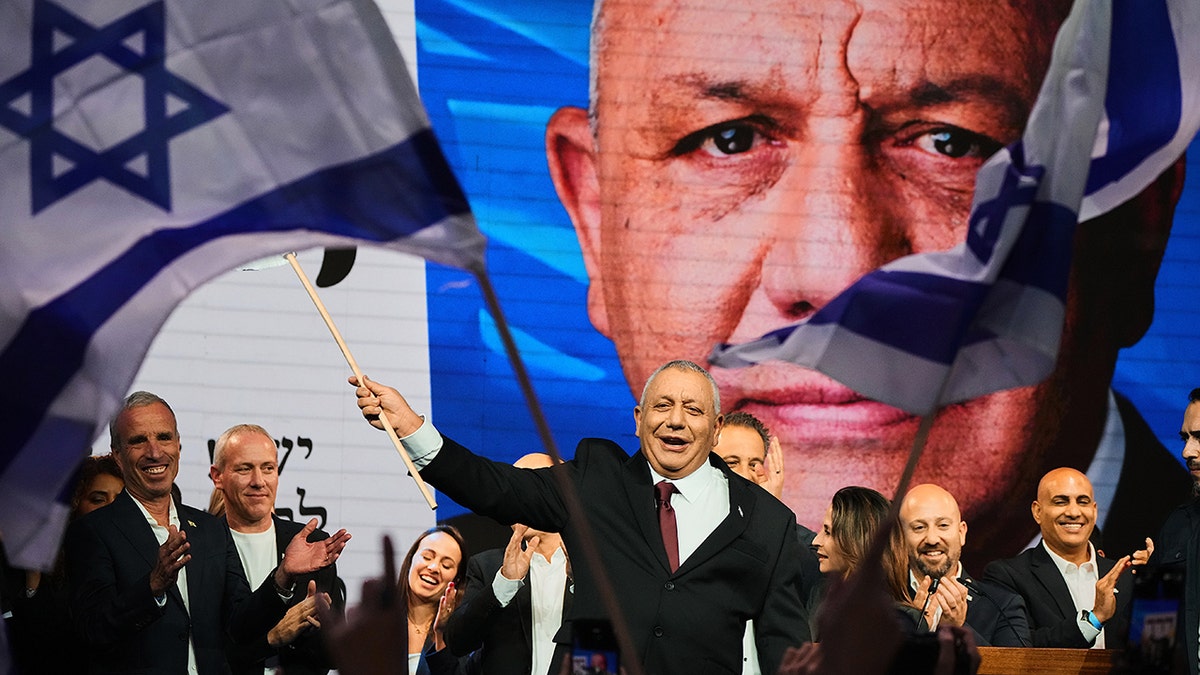
The Israeli government is in a stalemate after recent elections failed to produce a decisive outcome. Political parties are in coalition negotiations with President Isaac Herzog to determine the next steps. Two key figures, Benjamin Netanyahu and Gadi Eisenkot, are seeking the backing necessary to form a new government.
President Herzog revealed he has chosen Gadi Eisenkot, the opposition leader, to attempt to form a new government. He announced this decision on November 7, with the formal presentation of the mandate occurring the next day. Eisenkot will have 28 days to assemble a government, with the possibility of a 14-day extension if needed.
This opportunity for Eisenkot could pave the way for the end of Netanyahu’s tenure. However, Eisenkot will face challenging coalition negotiations due to stark differences among parties aiming to replace Netanyahu.
After consultations with the newly elected parliament, Herzog reported that 67 members of the Knesset recommended Eisenkot to form the next government. Netanyahu received backing from 46 lawmakers, while seven from the ultra-Orthodox United Torah Judaism party chose not to support either candidate.
The October 27 election saw Netanyahu’s Likud party gain 27 seats, becoming the largest single party. His political bloc secured 53 seats. The alliance aiming to oust him managed 48 seats in total.
Eisenkot’s endorsements include support from two Arab-led parties, the Joint List and Ra’am, together holding 19 seats. But the involvement of these parties presents a challenge, as some potential coalition partners oppose relying on Arab parties.
In a statement, Eisenkot proposed forming a National Emergency Government. This would initially rely on the four parties wanting to replace Netanyahu, while staying open to others joining. Eisenkot emphasized the serious nature of Israel’s current national emergency situation. He criticized the outgoing government, asserting that ongoing instability could worsen Israel’s security and diplomatic issues.
The proposed government would rest on four core principles: recognizing Israel as a Jewish and democratic state, adhering to the Declaration of Independence’s values, advocating universal service, and identifying Hamas as a terrorist organization, along with dismantling its military capabilities.
Eisenkot plans to offer an invitation to lawmakers from across the political spectrum, conditioned on their acceptance of these principles. However, disagreements remain even within the bloc seeking to replace Netanyahu.
An important turn occurred when Avigdor Lieberman of Yisrael Beitenu expressed openness to compromise on military service for ultra-Orthodox Jews. Lieberman’s shift indicates readiness for difficult political concessions to avoid another election and end Netanyahu’s leadership.
Lieberman highlighted three conditions: preventing another election, ending the Netanyahu era, and rejecting any coalition depending on the Joint List and Ra’am.
The conscription issue remains significant. Ultra-Orthodox factions seek legal exemptions for yeshiva students from military service. Eisenkot and others in his bloc advocate expanding the service obligation.
Even including United Torah Judaism in their bloc would still not provide Eisenkot the necessary 61 seats for a majority. The religious Shas party, supporting Netanyahu, holds six seats. Eisenkot might form a minority government through abstentions from parties outside the coalition; yet, Lieberman rejects this if it involves Arab factions.
The primary issue Eisenkot faces is that despite a majority backing him to form the government, lawmakers lack consensus on its composition.
As discussions continue, Netanyahu remains the caretaker prime minister. He has also contested parts of the election results amid allegations of voting irregularities. Nonetheless, the Central Elections Committee maintains that the election’s integrity stands firm.
With Eisenkot receiving the mandate, he reaches a vital political milestone. However, converting his broad parliamentary endorsement into a functioning government will require consensus on contentious issues like military service and collaboration with Arab lawmakers.
Failure to forge agreements may result in another political deadlock and possibly a new election.