
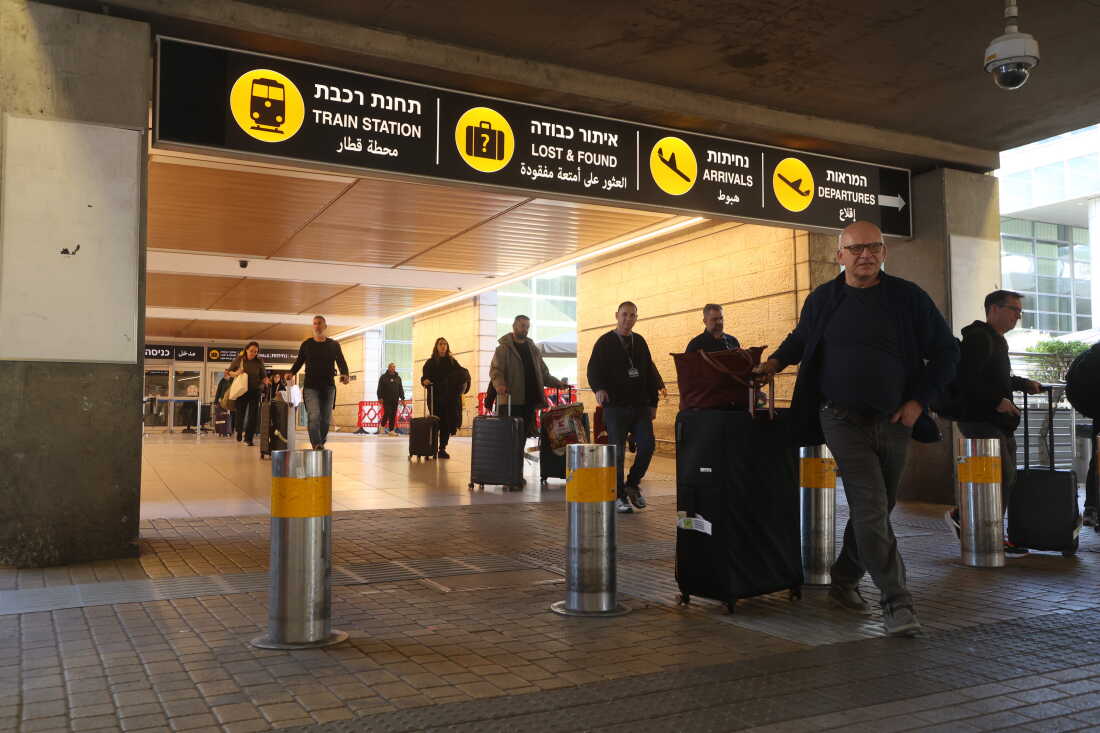
Recent escalations at border control have seen a rise in entry denials for travelers to Israel, particularly those with connections to Palestinians or plans to visit the occupied West Bank. Reports from travelers and their legal representatives suggest the criteria for denying entry have significantly broadened.
In August, a notable instance involved U.S. and international comedians barred from performing at a Palestinian comedy festival. Additionally, a U.S. multifaith delegation faced similar treatment when intending to tour West Bank and Jerusalem since they were affiliated with a Palestinian Christian organization.
The Israeli Interior Ministry claims it is unaware of a pattern of increased entry bans. However, data shows a surge in denied electronic travel authorizations, sitting at over 21,000 since early 2025. This pretravel screening is mandatory for visitors from the U.S., Canada, and European Union, where visa exemptions apply.
The U.S. State Department supports the Israeli stance, citing security concerns as rationale for these denials. These actions reflect similar measures by the Trump administration in deporting non-U.S. citizens involved in activism related to Palestinian issues on college campuses.
“It’s a tremendous change,” said Adi Lustigman, a lawyer representing affected travelers. “Complaints about entry denial have become almost daily or, at the least, weekly occurrences.”
In early August, comedians from Los Angeles and other countries, including a New Zealander, were detained and deported after landing in Israel for the Palestine Comedy Festival. Despite holding pretravel authorizations, their entry was blocked due to alleged anti-Israel sentiments.
The Palestine Comedy Festival, established with U.S. Consulate support in 2015, experienced its first instance of banned international performers, according to Amer Zahr, the festival organizer.
Incidents of entry bans have expanded, affecting those not strictly of Arab descent. This sharp rise follows Hamas-led attacks in southern Israel in October 2023. Efforts in 2024 saw Jewish Americans among others deported for participating in protective activities for Palestinians in the West Bank.
In 2025, legislation was passed to block entry for individuals disputing the attacks on October 7 or advocating for the prosecution of Israeli soldiers. Additionally, calls for boycotts against Israel could lead to banned entry.
Among those affected were European Parliament members barred for advocating international legal actions against Israel and accusing it of genocide in Gaza.
Common reasons for denial now include being part of West Bank tours, possessing contact details of Palestinian activists, or inconspicuous social media activity.
Lawyer Yotam Ben-Hillel notes frequent interrogation covers travelers’ opinions on the October 7 attacks, leading to ambivalence and potential entry denial.
Entry bans, often spanning five to ten years, have seen limited success in judicial appeals.
Notably, a U.S. multifaith group led by Methodist minister Rev. Ed Phillips faced aggressive questioning before a denial at the Jordan-Israel border.
A representative from Sabeel, the Palestinian Christian organization involved, alerted U.S. Ambassador Mike Huckabee, who promised to investigate. Nonetheless, no official comment came from the U.S. Embassy in Jerusalem or the State Department, though they stress equal travel rights regardless of nationality, religion, or ethnicity.