
Netanyahu’s Defiant Speech to Supporters
Prime Minister Benjamin Netanyahu delivered a resolute speech soon after Israeli polls concluded. He pushed for the creation of a right-wing, national government. Speaking to his Likud supporters, he stressed the need for a strong administration, despite Likud falling short of a majority in the Knesset.
Amid the speech, Netanyahu addressed the ongoing tensions with Iran, highlighting a joint opportunity with the U.S. to mitigate perceived threats.
Election Misinformation Accusations
Social media platforms and experts accused Netanyahu of spreading election misinformation. Posts on his X account depicted scenarios involving Arab voters that experts claim were designed to incite fear and influence turnout. This included imagery alleged to be AI-generated.
According to experts, these strategies might serve to question the election’s legitimacy, should Netanyahu not secure victory.
Political Rivals and Early Results
Opposition politicians, like Democrat leader Yair Golan, declared that the public had rejected Netanyahu. He emphasized a historic opportunity for governmental change in Israel.
Preliminary results indicated Netanyahu’s Likud party secured around 26.5% of votes. Nonetheless, confusion over coalitions remains due to lack of a clear majority.
Arab Parties and High Voter Turnout
Arab parties celebrated significant voter turnout, seeing it as a push against Netanyahu’s policies. High participation might influence the coalition dynamics despite candidates like Eisenkot avoiding alliances with Arab parties.
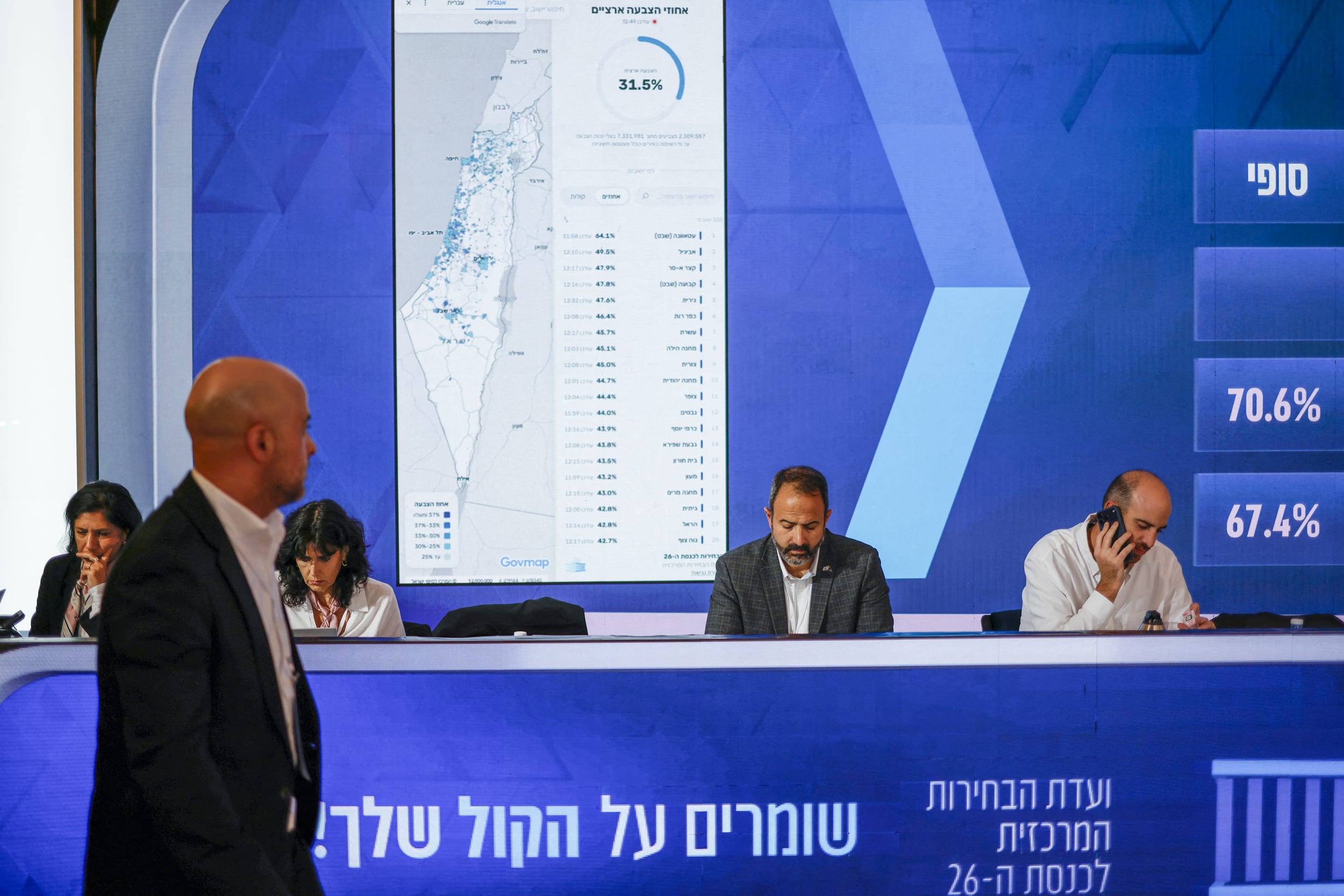
An increased turnout of 77.7% was the highest since 1999. Efforts by different parties to capture undecided voters are evident.
Subsequent Steps in Government Formation
Following the elections, detailed results will emerge within eight days. Customarily, the largest party attempts government formation, but negotiations play a crucial role. Failure to establish a coalition may lead to new elections.
Impact of U.S. Relations on Elections
Netanyahu often highlighted his relationship with Donald Trump during the campaign. However, rival supporters expressed concerns about Israel’s global standing under his leadership.
Exit Polls and Coalition Challenges
Initial exit polls revealed no clear majority, suggesting further uncertainty. Netanyahu’s and Eisenkot’s respective blocs are close in numbers, complicating coalition talks.
Observations from Around Israel
Ambassadors and public figures like Gal Gadot encouraged voting for change. Voter experiences varied, with some expressing hopes for a government that respects all citizens.
Haredi population discussions and voter motivations have also featured prominently, with calls for change from various segments of Israeli society.
International and Regional Context
Regionally, Gulf states expressed concerns about the U.S.’s stance post-Iran war. Meanwhile, Iran’s president criticized U.S.-Israeli actions, reflecting ongoing geopolitical tensions.
As Israel navigates these political dynamics, all eyes remain on the coalition-building process and its broader implications for Israeli and international policies.