
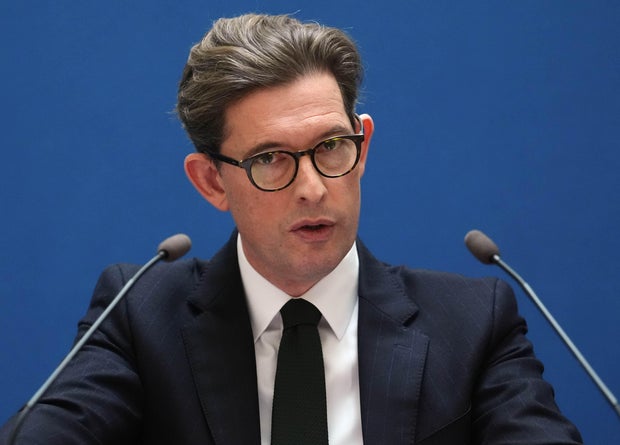
Iran is intensifying its efforts against the United Kingdom, targeting challenging sites like military bases. The head of MI5, Sir Ken McCallum, highlighted this shift in a recent threat update from MI5’s London headquarters.
Sir Ken detailed the diverse challenges faced by the U.K., from foreign hostility and terrorism to AI misuse. He noted that Iran is increasingly subcontracting its violent activities to criminal proxies. These proxies aim to intimidate opposition figures, media, and Israeli interests.
Particularly disturbing was the focus on British Jewish communities, drawing McCallum’s message of solidarity. Over 50 arrests related to Iran-linked activities occurred in the U.K. within the past year.
The address followed multiple incidents involving arson and sabotage aimed at Jewish communities and other sites across Europe. McCallum refrained from sharing particulars about the military targets involved due to ongoing probes, citing a disrupted plot at RAF Fairford as an example. This led the U.S. to withdraw its long-range bombers from the base.
Prime Minister Andy Burnham indicated strong suspicions of Iranian involvement in these incidents, controlled by entities within Iran’s Islamic Revolutionary Guard Corps. Yet McCallum acknowledged the complex nature of such actions, often veiled by proxies and individuals unknowingly acting for foreign states.
Counterterrorism units suggested the RAF Fairford case might involve individuals unknowingly acting for Iran or proxies, a tactic Iran and Russia are accused of utilizing across Western Europe. In one instance, the group Harakat Ashab al-Yamin al-Islamia claimed attacks on synagogues in multiple countries and threats to U.S. and Israeli interests.
McCallum’s address also labeled Russia as the primary aggressor among state threats. MI5 now handles four times more state-threat cases than a decade ago.
The threat environment has changed drastically since 2020. MI5 is deploying more resources against state threats than during the Cold War. Russian activities, including cyberattacks and hybrid warfare, have increased in response to battlefield challenges in Ukraine.
Conventional threats are still managed well by the military, yet unconventional threats from states like Russia and Iran require a new response.
Artificial intelligence was another critical focus. McCallum warned of AI’s fast evolution, impacting the cybersecurity landscape. AI can create tailored propaganda and radicalization materials, potentially aiding hostile actors.
He expressed concerns about AI enhancing biological weapons or facilitating new developments by malicious actors.