
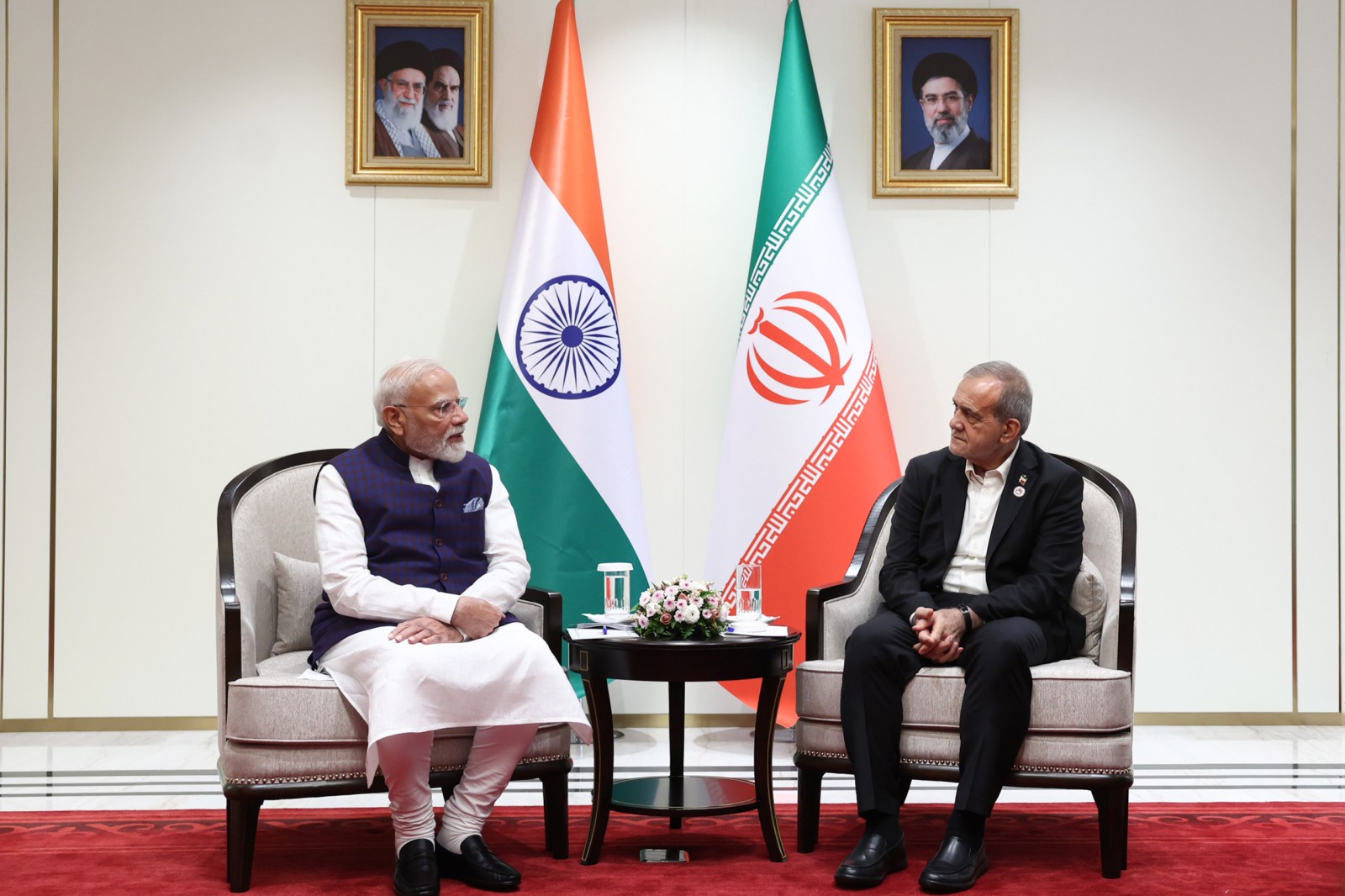
Iranian President Masoud Pezeshkian appealed to Indian Prime Minister Narendra Modi at the Shanghai Cooperation Organization (SCO) summit held in Bishkek, Kyrgyzstan. This meeting occurred as tensions between the U.S. and Iran escalated, following President Donald Trump’s threat to respond forcefully to strikes on an American base in Jordan.
The meeting marked the first face-to-face interaction between Pezeshkian and Modi since the Iran conflict began on February 28, though they have conversed several times over the phone. Iran considers India a crucial voice in global debates, and Pezeshkian seized the opportunity to present Iran’s position to the world through Modi.
“Despite Iran seeking peace, the Americans have chosen the path of war, insecurity, and imposing their will through force,” Pezeshkian reportedly stated. Further, he pointed out that “the American side has failed to fulfill its commitments” to a memo signed with Trump on June 17.
Iran’s outreach to India seeks strong support due to pressures and restrictions obstructing Iran’s international engagements. Modi, in turn, emphasized the significance of civilian safety and the free navigation of commerce while advocating for peace in the region.
Iran’s strategy includes targeting ships and infrastructure in the Persian Gulf, aiming to pressure the U.S. and allies by increasing conflict costs. India has opposed this approach, condemning an Iranian strike last month that killed an Indian sailor near the Strait of Hormuz. Despite the tensions, India consistently calls for caution and a ceasefire, not aggressive escalation.
Pezeshkian’s office stated that he urged Modi to leverage his diplomatic ties to redirect involved parties from warfare to negotiation and dialogue. The dialogue took place within the context of the SCO summit, a conglomerate initially formed in 2001 comprising China, Russia, and several Central Asian nations, with India and Pakistan joining in 2017 and Iran in 2023.
The SCO functions as a collaboration platform focusing on political, economic, and security interests, particularly counterterrorism. Although it is not a defense alliance, it represents an assembly where Iran can share views and attract ‘non-West’ support. The summit’s media portrayal may concern the U.S., whose efforts, spearheaded by Operation Economic Outcast, aim to isolate Iran.
Ali Ahmadi from the Geneva Centre for Security Policy underscored that the SCO doesn’t mimic an Asian NATO. Instead, it offers a coordination body for economic and military matters, thus diminishing Iran’s isolation while enabling Tehran to seek support in a changing global landscape.
Iran tries to stabilize trade through land routes amidst U.S. maritime blockade threats. The SCO enables Iran to secure commerce and petition political backing as Trump challenges Iran’s trade partners. Ahmadi highlighted that the economic and security dimensions of SCO cooperation intertwined due to conflicts, enhancing Iran-Russia-China collaboration in light of the war’s economic impact.
India’s Diplomatic Balancing Act
India navigates a delicate balance amid shifting regional power dynamics and evolving security ties. Its SCO membership is nuanced, with peers like China and Pakistan posing security concerns despite shared interests. Recently, Pakistan’s newfound diplomatic role, mediating U.S.-Iran talks, and alliances with Turkey and Saudi Arabia, have influenced this balance.
India diversifies rather than strictly aligning regional partnerships. Deepika Saraswat from the Manohar Parrikar Institute for Defense Studies and Analyses noted that India balances relations across Gulf States, Iran, and Israel, ensuring consistent diplomatic engagement without triggering radical policy shifts.
Despite some bumps in the India-U.S. relationship, reflected in tariffs and controversial statements, Modi and Trump maintain generally positive ties. Trump’s reference to India as a “hellhole” raised concerns, but Modi’s diplomatic engagement with various countries strengthens strategic postures. Iran might be next as New Delhi rekindles interest in developing Iran’s Chabahar port after sanctions relief expiration.
India values its relationship with Iran, vital to connectivity plans with Afghanistan and Central Asia. The U.S.-Iran conflict and Strait of Hormuz disruptions highlight the importance of keeping diplomatic channels with Iran open.