
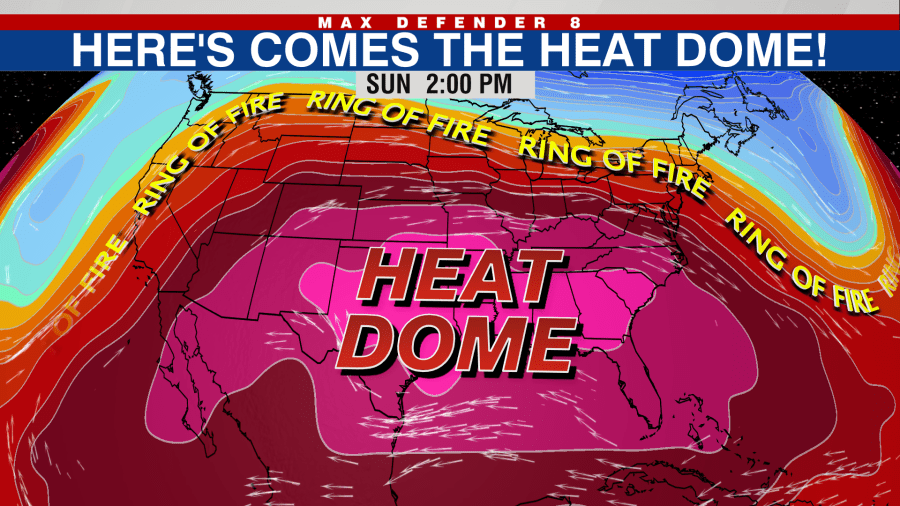
Major heat conditions are set to impact the Southeast, including Florida, as a near-record heat dome develops over the region. This weather phenomenon is anticipated to begin over the weekend and persist throughout most of next week or potentially longer.
The heat dome, characterized by an area of high pressure, acts like a dome that traps warm air and prevents clouds and rain. According to the American Meteorological Society, this upper-level ridge is expected to break monthly records for high pressure intensity, resulting in numerous temperature records being shattered.
The National Oceanic and Atmospheric Administration forecasts that more than 30 million individuals will face ‘extreme’ heat, while another 50 million will experience ‘major’ heat. High temperatures will escalate later this week, peaking over the weekend. These extreme conditions are anticipated to move from Kansas and Oklahoma eastward into Missouri, Arkansas, Kentucky, Tennessee, southern Illinois, and further south into Alabama, Mississippi, Georgia, and Florida.
In Florida, high temperatures will be in the mid-90s, with broader areas of the Southeast reaching close to 100 degrees. A heat risk map illustrates dangerous conditions spanning more than a dozen states, backed by data from the National Weather Service.
Combined with high humidity, heat index values are predicted to peak between 105 and 115 degrees. Overnight low temperatures will remain elevated across the Southeast, posing severe risks.
“In heat waves, nighttime lows critically affect total heat stress,” said meteorologist Jeff Masters from Yale Climate Connections. “If it remains hot at night, the body lacks time to adjust, increasing heat risks.”
Despite the peak expected early next week, the heat dome phenomenon may prolong its presence. The recent heat follows closely after the United States recorded its hottest July on record, averaging 76.89 degrees, slightly higher than July 1936 during the Dust Bowl era. Records date back to 1895.
“Exceeding Dust Bowl records signifies serious problems,” noted Masters. “The Dust Bowl involved mass migrations due to severe drought and heat across the U.S., a pivotal event in history. Breaking those records indicates significant climate issues.”