
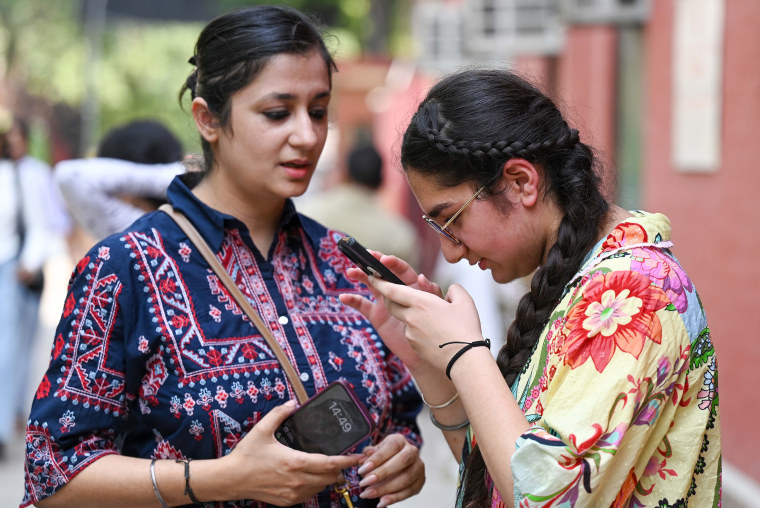
Ridhvi Saxena, an 18-year-old aspiring cardiologist, felt confident after her exam, anticipating the next step in her medical career. However, her dreams were dashed when India’s testing agency announced the NEET exam she took on May 3 was compromised due to leaks. This resulted in a retest for all candidates.
Indian authorities went further by temporarily banning the Telegram messaging app. Officials claimed cheating networks operated on the platform, selling leaked exam papers. “I feel cheated by the system,” Saxena stated from Bhopal. Her excitement for college turned into uncertainty and exhaustion, especially with the retest scheduled soon.
This year’s NEET exam saw over 2 million aspirants across India participating. Known for its grueling nature, the exam covers physics, chemistry, and biology. Many, like Saxena, who repeatedly attempted the test, felt devastated by the annulled results.
“Years of hard work felt wasted,” Saxena expressed. “We sacrifice family time, barely leaving our study spaces, only to face this setback.”
The Central Bureau of Investigation initiated a probe into the exam leaks. Additionally, the Ministry of Electronics and Information Technology enforced a Telegram ban until June 22, citing national security concerns.
India’s National Testing Agency believes the ban ensures exam integrity. Conversely, Telegram’s founder, Pavel Durov, criticized the move, impacting over 150 million users, arguing that leaks shifted to other platforms.
The Delhi High Court upheld the government’s decision despite Telegram’s appeal against the ban. This has alarmed activists, who view it as a silencing tactic against government critics. The Internet Freedom Foundation warned of the ban’s broader implications on internet freedom.
This incident adds to an already challenging year for India’s education system. Technical errors in the high school board’s electronic marking led to public uproar. Furthermore, student cybersecurity efforts highlighted security flaws in the examination process. Discontent led to protests, demanding education minister Dharmendra Pradhan’s resignation.
Despite hopes the Telegram ban would avert further scandals, students remain skeptical. Many argue it diverts attention from authorities’ past failures to prevent leaks. VPN activity surged 120% post-ban, highlighting students’ determination to access the platform.
“Authorities seem to apply a temporary fix, sidestepping core issues,” shared Anoop Girijesh, another NEET candidate. Concerns linger, questioning if the process guarantees security this time.
The National Testing Agency assured on social media that strict security measures were enacted and deemed the retest necessary for students’ benefit. Yet, students like Girijesh remain wary, doubting the system’s integrity.
The National Testing Agency and Telegram provided no further remarks.