
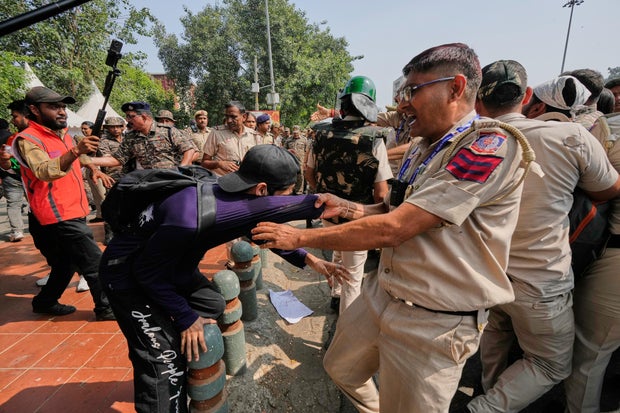
Indian authorities imposed a stringent security crackdown in New Delhi, detaining thousands of protesters. The protest was organized by India’s youth “Cockroach” movement, aimed at opposing a controversial voter list revision. This revision sparked anger against Prime Minister Narendra Modi’s government and election officials.
Police intercepted protesters en route to Jantar Mantar, New Delhi’s designated protest site. Many demonstrators were chased off, while others were detained and taken to temporary detention centers. Key movement leaders, opposition lawmakers, and activists were detained to prevent the protest’s commencement. Vehicles were stopped at checkpoints around the city, and mobile internet restrictions further hampered protest efforts.
Police claimed protest permissions were denied due to late requests. BJP spokesperson Sambit Patra labeled the protesters as “anarchic elements,” dismissing their efforts.
Massive Crackdown
The crackdown highlighted the government’s determination to stifle the rapidly growing protest movement. Previously, the “Cockroach” movement led protests over exam paper leaks, resulting in the Education Minister’s resignation. The movement’s leaders were detained upon arriving in Delhi from Mumbai, preventing their participation.
Authorities issued bans on gatherings in New Delhi, warning with loudspeakers. Journalists faced restrictions, with some briefly detained. Despite these measures, some protesters broke through police lines, chanting slogans against Modi and the election commission.
“We are a democracy, yet peaceful protests are being crushed by force. Shouldn’t we fight for our rights?” – Tanya Negi, protester.
The police response displayed significant force in a city where preventing dissent has become routine under Modi’s government.
Criticism from Opposition
Opposition leaders accused the government of stifling opposition. John Brittas, an opposition lawmaker, condemned the actions, questioning the presence of democracy in India. The protest focused on the Election Commission’s Special Intensive Revision, which the opposition claims disenfranchised millions. Protesters demand the resignation of Chief Election Commissioner Gyanesh Kumar.
The Election Commission and government counter these claims, arguing that the revision aims to remove duplicate and ineligible entries.
The “Cockroach” movement views this as a chance to expand its influence. The movement, which began with online actions in May, gained attention through sit-ins and hunger strikes. For Modi, the protests present a challenge during his third term. While national elections are scheduled for 2029, upcoming state elections in BJP-controlled regions could affect the party’s position.