
After extensive negotiations, legal battles, and appeals over the past three years, the Illinois Supreme Court is set to hear arguments about handling serious misconduct cases involving Chicago Police Department officers. The central issue involves whether such cases should be decided by a third-party arbitrator rather than the traditional method of the Chicago Police Board, a practice since 1961.
The hearing is scheduled for Thursday in Springfield, and a decision might be expected by the year’s end. However, implementation details of any potential changes remain uncertain. The upcoming CPD superintendent will inherit numerous unresolved disciplinary cases.
Police accountability advocates have raised concerns, citing past incidents like the 2014 shooting of Laquan McDonald as a warning against returning to opaque disciplinary proceedings. They argue that settling serious misconduct in arbitration could undermine nearly a decade’s efforts to combat police misconduct, potentially shielding such cases from public accountability.
“Secrecy breeds impunity for police officers,” wrote attorneys for a coalition of reform groups in a court brief. They emphasized that transparency prevents abusive officers from considering themselves above the law.
The debate also touches on whether officers facing potential termination should continue to receive pay during the adjudication process. Both accused officers and alleged victims have had to endure prolonged waits due to the legal impasse.
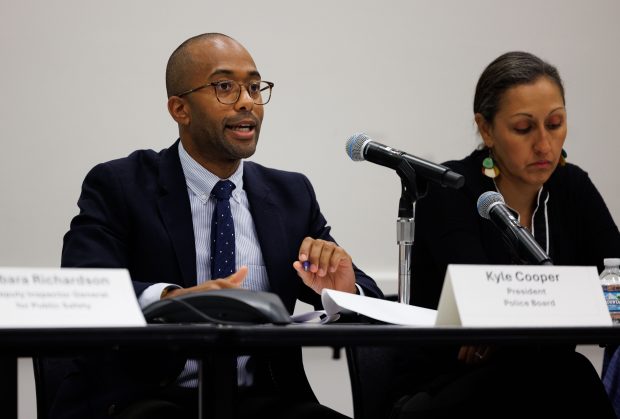
Chicago Police Board President Kyle Cooper recently highlighted these delays, stating, “Officers and alleged victims should not wait years for resolution. Residents deserve timely justice regarding serious allegations.”
Since 2023, the usual adjudication process has been largely stalled due to ongoing legal disputes between the city and the Fraternal Order of Police (FOP). The FOP argues that the city is attempting to impose a new policy requiring public access to grievance arbitration, which historically hasn’t been the case.
City attorneys counter that keeping these hearings public is crucial to reform efforts and maintaining public trust. “Public hearings build trust and cooperation between CPD and the community it serves,” they argued.
The FOP, however, contends that the core issue is about workers’ rights, not the broader political implications the city suggests. They recall the Illinois Supreme Court’s 2020 dismissal of a related FOP attempt to destroy misconduct records after five years, citing violation of state public policy.
This ongoing dispute began in summer 2023 when the City Council separated the FOP’s new collective bargaining agreement. Arbitrator Edwin Benn’s warning about wasting taxpayer money on a futile legal battle went unheeded, leading to subsequent legal proceedings and appeals.
In March 2024, Judge Michael T. Mullen ruled that while officers could have cases heard by a third party, the proceedings must be public. A 2025 appellate court decision upheld this but allowed officers facing dismissal to remain on the payroll during proceedings.
Currently, only a small number of officers opt for Police Board hearings while others choose arbitration. Despite the stalled process, investigations continue, with hundreds of misconduct cases sustained since September 2023.
Former Superintendent Larry Snelling advocated for open proceedings, emphasizing the importance of transparency in disciplinary processes to bolster public confidence and the department’s reputation.