
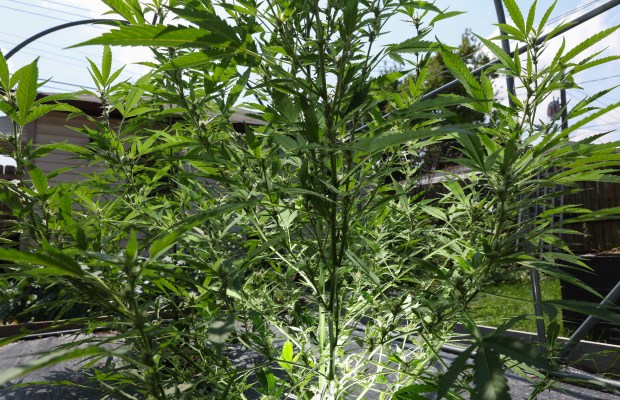
In a significant shift, Illinois regulators have suggested permitting cannabis companies to grow plants outdoors. This proposal promises to reduce energy use and cultivation expenses, although it leaves home growers excluded. Current state laws require cannabis to be cultivated in a secured, enclosed facility. The state Department of Agriculture has until now interpreted this requirement as a prohibition against outdoor growing due to security concerns and the risk of agricultural pesticides contaminating marijuana plants. However, after two companies successfully challenged this interpretation in court and a third filed a lawsuit, the agency has proposed changes.
Outdoor growing practices are already common in other states that have legalized cannabis, such as California and Michigan. Researchers indicate that transitioning to outdoor cultivation could cut up to 76% of the energy used in indoor growing, aiding Illinois in its goal to lower net carbon emissions. This change could also reduce costs for consumers.
Scott Redman, founder of the Illinois Independent Craft Growers Association, described the move as a major opportunity for smaller growers. Many of these smaller operations face high startup costs and find it difficult to secure financing. Currently, only 31 of 85 licensed craft growers have been permitted to operate. Redman highlighted that this policy change could enable growers to expand more economically to the state limit of a 14,000-square-foot canopy. For projects still in planning, outdoor growing could eliminate the need for costly lighting and HVAC systems within their budgets. Redman views this as a crucial advancement for the industry.
The proposed rules would allow licensed cannabis companies to cultivate outdoors next to existing facilities under certain conditions. The cultivation area must be enclosed by an 8-foot high chain-link fence topped with security wire and remain out of public view. Outdoor cannabis would primarily be used for extraction to create concentrates for edibles, vapes, and oils. Redman noted that while this wouldn’t increase flower availability for smoking, it could benefit small-business infusers by providing more distillate.
The issue gained attention last year when Curaleaf Holdings, the largest cannabis company in the U.S., filed a lawsuit through its subsidiary to grow in hoop houses near its existing facility. The current regulatory framework required solid walls and ceilings, but Curaleaf seeks re-evaluation in favor of qualified ambient environment structures. According to a Curaleaf representative, the company is reviewing the proposed rule change, advocating for a regulatory environment that allows for safe and efficient cultivation.
The proposed regulation changes await public comment for 45 days before potential implementation. The Department of Agriculture aims to establish consistent health and safety standards while fostering a safe, equitable cannabis industry. This shift appears somewhat ironic because, although hemp—a relative of cannabis with minimal THC—is legally cultivated nationwide, its intoxicating derivatives face restrictions.
In Illinois, early regulations allowed outdoor screen houses for Green Thumb Industries and Nature’s Grace and Wellness. Both companies successfully defended their operations in court. Most other Illinois growers depend on energy-intensive indoor environments. Nationwide, cannabis industry emissions equate to those from 10 million cars, rivalling all other crop emissions combined and exceeding those from cryptocurrency mining.
Illinois’ climate supports one or two outdoor harvests annually, but using greenhouses can extend this. The Cannabis Business Association of Illinois expressed mixed feelings about the proposal, emphasizing the potential impacts and security concerns. Executive Director Tiffany Chappell Ingram noted that the association would gather member input for a comprehensive response.
For home growers, state law restricts cultivation to indoor environments and limits registered medical patients to five plants. While cannabis activist Cole Preston advocates for home growers to cultivate outdoors as well, the proposal currently lacks provisions for this. Preston argues outdoor growing is simpler and more natural than complicated indoor setups.
Madeline Scanlon, co-founder of High Focus Media, advocates for outdoor home growing for medical patients. She explains that secure outdoor cultivation processes can be easier and cheaper. Scanlon and others insist that outdoor growing is feasible without negative impacts, urging legislators to consider the benefits.