
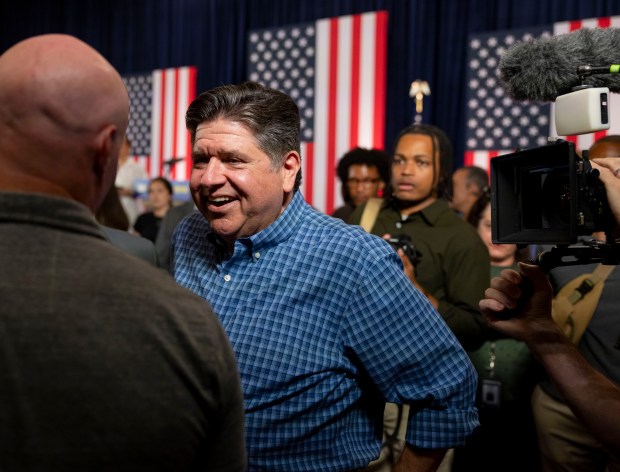
Labor Day traditionally signals the start of the fall general election campaign. For major candidates, it means a shift in focus from regional events to the Chicago area, where statewide races are often decided. As politicians attended parades and events across Illinois, campaigns for governor and U.S. Senate faced distractions like national politics, internal disputes, financial issues, and future aspirations that complicated their messaging.
Chicago voters are also preoccupied with a looming mayoral race, which garners more interest than the state election set for Nov. 3. Ultimately, all campaigns are a referendum on the candidates, and this election follows the same pattern.
Governor Race Dynamics
Democrat JB Pritzker is running for a rare third term as Illinois Governor, with potential White House ambitions looming. On the Republican side, Darren Bailey aims to overcome the state’s negative view of President Donald Trump and his own past defeat by Pritzker. Meanwhile, Collin Corbett, a former GOP operative, presents an independent candidacy.
The governor’s race features significant financial disparities. Pritzker, an entrepreneur and Hyatt hotels heir, invested nearly $440 million of his wealth into his campaign since his initial 2018 run. This includes a recent $65 million contribution. By contrast, Bailey manages a more restricted, social-media-driven campaign focused on affordability. He lacks substantial funding, running without the large-scale contributions that boosted his previous campaign.
Bailey’s Campaign Challenges
Bailey proposes shifting school funding from property taxes to state resources without detailing how he’d achieve this, especially with a Democratic General Assembly. Despite calling for reduced property taxes, his plans lack feasible funding options.
Bailey also pledged to eliminate Illinois Tollway fees but hasn’t explained how to offset the costs, which include $8.2 billion in bond debts and a $26.5 billion construction plan. Raising property or fuel taxes contradicts his stance against tax increases.
Previously aligned with Trump’s policies on tariffs affecting Illinois farmers, Bailey now seeks to distance himself from previous positions on issues like abortion and gay rights, framing Trump-related inquiries as distractions. Despite this, he remains open to a presidential endorsement.
Pritzker’s Strategies and Opposition
Pritzker remains focused on opposing Trump while reusing themes from past campaigns against Bailey. His extensive funding provides flexibility to explore a 2028 presidential campaign. Despite running against Bailey, his rhetoric mainly targets Trump’s influence.
At a recent event, Pritzker criticized national and local Republicans, emphasizing the need for leaders to improve lives beyond mere survival.
Senate Race Overview
In the U.S. Senate race, Lt. Gov. Juliana Stratton, once Pritzker’s running mate, faces ex-GOP Chair Don Tracy to succeed retiring Senator Dick Durbin. Stratton’s campaign remains quiet, largely limited to Democratic events and Pritzker’s appearances.
Tracy criticizes Stratton’s absence from key events, like the Illinois Farm Bureau’s agricultural roundtable, claiming the prioritization of out-of-state activities. Still, Stratton’s campaign plans to engage with agricultural officials soon.
Reporter Jeremy Gorner contributed to this coverage.