
New research has uncovered areas globally where cooler currents and favorable conditions are aiding in the protection of coral reefs from the severe impacts of climate change.
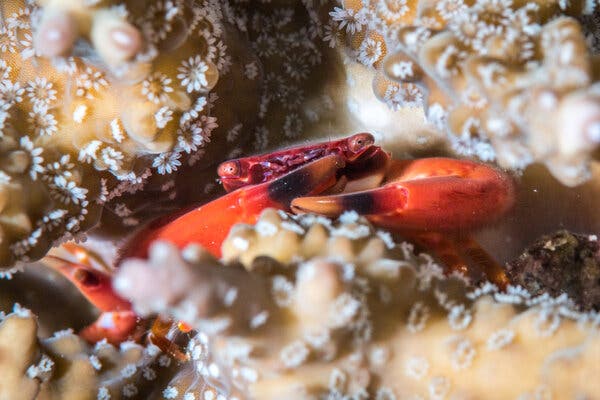
A crab residing among the coral in Fiji’s Vatu-i-Ra Conservation Park exemplifies the critical role reefs play, nurturing roughly a quarter of ocean species at various life cycle stages.
Amidst rising ocean temperatures affecting reefs worldwide, scientists have found cautious optimism. They utilized artificial intelligence to pinpoint sheltered pockets where conditions are favorable for corals. Factors like cool currents, reduced sunlight, and locations beyond cyclone paths contribute to coral resilience.
This study, shared at the Our Ocean Conference in Mombasa, Kenya, is under peer review for Environmental Research Letters. Five scientists identified 42 key factors that create coral refuges. They then incorporated these into a program drawing from nearly 38,000 human observations of coral cover and composition collated over 65 years.
The investigation found over 5,800 square miles of climate-resilient ocean across 72 countries. This is three times more refugia than the 2018 landmark 50 Reefs Study, which initially identified potential coral havens globally.
David Obura, former chairman of IPBES, noted the study builds on decades of work on reef resilience to climate change. He highlighted the important question of whether climate refuges will encompass 10 percent, 1 percent, or even less of coral reefs’ former extent.
Coral reefs remain vital ecosystems. They support about a quarter of ocean species and play a crucial role by providing fish that supply protein to millions and protecting coastlines from storms.