
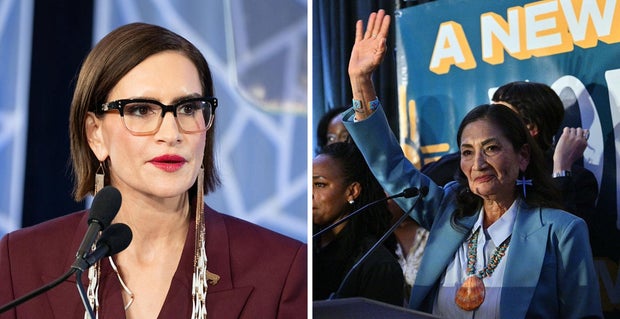
On Tuesday night, the 2026 midterm elections marked a landmark moment as two Native American women made history by winning significant political positions. Across the United States, Democrats celebrated sweeping victories.
In New Mexico, Deb Haaland, a former Interior Secretary, became the first Native American woman elected as governor of a U.S. state. Her victory over Republican Gregg Hull, the former mayor of Rio Rancho, highlights a significant milestone.
In Minnesota, Lt. Gov. Peggy Flanagan made history by becoming the first Native American woman elected to the U.S. Senate. Flanagan defeated Republican Michele Tafoya, a former sports broadcaster and conservative commentator.
“Long before Native women were welcomed into the halls of government, they were leading our Nations, protecting our families, and shaping the future of Indian Country,” said Larry Wright Jr., NCAI Executive Director.
Who Are They?
Deb Haaland, a member of the Laguna Pueblo tribe, has achieved numerous firsts throughout her career. In 2015, she became the first Native American woman to chair a state political party. In 2018, she entered Congress, alongside Rep. Sharice Davids of Kansas, as one of the first two Native American women elected. Haaland also served as the Secretary of the Interior under former President Joe Biden from 2021 to January 2025.
Haaland shared personal stories of her life, mentioning her experience as a single mother and times when she had to rely on food stamps.
Peggy Flanagan, from White Earth Nation, has an extensive background in public service. She started as an organizer, served on the Minneapolis School Board, and coordinated efforts at the Children’s Defense Fund Minnesota. As lieutenant governor since 2019, Flanagan has fostered strong relationships with Minnesota’s 11 tribal nations.
Flanagan also shared her experiences growing up with asthma in Section 8 housing and has been a vocal supporter of Medicaid.
What Do They Stand For?
Deb Haaland campaigned on controlling living costs and enhancing child care and welfare systems in New Mexico. She criticized former President Trump’s cuts to federal safety net programs, promising executive action to halt large-scale data center constructions without legislative scrutiny.
Peggy Flanagan advocated for progressive issues like “Medicare for All” and national paid family and medical leave. Her campaign resonated with voters facing economic hardships.
Why Does It Matter?
The victories of Haaland and Flanagan are monumental for Native American communities. Native American women constitute only about 1% of the U.S. population, as noted by U.S. Census Bureau data, yet they remain underrepresented in political office.
The National Congress of American Indians recognized these wins as pivotal milestones, reinforcing the message that Native American voices are vital and their leadership is crucial in reimagining possibilities.
Larry Wright Jr. expressed hope that this representation would lead to significant progress, particularly in protecting tribal lands and honoring treaty obligations.
Additionally, Alaska might witness another historic win. Democrat Mary Peltola, who is Yup’ik, is involved in a competitive Senate race against Republican Senator Dan Sullivan. The final outcome depends on ranked-choice tabulation later this month.