
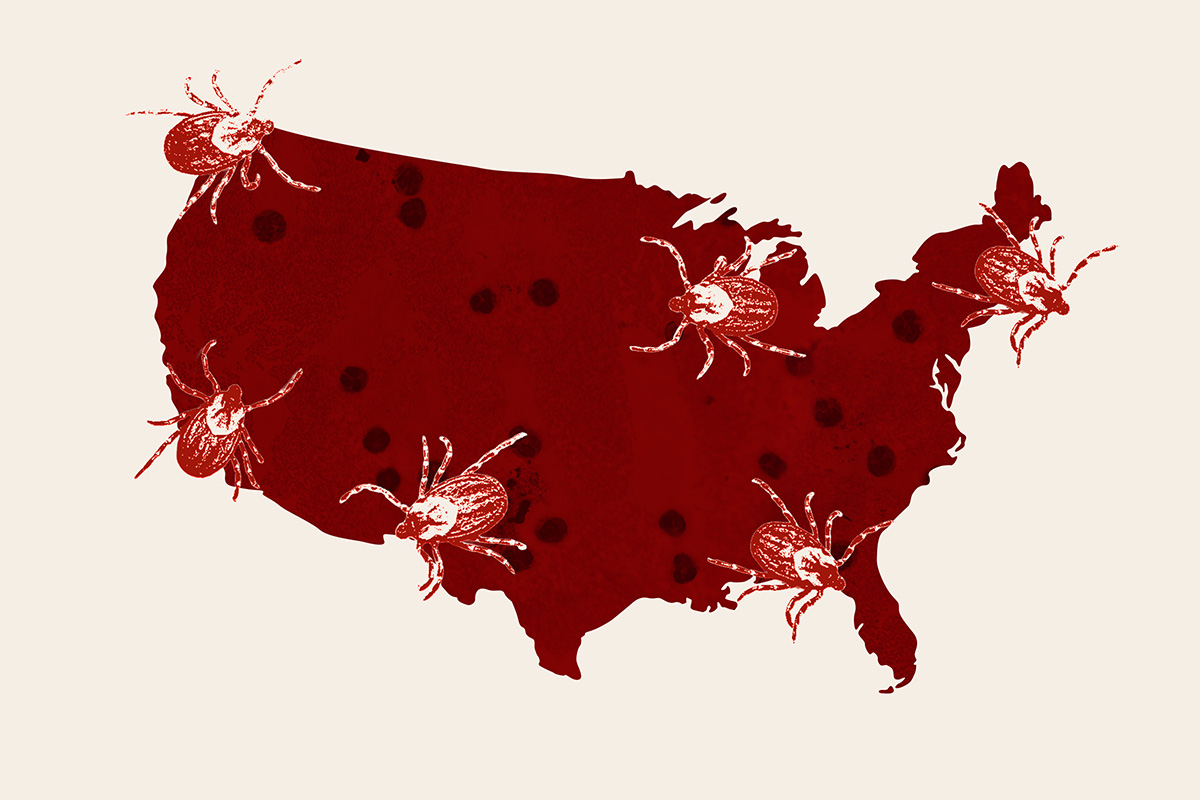
As temperatures rise in summer, certain ticks become active agents in spreading various diseases, unfamiliar to many Americans. These tick-borne issues pose significant public health risks, similar to Lyme disease.
Increasing Vector-Borne Illnesses
Reports on mosquito and tick-borne illnesses are increasing. Dr. Natasha Wyndham Hanners, an infectious disease specialist, attributes this rise to climate changes affecting regional habitats. Improved diagnostic techniques and global travel ease also contribute to the discovery of new or unfamiliar organisms. This has led to scientific findings on how orthonairoviruses, a group of tick-borne viruses, bypass the immune system and how dangerous pathogens are spreading across North America.
Tick-Borne Threats to Be Aware Of
Anaplasmosis: Spread by the blacklegged deer tick, it presents with fever, headache, chills, and muscle aches but lacks the bull’s-eye rash common in Lyme disease. Blood tests are crucial for detection.
Orthonairoviruses: This virus family includes Crimean-Congo hemorrhagic fever virus, a severe pathogen. Recent studies show these viruses eliminate immune system signals, evading detection.
Nairoviruses: A growing category of pathogens, including orthonairoviruses. The PCTNV virus, found in the U.S. Pacific Coast tick, has potent immune-evasive enzymes, raising concerns about human exposure risk.
The Immune System’s Challenge
University of California, Riverside’s research illustrates how orthonairoviruses disrupt the body’s infection detection processes. Researchers studied viral proteins called OTUs, which remove immune-signaling molecules from human cells, preventing the immune system from responding. Enzyme tests showed the Pacific Coast tick’s virus excels in evading immune defenses, raising potential exposure concerns on the West Coast.
Changing Patterns in Tick-Borne Diseases
Anaplasmosis, via the blacklegged deer tick, is emerging in new areas. Though Lyme disease remains prevalent, deer ticks also spread anaplasmosis and babesiosis, requiring blood tests for proper treatment. The Asian longhorned tick, first seen in the U.S. in 2017, spreads SFTS and is now present in states like New Jersey and Pennsylvania. Despite rare human infections, its rapid spread demands increased public awareness.
Protecting Against Ticks
For those outdoors, precautions include wearing long sleeves, tucking pants into socks, and using EPA-approved repellents containing DEET, picaridin, or IR3535. Treat clothing with permethrin. Shower within two hours to remove ticks and thoroughly check your body, focusing on the scalp, ears, underarms, and knees. If bitten, remove the tick with fine-tipped tweezers, clean the bite area, and consult a physician if symptoms develop.
Reference: Gonzalez, D. S., et al. (2026). Insights into the Structure and Function of the OTU Protease Virulence Factors from Emerging Human Nairoviruses. ACS Infectious Diseases. https://doi.org/10.1021/acsinfecdis.6c00320. Contact Newsweek editors on this story: Kara Dolman and Emma Lee-Sang.