
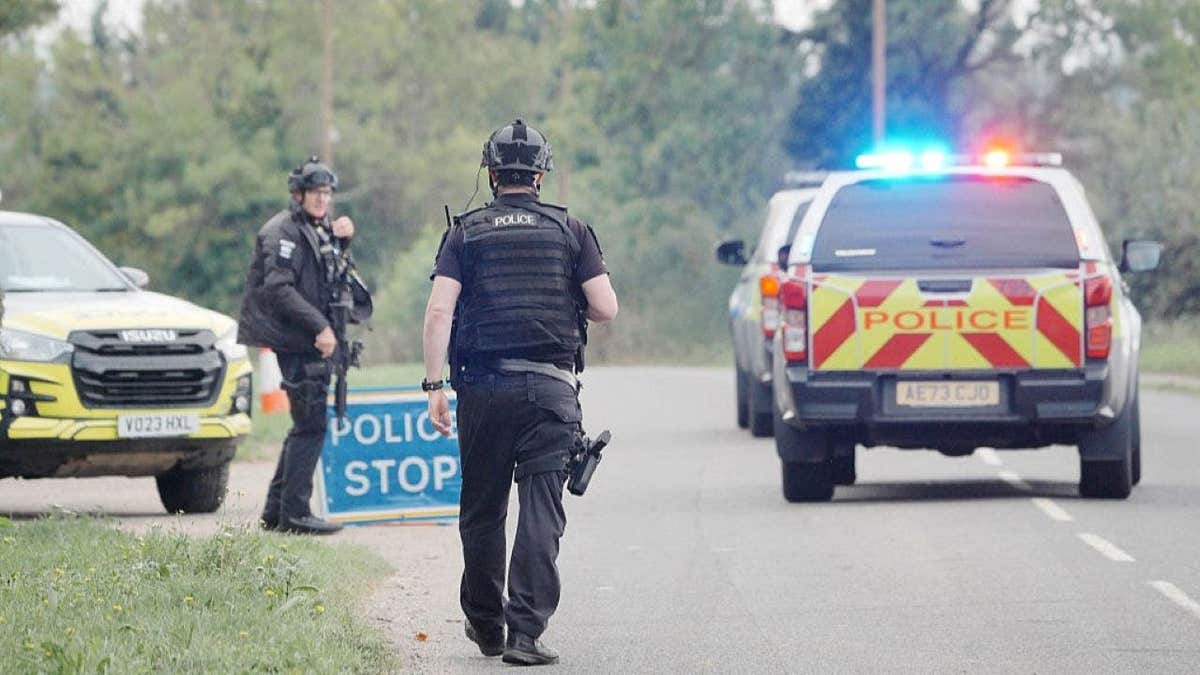
On Sunday, authorities arrested five men near the RAF Fairford base in Gloucestershire, UK, known for hosting U.S. strategic bombers. The arrests, initially on suspicion of offenses under Britain’s Explosives Act, have elevated concerns about a potentially complex and coordinated attack targeting American military installations globally.
Former U.S. intelligence and Pentagon officials have implied that the consequences may reach high levels of international diplomacy, depending on whether the investigation traces the attack back to Tehran. According to reports, President Donald Trump mentioned that U.S. authorities were monitoring the suspects before their capture, and he may decide the repercussions if Iran is found to be involved.
Counterterrorism police are working with U.S. law enforcement and intelligence in examining connections between the suspects’ activities and Tehran. Former Trump White House official Morgan Murphy emphasized that British and American intelligence would scrutinize every detail of the suspects’ activities to ascertain any links to Iran.
“Every phone, bank record, and rental receipt will be run through British and American intelligence, and if the trail leads to Tehran, it will be found,” Murphy clarified.
As global military protocols escalate, former Defense Intelligence Agency official Andrew Badger highlighted the sophistication of the operation, evidenced by the number of suspects and vehicles. He predicted increased security measures at U.S. installations worldwide.
The strategic importance of RAF Fairford, particularly in relation to operations in the Middle East, has heightened security implications. The airfield is crucial for housing U.S. bombers essential in operations against Iranian targets.
Authorities have not explicitly linked the plot to specific groups or motivations, but the involvement of five individuals and multiple vans suggests a well-orchestrated plan. This potential threat could have extended beyond the airfield, posing risks to the surrounding areas.
Recent tensions between Iran and Western nations underscore the gravity of the security threat at RAF Fairford. The U.K. has authorized U.S. forces to use the base for operations aimed at mitigating Iranian missile threats, which have been met with warnings from Iran’s Islamic Revolutionary Guard Corps.
Despite these developments, former officials caution against prematurely assigning blame to Iran without conclusive evidence, urging consideration of other actors such as Russia or Islamic extremist groups.
The incident has led to heightened vigilance across European military bases, including RAF Welford, known for storing significant U.S. ammunition. Increased security patrolling and alert statuses have been implemented, positioning regional military installations in a high state of readiness.
The unfolding investigation continues to reveal connections and potential threats, as authorities work diligently to ensure the security of U.S. forces stationed in strategic locations.