
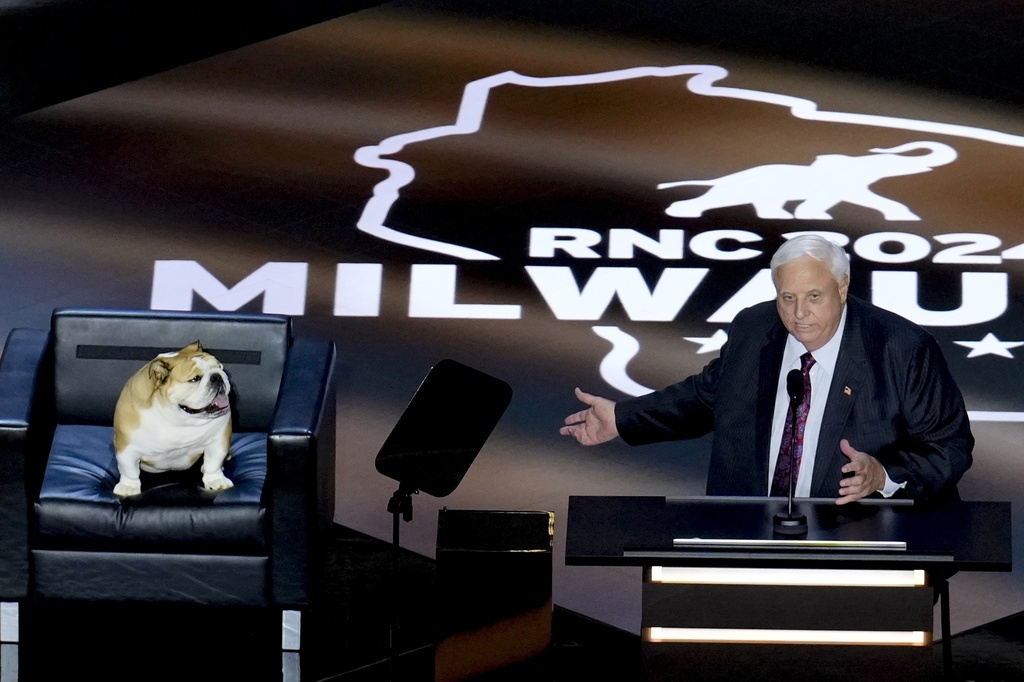
Governor Jim Justice of West Virginia, accompanied by his pet ‘Baby Dog,’ recently appeared at the Republican National Convention in Milwaukee. Reflecting on a moment nearly a decade ago, a legislative decision aimed at ending greyhound racing was in the spotlight. This legislation passed the state Legislature and reached Governor Justice’s desk. The bill intended to repeal a law mandating and subsidizing greyhound racing, which receives $19 million annually that could otherwise support infrastructure or healthcare. Despite these potential benefits, my motivation stemmed from a lifelong commitment to animal welfare.
As president of the Federation of Humane Organizations of West Virginia, I’ve led efforts since 1994 to advance animal welfare in the state. The 2017 legislation represented a significant shift away from an industry responsible for breeding thousands of greyhounds, many of which suffer injuries or are discarded when deemed unprofitable. When the governor vetoed the bill, I felt a profound disappointment. The race tracks remained open, subsidies persisted, and the greyhounds continued to suffer and die. Since that veto, approximately 4,000 greyhound injuries have occurred, including over 1,300 with broken bones, and 84 deaths on the track.
A promising development is now unfolding. A new bill to ban greyhound racing is progressing in Congress and soon faces discussion in the Senate Agriculture Committee, which includes Senator Jim Justice. The hope is that the senator will now advocate for greyhounds and vote for this change. A compelling personal element involves Babydog, a gift to the Justice family in 2019. Babydog gained fame as a central figure in West Virginia’s COVID vaccine campaign and even featured in Governor Justice’s 2022 State of the State address. However, symbolic politics involving Babydog should translate into policy change that benefits all greyhounds.
The current scenario involves dogs that face a grim existence on the race tracks. 44 states have already outlawed this practice, but still, it lingers here, buoyed by state subsidies. Now, an opportunity presents itself in the form of the farm bill. This bill allows Justice to extend the care his family pet enjoys to the greyhounds, ensuring they receive protection and a life free from exploitation.
A survey indicates 65% of West Virginian voters support the Greyhound Protection Act, with only 25% in opposition. Moreover, a study from Ball State University showed that greyhound racing yields no lasting employment benefits or GDP impact and persists solely due to financial support directed toward it. The study concludes there is no fiscal justification for maintaining greyhound racing in West Virginia.
After advocating for animals for nearly 30 years, I see more purposeful alternatives for the $19 million annually allocated to this declining industry, which the state’s residents no longer back. The Greyhound Protection Act presents Governor Justice with a rare chance for redemption in his political decisions. Although it’s uncertain whether Justice would choose differently today compared to 2017, he once provided the industry with an opportunity to change, which led to more avoidable suffering of 4,000 dogs.
Governor Justice should support the act, for the welfare of the greyhounds, for the future of West Virginia, and for the spirit of compassion represented by Babydog.
Theresa Bruner serves as president of the Federation of Humane Organizations of West Virginia.