
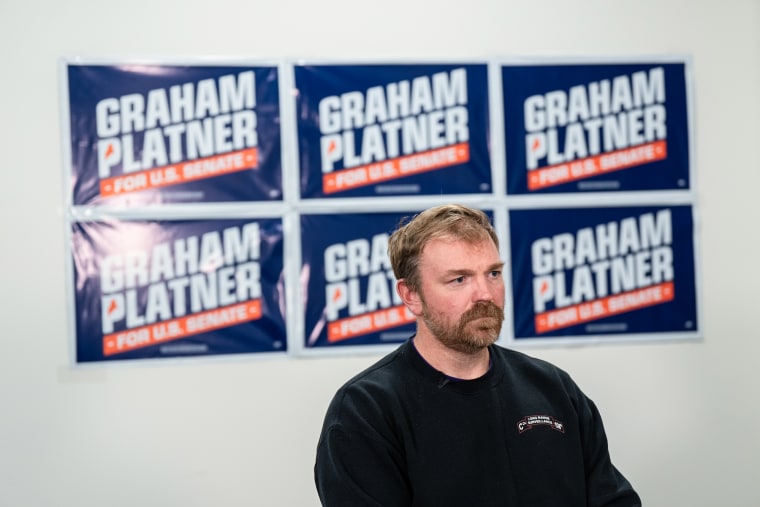
Graham Platner announced the end of his U.S. Senate campaign on Wednesday. This followed a period of turmoil and Democratic conflict, leaving the party without a candidate for the crucial Maine race in the upcoming fall election.
The populist progressive stepped down after a woman he previously dated accused him of sexual assault in 2021. His support dwindled rapidly as key Democratic figures withdrew their endorsements and urged him to exit the race.
In a video message on the platform X, Platner refuted the accusation as false but acknowledged the heavy toll it had taken on him. He noted that if he continued his candidacy, he would lose his ability to fundraise, access voter data, or operate a campaign effectively.
“What comes next needs to come from the people,” Platner stated. “It must be open, transparent, and democratic, reflecting the values of those who built this movement.”
Platner declared, “We are suspending campaign operations” due to structural challenges imposed by those in power, not because of the allegations.
With Platner’s departure, the Maine Democratic Party now faces the July 27 deadline set by state law to nominate a replacement candidate. The process for selecting a candidate within this limited timeframe remains uncertain. Many candidates are eager to face Republican Sen. Susan Collins, who seeks a sixth term.
On Wednesday evening, the state party announced its decision to conduct a nominating convention, promising a transparent timeline and clear guidelines for potential candidates.
Platner’s withdrawal was influenced by a firm warning from Senate Minority Leader Chuck Schumer and the Democratic campaign arm. They emphasized that the national party would withdraw support if Platner stayed in the race.
The situation intensified when several Democratic leaders, including Sen. Elizabeth Warren, Rep. Ro Khanna, and Sens. Ruben Gallego and Bernie Sanders, expressed their concerns and advised Platner to step down.
Maine Democrats face a challenging situation with little time to conduct a full primary. However, many see an opportunity to find a candidate with better odds of defeating Collins, who has been in office since 1996 and promised previously to serve no more than two terms, a promise she later broke.
Democrats need to gain four seats to take control of the Senate. Aside from Maine and North Carolina, the remaining opportunities are in states where Donald Trump had substantial victories in 2024: Ohio, Iowa, Alaska, and Texas. Maine is the sole blue-leaning state with a Republican senator.
Platner, a Marine veteran and oyster farmer, won the primary overwhelmingly on June 9 after two-term Governor Janet Mills, initially the preferred candidate of the Democratic establishment, withdrew in April.
Platner’s campaign resonated with the Democratic base through his straightforward and anti-establishment tone. He garnered support from prominent progressives like Warren, Khanna, and Sanders, even amid various damaging revelations during the campaign.
These revelations included a detailed account reported by Politico, where Jenny Racicot accused Platner of appearing at her home uninvited and intoxicated in 2021, alleging assault. Platner denied any nonconsensual behavior.
Despite prior support for his redemption story following combat service, the latest allegations led many of his allies, who felt deceived, to withdraw their backing. Platner had reassured Democratic leaders that such stories would not emerge.
Platner urged his supporters to continue advocating for the campaign’s values and policies, expressing hope for future victories.
“We’re going to win some day,” he assured them.