
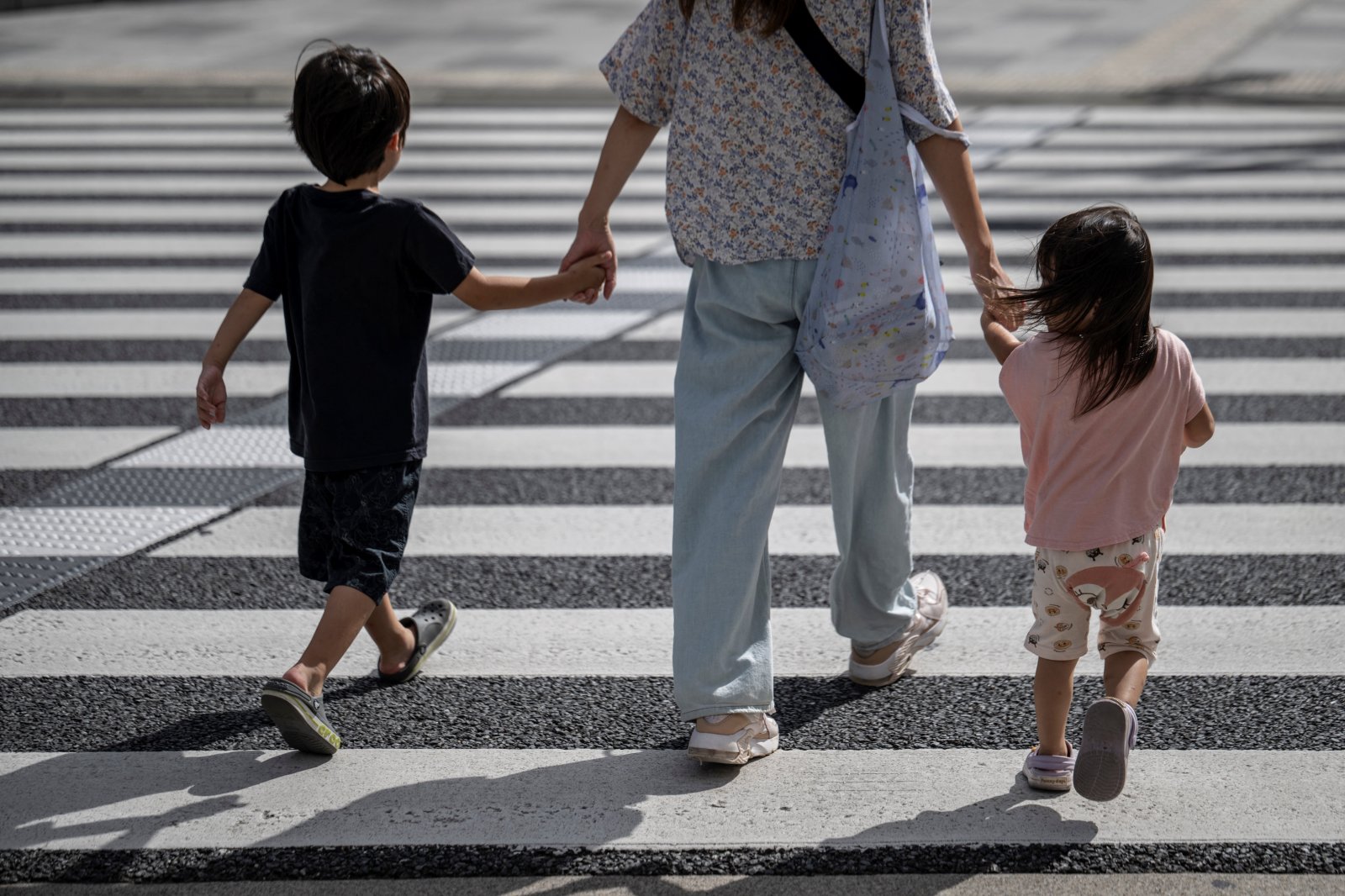
Governments globally are implementing financial incentives to encourage citizens to have more children due to falling birth rates and aging populations.
Declining birth rates create economic strain as fewer people are born to support the older population. This leads to stress on social programs like Social Security and Medicare in the United States, where more people use these programs than those contributing to them. Countries are introducing pro-family incentives, from direct payments for newborns to long-term childcare assistance.
Singapore
Singapore has expanded financial support due to its low fertility rates. Prime Minister Lawrence Wong announced measures to provide substantial assistance from birth through the formative years.
Each child will receive nearly S$70,000, equivalent to about $55,000 USD, in financial aid by age 17. This replaces the Baby Bonus Scheme.
The Baby Bonus Scheme includes cash gifts during the first six-and-a-half years, offering S$11,000, about $8,660 USD, for the first and second child, and S$13,000, about $10,236 USD, for subsequent children.
The Large Families Scheme, which provides an additional $16,000 for each third or subsequent child after February 18, 2025, will also be replaced. Despite these efforts, the birth rate remains low.
Prime Minister Wong emphasized, “Ultimately, the decision to have children is deeply personal. Policies alone cannot make this happen. But we can make it easier for Singaporeans who want children to start and raise a family.”
China
China is encouraging childbirth following the one-child policy shift. In 2025, a nationwide childcare subsidy was introduced, providing families 3,600 yuan, approximately $500 USD, annually per child under age three.
The subsidy is part of an initiative to boost childbirth and ease parenting costs. Local initiatives include larger payments such as monthly stipends for families with multiple children.
Zhang Benbo, a researcher from the National Development and Reform Commission, noted, “International practices show cash subsidies are indispensable for pro-birth measures.”
The program is expected to benefit millions centrally worrying about China’s aging population and workforce.
Japan
Japan faces demographic challenges with an aging population and low fertility rates motivating government initiatives for families. Measures include monthly allowances, childbirth grants, and expanded childcare services. New initiatives launching in 2026 aim to ease parenting costs and enhance childcare access.
Children’s Policies Minister Masanobu Ogura stated in 2023, “The next few years are possibly a last chance for Japan to change its declining birth rate trajectory.”
Efforts focus on reversing trends by supporting individual happiness and ensuring choices about marriage and childrearing are respected.
Officials link future economic strength to stabilizing population trends.
South Korea
South Korea, known for having a low fertility rate, invests billions in programs like the 2022 initiative giving birth mothers 2 million won, equivalent to about $1,500 USD. Monthly payments follow until children turn two, adding additional support.
Companies incentivize employees; for example, the Lotte Group offers vehicles and Booyoung provides $75,000 bonuses for additional children.
Booyoung chairman Lee Joong Keun projected a decline in national existence over 20 years, affecting economic productivity and security due to low birth rates.
South Korea saw newborn numbers rise in 2024, marking a nine-year high.
Sweden
Sweden provides monthly allowances based on child count but no direct cash bonuses for births. Parental leave, subsidized childcare, and income support facilitate family balance with careers.
Eligible children receive 1,250 SEK, about $132 USD, monthly. Extra supplements help larger families. Parents with two kids receive 150 SEK, about $15 USD; three children get 730 SEK, around $77 USD; four-child families get 1,740 SEK, equivalent to $183 USD; five or more receive 1,250 SEK monthly per child, equivalent to $132 USD.
Estonia
Estonia merges direct payments with broader support programs for larger families. Birth allowances and child-related benefits increase for households with multiple children alongside paid parental leave and childcare policies.
Families with 1-2 eligible children receive 80 euros per child monthly, equivalent to $93 USD, increasing to 100 euros for those with three or more children.
Government officials highlight the need for both direct financial support and practical assistance in fostering family formation.
Estonia’s family policy pairs financial aid with social programs, while birth rates have declined since 2021.
Finland
Finland combines cash benefits with family support programs, notably the baby box offering newborn essentials. Financial aid extends monthly payments until a child reaches 17.
Families may receive: 94.88 euros for one child, 104.84 euros for a second, 133.79 euros for a third, 173.24 euros for a fourth, and 192.69 euros for a fifth child, equivalent to $224.84 USD.
Despite these efforts, Finland experiences low birth rates among Nordic countries.
Anneli Miettinen, Kela research manager, remarked on the diminishing impact of family policies on fertility trends.
United Arab Emirates
The United Arab Emirates offers substantial childbirth-related financial support to Emirati citizens, while lower-income families may receive monthly child allowances and larger family perks.
Emirati citizens can get up to AED 220,000, equivalent to $60,000 USD, post-birth and additional monthly benefits through initiatives like NAFIS.
Support generally focuses on citizens, not expatriates, aimed at encouraging Emirati population growth.
Effectiveness of Cash Incentives
Governments expand family benefits while research debates direct financial incentive effectiveness. Studies suggest combining financial support and systemic policies may affect family planning.
Data indicates immediate impacts, though they rarely address long-term population declines, noting below-replacement fertility rates in developed areas.