
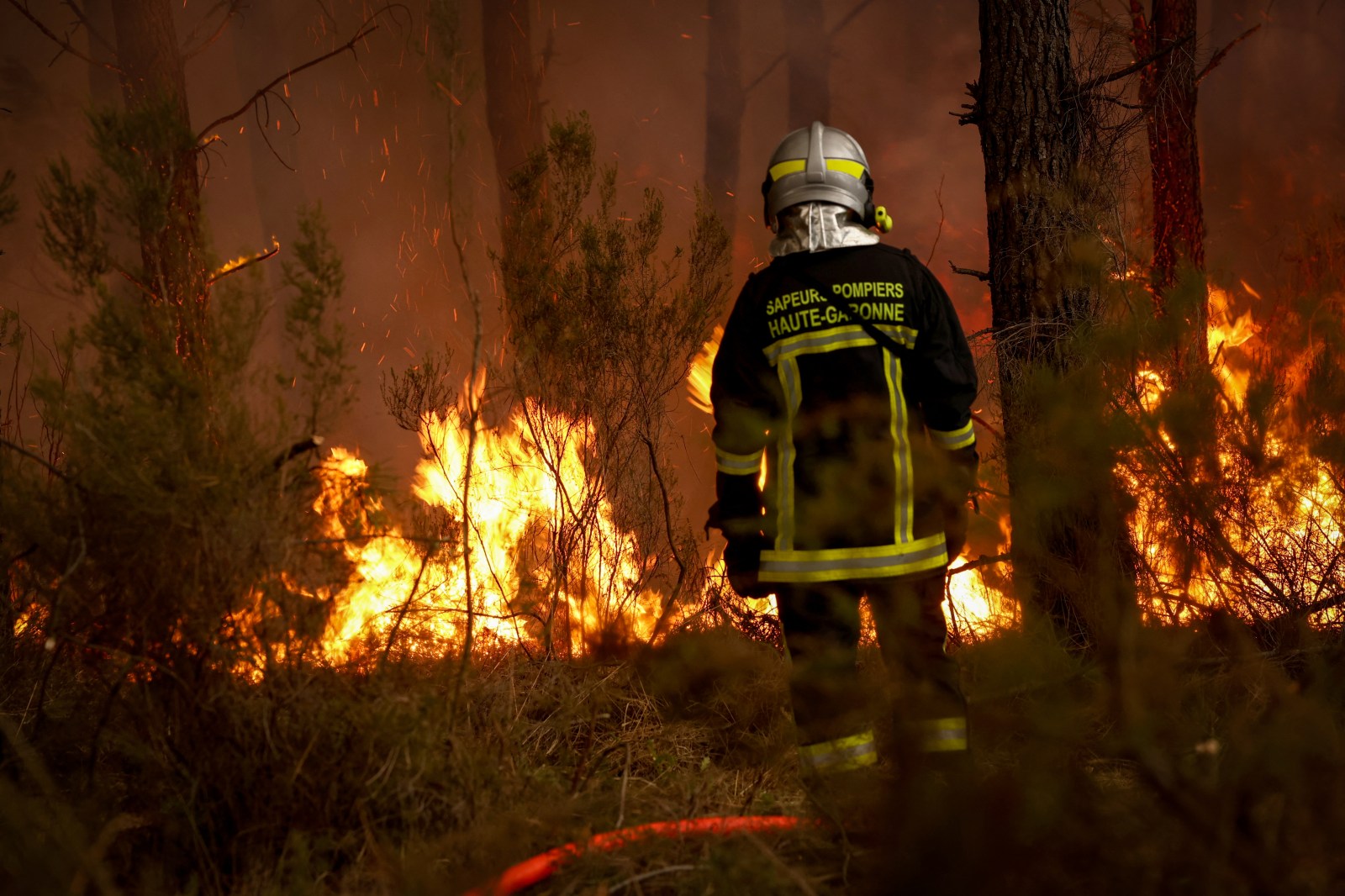
Wildfires are increasingly threatening urban areas, leading to evacuations and spreading smoke across borders. Both Europe and North America are facing severe blazes this summer. In southwestern France, wildfires are nearing Bordeaux, resulting in mass evacuations. In Spain, tens of thousands have fled fires in central and eastern regions. Meanwhile, across the Atlantic, Canada is battling hundreds of fires, sending smoke into the United States.
Patterns and Concerns
These fires are part of a broader trend linked to heat, drought, and vegetation dryness due to prolonged warm weather. Experts highlight that these factors are creating more hazardous conditions for fires in regions that once considered extreme wildfires to be rare occurrences. According to AccuWeather meteorologist Brandon Buckingham, wildfires have always naturally occurred but are now changing in number and intensity due to climate change.
Europe’s Fire Season
France and Spain are central to Europe’s current wildfire emergency. Fires near Bordeaux have prompted the evacuation of about 220,000 people in France. Over 100,000 individuals in Spain have also been forced to leave their homes. Reports indicate that fires in Madrid, Ávila, and Toledo have consumed more than 111,000 acres, with additional blazes in Castellón burning over 10,500 acres.
The situation is not yet the worst on record for Europe. The worst year was 2025, with 2026 not far behind. Nonetheless, as of July 22, more than 1,254 fires have been recorded across the EU, surpassing the long-term average of 569 by a significant margin. Brandon Buckingham attributes this to heatwaves and severe drought affecting much of Western and parts of Central and Eastern Europe.
Theo Keeping from Imperial College London notes that the fires in Spain and France are extraordinary in scale and spread, attributing the extremes to climate change, which makes such weather more common.
Other European Regions
Portugal is also affected by serious fires, such as in the Vouzela area, where substantial firefighting resources have been deployed. In Greece, fires have caused deaths and prompted evacuations near Thessaloniki and west of Athens. The U.K., too, is experiencing what has been described as a “firewave” during prolonged heatwaves.
North America’s Fire Season
North America is experiencing above-average fire activity as well. The U.S. has seen over 4 million acres burned, exceeding the 10-year average. Canada, the source of much cross-border smoke, has over 900 active fires as of late July and has burnt 3.7 million hectares.
The smoke from these fires poses public health concerns in the U.S., further emphasizing the wide-reaching impact of these events.
A Global Pattern
The same pattern is observable worldwide. Fires have been reported in North Africa, Japan, and South America. Japan saw substantial fires in Ōtsuchi, while Chile faced significant blazes in Biobío and Ñuble earlier this year. North Africa, facing extreme heat and strong winds, is experiencing severe fires, prompting international assistance in Tunisia.
Although no single fire is solely due to climate change, factors like ignition sources, land management, and firefighting capacity are critical. Nevertheless, climate change intensifies heatwaves and droughts, increasing the flammability of fuels. As a result, the start and end of wildfire seasons are becoming less defined, making them more unpredictable.