
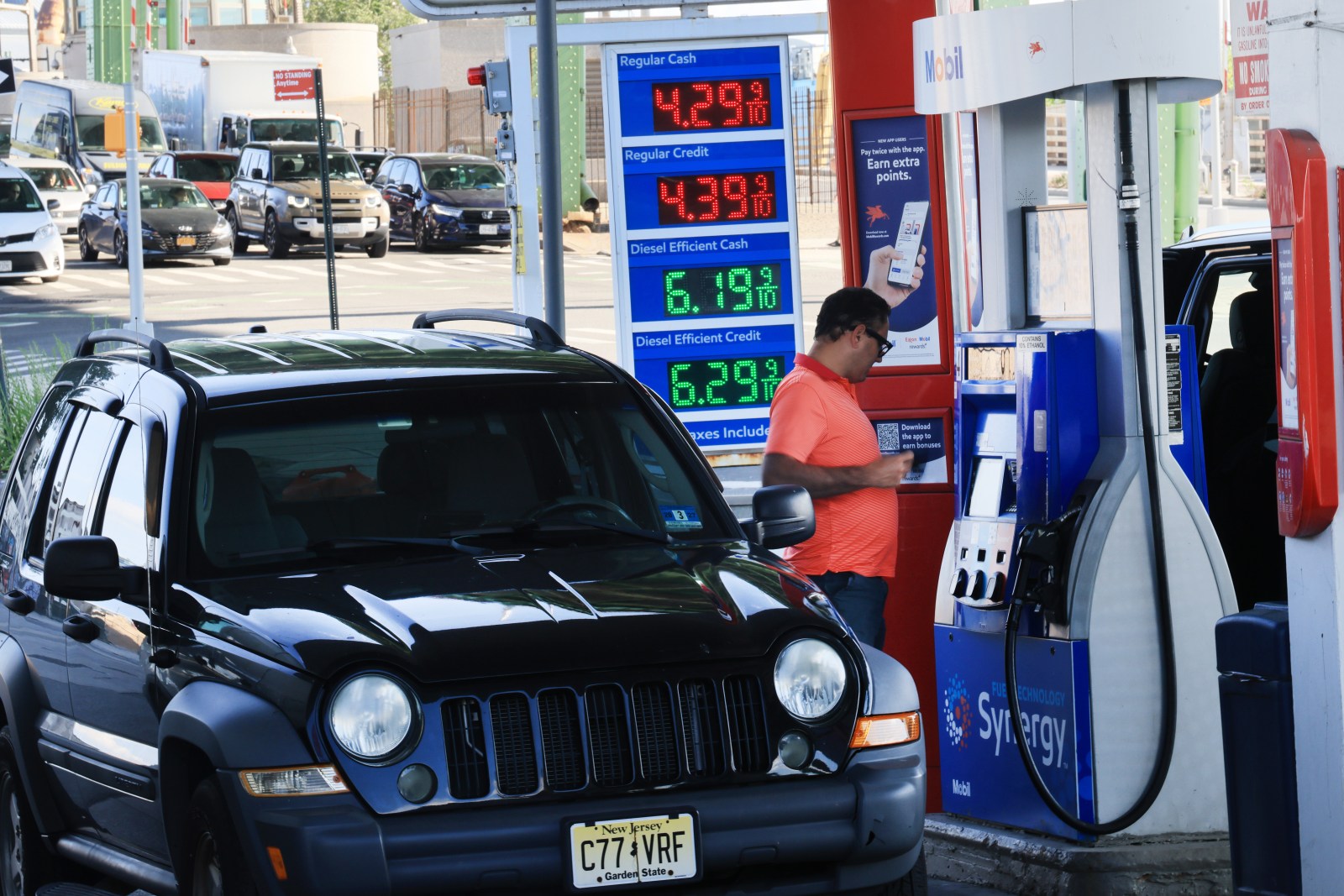
Drivers worldwide are experiencing a significant increase in gasoline prices, with an average of $5.89 per gallon reported this week by Global Petrol Prices. This jump of about a dollar since late February corresponds with escalations in conflicts involving Iran, impacting global energy markets. Prior to these developments, on February 23, before joint strikes by the U.S. and Israel on the Islamic Republic, the average global gas price was $4.92 per gallon. In the United States, gas prices mirrored this trend, rising from $2.98 per gallon around late February to a current national average of $4.28 per gallon, as reported by the American Automobile Association (AAA) on Thursday.
This increase translates to an additional $1.30 per gallon for American drivers since February 28, adding to the financial burden placed on them after disruptions in the global oil supply caused by Russia’s invasion of Ukraine in early 2022. According to Global Petrol Prices, data up to September 7 recorded a national average gas price in the United States of $4.42, slightly above the AAA’s figure of $4.15 per gallon for that day.
Patrick De Haan, head of petroleum analysis at GasBuddy, estimates that Americans are spending $377 million more each day due to increased gas prices. This results in a $4.63 billion additional surcharge weekly. Despite this, Americans have been somewhat shielded from the steepest price spikes that have impacted other regions. Based on Thursday’s AAA data, gas prices in the United States are approximately $1.61 lower than the global average.
Lowest and Highest Gas Prices Around the World
Since the conflict commenced, global fuel prices have risen due to the effective closure of the Strait of Hormuz, which previously accounted for a fifth of the world’s oil and gas flow. The lowest prices are found in regions with significant oil production or heavy fuel subsidies. In Libya, drivers pay just $0.09 per gallon, followed by Iran ($0.11), Venezuela ($0.132), Angola ($1.238), and Kuwait ($1.287). These prices remain well below the global average, maintained by subsidies and domestic oil markets.
Conversely, the highest prices were recorded in Hong Kong at $15.892 per gallon, followed by Malawi ($12.245), Norway ($11.765), Denmark ($11.100), and the Netherlands ($10.371). These countries impose significant fuel taxes and environmental levies, contributing to higher prices at the pump.
Despite steep prices, these regions haven’t necessarily experienced the worst effects from oil market disruptions. Australia recorded the highest increase in gas prices during the first month of the conflict, with a 42 percent rise between February 23 and March 23. Other significant increases occurred in Sri Lanka (33.8 percent), the United States (30.2 percent), Canada (25.2 percent), and Pakistan (24.4 percent). In these markets, retail fuel costs are closely tied to global crude price changes, reflecting geopolitical shifts quickly.
In contrast, prices in regulated or subsidized markets such as Saudi Arabia, Kuwait, Oman, Bahrain, India, and Bangladesh remained stable. These big oil producers often shield consumers from short-term price volatility in international oil markets.
Future of Gas Prices
Future gas prices depend largely on Middle East developments and the potential reopening of the Strait of Hormuz. The ongoing exchange of strikes between the U.S. and Iran suggests no immediate end to the conflict. Even if resolved quickly, prices may not decrease at the same rate they increased. Denton Cinquegrana, chief oil analyst at Oil Price Information Service, indicated it’ll take time to return to normal.
Patrick De Haan also noted the usual fall gas price drop, as U.S. gasoline demand reduces and winter gasoline is introduced next week, is uncertain. New tensions between the U.S. and Iran or ongoing attacks in Ukraine could prevent expected decreases.
Newsweek editors Ben Kelly and Shakeema Edwards were contacted regarding this story.