
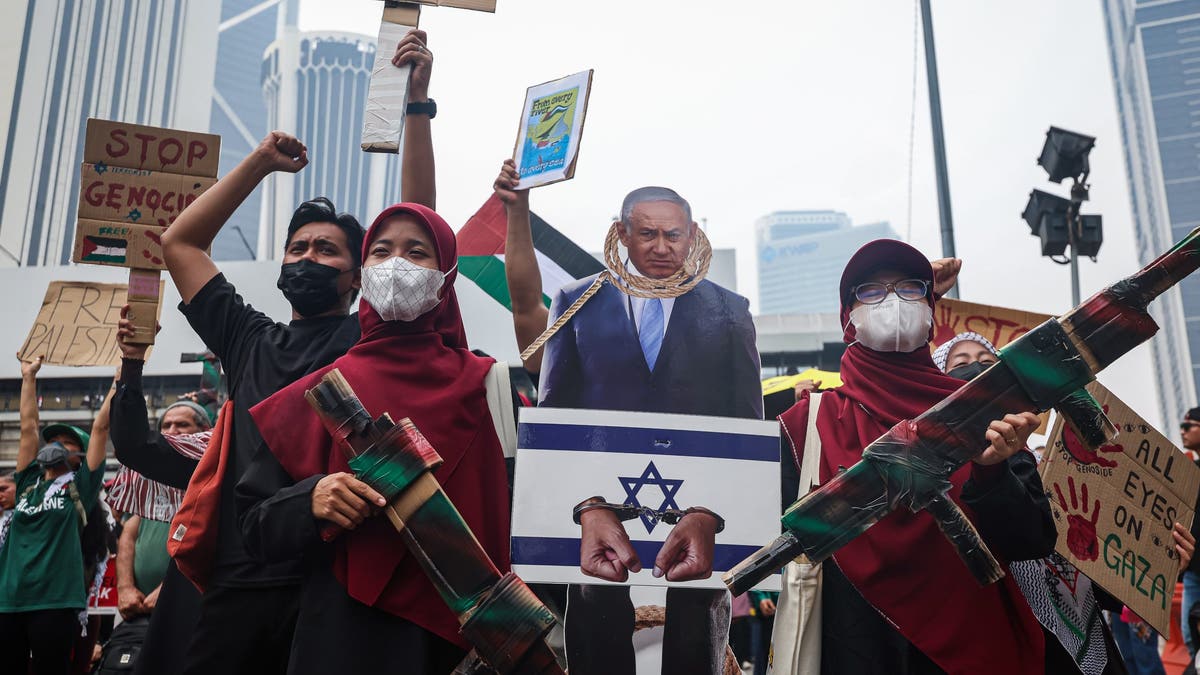
In Washington, D.C., demonstrators, including notable groups like CodePink, gathered for a global protest against Israel on a Saturday afternoon. This event was part of a worldwide effort to protest Israel’s actions, featuring marches and planned disruptions in multiple cities.
In Kuala Lumpur, Malaysia, protestors held emotionally charged signs, such as one with a Palestinian flag and a bloodied hand, demanding to “STOP GENOCIDE.” Some demonstrators used imagery of Israeli Prime Minister Benjamin Netanyahu with incendiary messages, highlighting the intensity of the protest.
This isn’t merely a symbolic march but a direct action campaign designed to interrupt normal activities.
A Fox News Digital investigation disclosed that preparation for this protest started well in advance. Organizers crafted specific messages, designed banners, and shared strategies to harness public outrage. Instructions were given for demonstrators to take aggressive actions like shutting down city areas and blockading entities seen as supportive of Israel.
Fox News Digital identified that 179 organizations joined this coalition. A Google Map published on their platform outlined 322 events planned across different days, including locations in Canada, Bangladesh, and South Africa, all utilizing “intifada”—a term linked to Palestinian resistance against Israel.
Documents revealed the global coordination aimed to blend international leadership with local activism. These efforts merged established visual branding and emotionally charged public messages with traditional media strategies.
One of the organizations involved, CodePink, received significant funding from Neville Roy Singham, a tech entrepreneur under scrutiny for his donations to various nonprofits. Allegations suggest that some of these nonprofits may act as covert groups influenced by foreign interests. CodePink has denied illegal activity.
Coordination among international organizations was visibly extensive, as seen when CodePink’s co-founder participated in related protests, linking diverse activist groups together.
Campaign materials emphasized strategic accusations against Israel, targeting media outlets and promoting political lobbying. The plan involved not just organizing protests but steering what the press and public perceive about the Israeli-Palestinian conflict.
Organizers utilized a suite of messages and visuals across multiple languages, intending to present a united front against Israel’s operations in Gaza. They wanted to influence public opinion by making their claims of “genocide” a recurring theme.
The overarching strategy involved creating synchronized protests on an international level, harmonizing student protests, rallies, and acts of civil disobedience across various continents.
The efforts were underscored by specific figures prominent in global politics who have histories of political activism and anti-Israel sentiments.
Beyond the street actions, the alliance’s objective extended into influencing legislative processes. They encouraged protesters to contact lawmakers, propose embargoes, and push for sanctions against Israel.
Instructions for local groups included disseminating media packages and ensuring cohesive public messaging, aiming to maintain sustained political pressure to achieve their goals.