
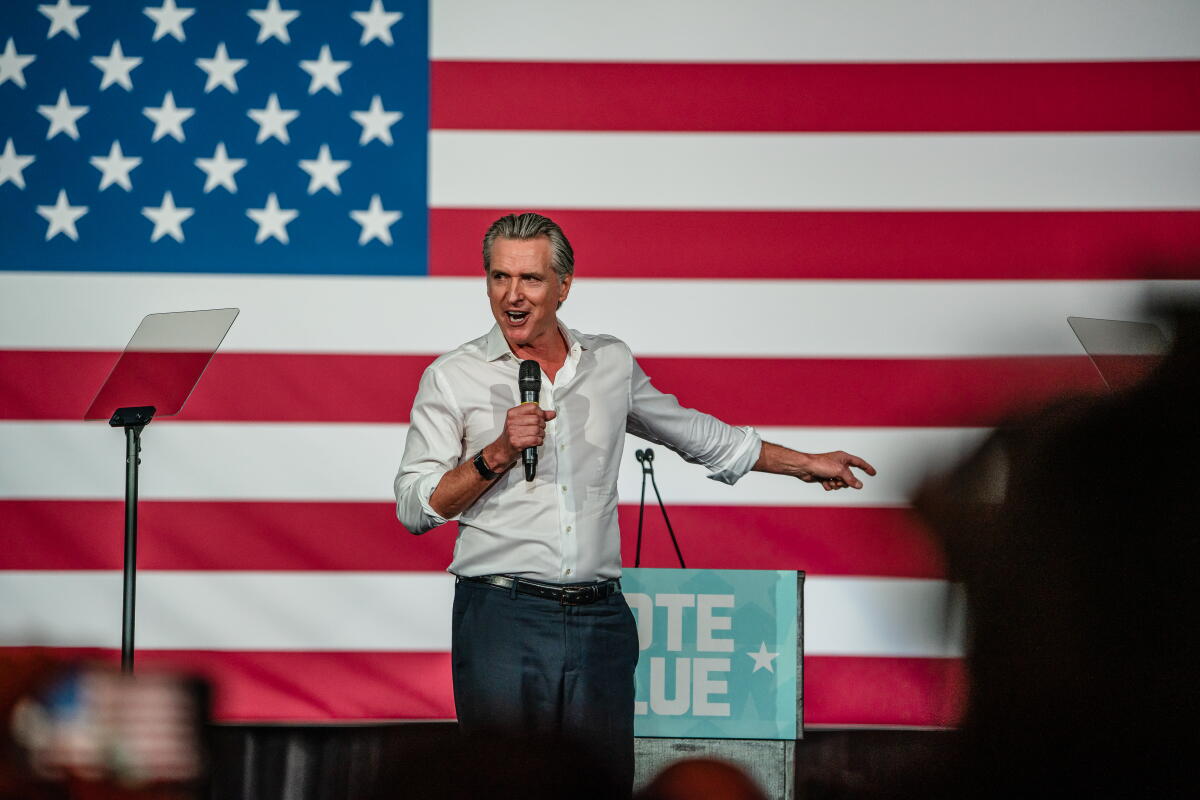
In 2018, while running for governor of California, Gavin Newsom expressed a preference for bold actions even at the risk of failure. Now, the governor is staying true to his word. On Thursday, he offered clemency to all inmates sentenced to death in the state. This decision may influence his potential presidential campaign in 2028. Newsom’s actions reflect his principles as a leader.
Newsom stated, “If my job is just to read the polls, you can have an AI chatbot as governor.” He emphasized the role of leadership over management, aiming to change public opinion. The decision is reminiscent of his actions as San Francisco mayor when he allowed same-sex marriages in defiance of federal law.
The governor’s tenure is marked by decisions like the COVID-19 stay-at-home order and the Proposition 50 initiative to combat gerrymandering. These moves highlight his reluctance to shy away from controversy. He sees these actions as rooted in his duty to stand against injustice. Newsom quoted Bryan Stevenson, noting economic disparity in death penalty sentencing.
“I couldn’t not have done this,” Newsom said. He felt an obligation to act against what he views as an unjust system.
The commutation affects 548 inmates. However, only about 40% fall directly under his power. The rest require approval from the California Supreme Court due to additional felony convictions. Previously, the court rejected similar efforts by former Governor Jerry Brown without explanation.
Capital punishment remains legal in California. Prosecutors can still pursue death penalty cases. Los Angeles District Attorney Nathan Hochman said his office will evaluate cases with due diligence. Some officials, like Sacramento County Sheriff Jim Cooper, oppose the commutations. They cite cases like Luis Bracamontes, sentenced for killing law enforcement officers, as reasons for their disapproval.
Critics view the move as politically motivated, potentially benefiting Newsom’s future ambitions. However, Michael Hestrin from Riverside County argues that the decision ignores justice for victims. A Pew Research Center poll from August indicates that two-thirds of Americans support the death penalty, which could influence Newsom’s reception as a national candidate.
Political analyst Gar Culbert posits that the decision might enhance Newsom’s standing with the Democratic base. He argues that Newsom’s stance on the death penalty aligns with progressive values. Still, Culbert acknowledges the unpredictable nature of elections.
Newsom instituted a moratorium on executions shortly after taking office, dismantling the death chamber at San Quentin. His successor, Xavier Becerra, intends to uphold this pause. The governor mentions he would regret inaction. He emphasizes a desire to leave office without doubts about missed opportunities.
With his term nearing its end, Newsom is focused on taking action aligned with his beliefs. He said, “If others aren’t willing to do it, you know what? I’ll raise my hand.”