
France is grappling with a significant intelligence setback following massive protests that spiraled into riots and looting. French President Emmanuel Macron has called for a security review after officials admitted losing control in key cities. Some officials offered their resignations after failing to foresee the chaos.
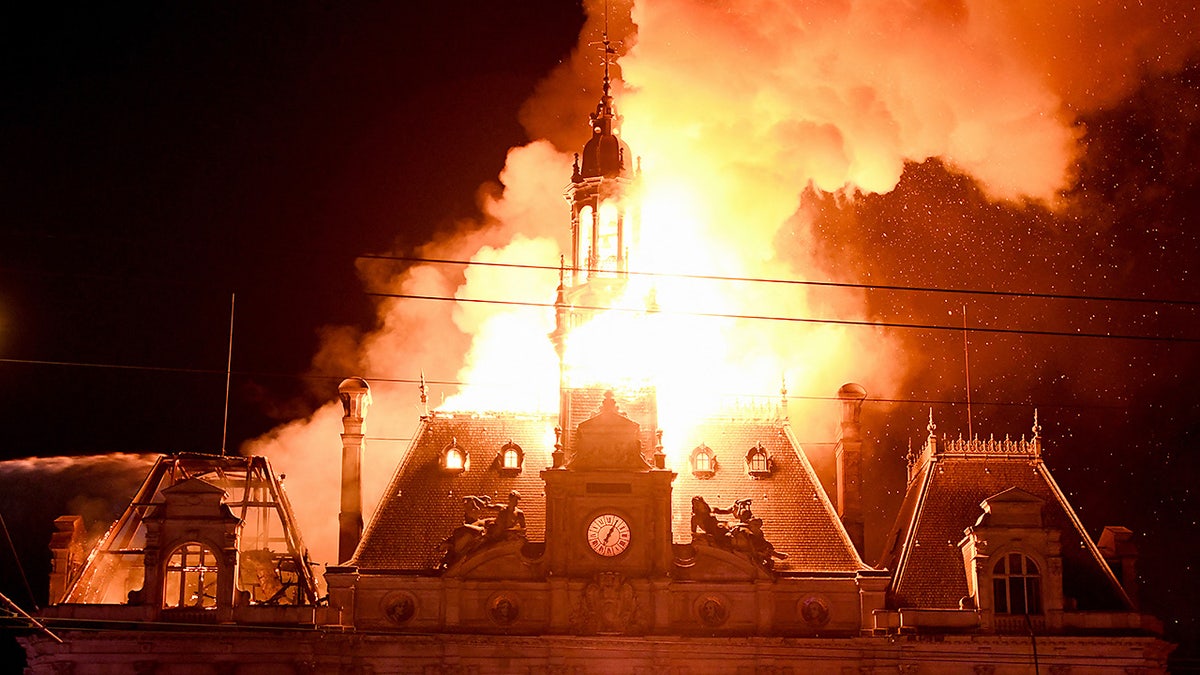
The French Interior Ministry reported that approximately 550,000 people participated in 110 nationwide marches. This turnout drastically exceeded the intelligence forecast of about 200,000 demonstrators. Organizers claimed an even higher turnout of 800,000. The unrest resulted in burning cars, over 1,500 ransacked or destroyed stores, and attacks on public buildings throughout the nation. In Limoges, riots led to the burning of a 19th-century city hall, whose roof collapsed.
By Monday, the Louvre remained closed as student protests blocked its entry points, extending disturbances into another day.
Security Challenges
The weekend’s violence overwhelmed about 60,000 police, gendarmes, and security personnel across France. Nearly 1,000 law enforcement officers and firefighters were injured, with at least 2,400 arrests reported. Authorities estimated that approximately 3,000 businesses suffered damage.
As protester numbers grew, law enforcement faced multiple flashpoints, with masked rioters attacking storefronts, setting fires, and clashing with security forces. In some areas, officers struggled to prevent looting in commercial zones, despite efforts to quell the larger protests.
Interior Minister Laurent Nuñez publicly acknowledged the situation, stating, “Yes, Saturday, in certain large cities, we lost control.” He admitted to a “lack of anticipation” about the protests and the violent groups that took advantage of the unrest. Nuñez offered his resignation to Macron, who refused and instead ordered a review of the failures in planning and intelligence.
Justice Minister Gérald Darmanin also acknowledged the mistakes, specifically pointing out intelligence shortcomings and challenges in addressing ultra-left factions.
Background and Escalation
The unrest originated in September with high school protests over teacher shortages and poor school conditions in Paris. The movement quickly gained momentum, involving teachers, labor unions, and others frustrated by rising living costs and deteriorating public services. Violence became more common as students set fires, torched cars, and confronted riot police, resulting in thousands of arrests.
French intelligence services had identified a “tipping point” in early October, noting a shift toward urban violence. Despite this, authorities were unprepared for the scale of the demonstrations that later unfolded.
On Saturday, diverse groups—including students, trade unionists, and Yellow Vest veterans—joined under a single “convergence of struggles.” While hundreds of thousands marched peacefully, smaller groups engaged in looting and arson.
Political Ramifications
The violence has sparked a political debate on immigration. President Donald Trump criticized France’s migration policies, suggesting migrants were responsible for the chaos and calling for border closures. European right-wing leaders have echoed this sentiment.
French authorities, however, attribute the violence to ultra-left militants and criminals exploiting economic grievances, rather than immigrants. The unrest is reshaping political discourse ahead of France’s 2027 presidential election, providing right-wing parties with ammunition on issues of immigration, crime, and public order.
Marine Le Pen’s National Rally has used the events to argue that Macron’s government is losing control, while other right-wing figures advocate for stricter policing and immigration policies.
The recent riots have intensified debates on policing, economic discontent, and government policies on immigration, with potential long-term impacts on France’s political landscape.
Macron’s administration faces immediate scrutiny over how security services, despite monitoring an increasingly unstable protest movement, failed to predict the weekend’s violent escalation.