
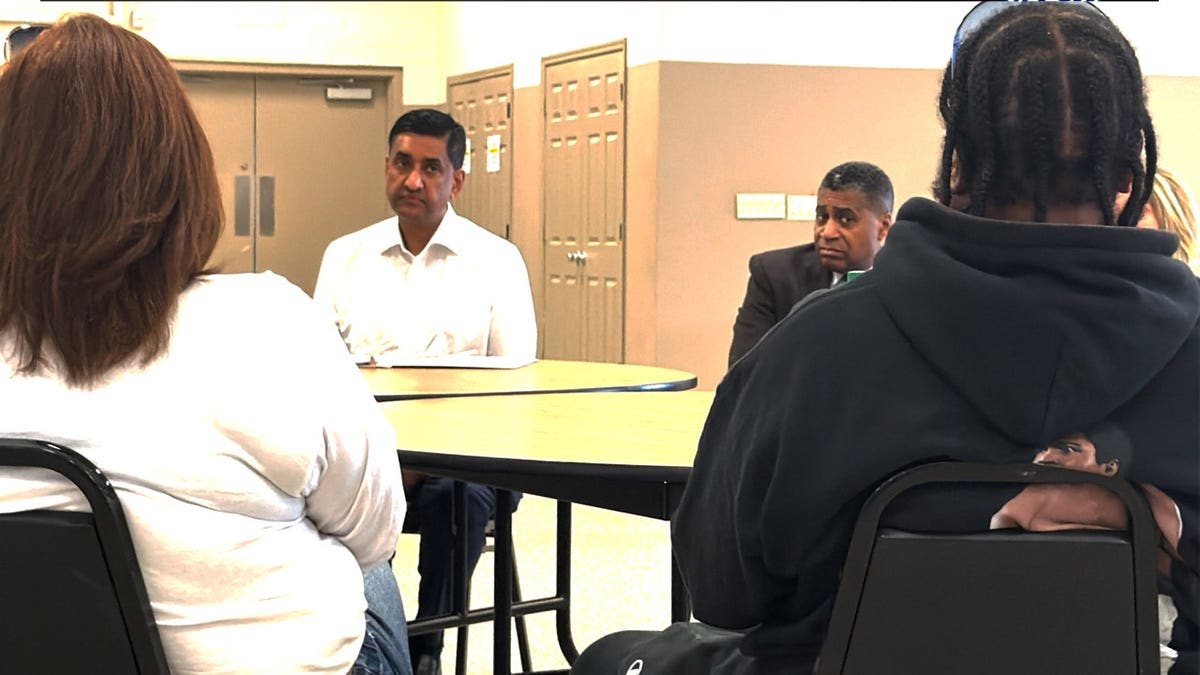
In Dayton, Ohio, former workers from Fuyao Glass America Inc. gathered to discuss their challenging experiences while employed at the factory, which has connections to China. This event took place at the International Union of Electrical Workers, attended by one of the prominent U.S. congressmen, Rep. Ro Khanna.
Tiffany Moore, who worked at Fuyao for three years, described the harsh conditions, particularly the intense heat in the factory, stating, “The heat in there is unbearable; they don’t care.” Her comments were part of a larger conversation with Rep. Ro Khanna, a Democratic congressman from California, who was there to oversee congressional activities focusing on issues related to the Chinese Communist Party (CCP).
Khanna, a member of the House Select Subcommittee on the CCP, visited Dayton to perform oversight duties on Fuyao. He previously requested Fuyao to submit a comprehensive packet of information regarding wage suppression, worker conditions, and potential violations of U.S. immigration and labor laws. However, Fuyao’s response was reportedly insufficient, as pointed out by Khanna in his communication with the company dated October 1.
“A generous interpretation of your approach toward this investigation would be that Fuyao does not appreciate Congress’s oversight function and the American system of government,” Khanna highlighted in his letter.
Despite not receiving permission to visit the factory in Lorraine, Ohio, Khanna continued his work, holding a roundtable discussion with several former Fuyao workers.
Former employee Demetria Hodges shared attempts by Fuyao to prevent unionization, describing the use of scare tactics and a temporary pay raise that wasn’t sustained.
Another former worker, Darrell, recounted a tragic incident involving 57-year-old Ricky Patterson, who died in an industrial accident. Darrell noted that work continued immediately after the event, adding stress to the already tense environment. “When that guy got smashed by … glass, we had to work the next day,” he shared, highlighting the continuous pressure faced by employees.