
In the early hours of Sunday, a farmer in the village of Whelford, England, encountered a suspicious scene. Three white vans stood near an air base, with masked individuals fleeing into the nearby fields. The farmer quickly contacted police, leading to the arrest of five men on suspicion of explosive offenses. Authorities later charged them with preparing a terrorist act. The response was swift, evacuating 85 households while bomb-disposal teams inspected the vans parked close to an RAF Fairford runway used by American bombers in past operations against Iran.
This situation may present a pivotal moment for President Donald Trump, who has expressed frustration with NATO allies. In March, after efforts to secure assistance for reopening the Strait of Hormuz were rebuffed, Trump criticized NATO as a “one way street.” The Fairford incident now appears as a more direct test of NATO’s mission: defending allied soil. Fortunately, the potential threat was neutralized without injury. For the geopolitical scene, this serves as a potent reminder of the risks faced by countries hosting American military assets.
If investigators find connections to Iran, the situation could provide Trump with grounds to question allies. He may press those who rejected participation in strikes on Iran about their stance on a threat emerging on British soil. Whether a commitment to military action against Iran will satisfy Trump is uncertain.
Preliminary investigations suggest the van contents align with improvised explosive devices. Police have not shared details on the suspects’ nationality, intentions, or specific targets. An insider remarked to Reuters that an Iran-related motive is under consideration, alongside possibilities of Russian interference or an Islamist plot. Trump’s initial comments suggested the men were planning significant damage, a stance not officially corroborated but consistent with threats from Iran’s Revolutionary Guards in the past. The Guards had previously declared any bases used against Iran, including Fairford, as legitimate targets.
Iran maintains sleeper cells globally, raising questions about their involvement in this case. As investigations continue, results are anticipated shortly.
Strategic Implications for NATO
Though the Strait of Hormuz lies outside NATO’s jurisdiction, Trump’s call for allied involvement argued for the strategic impact if Iran remained unchecked. Allies offered limited support, like the U.K. allowing U.S. operations from its bases, but avoided joining the strikes directly. Conversely, Fairford’s location places it squarely within NATO territory, linking any international-directed armed attack on the base to discussions around Article 5 of the NATO charter, which states an attack on one member is an attack on all.
NATO evaluates the Article 5 invocation case-by-case, typically excluding domestic terrorism unless an international dimension exists. For the U.K., the presence of U.S. forces on its soil, potentially under threat, might necessitate a collective NATO response. The sole Article 5 event followed 9/11, offering nations flexibility in assisting as they deemed necessary.
The less complex Article 4 allows a member to call for consultations on addressing an incident. This tool was recently used concerning suspected Russian drone activities over NATO territories.
Potential Responses and Challenges
A previous NATO response occurred when Turkey reported an Iranian missile nearly entering its airspace. Although Iran denied targeting Turkey, NATO ambassadors condemned the incident and reinforced defense measures. Comparatively, the deliberate planning evident in the Fairford situation presents a distinctly different challenge.
European leaders contend with Trump’s desire for shared military endeavors that they did not initiate. Their initial disagreement with Trump’s approach to the Iranian nuclear issue and commitment to a 2015 deal adds complexity.
Germany’s defense minister, Boris Pistorius, summarized the European stance in March, stating, “This is not our war.” Berlin criticized Washington for limiting consultations and expressing that European help was unnecessary.
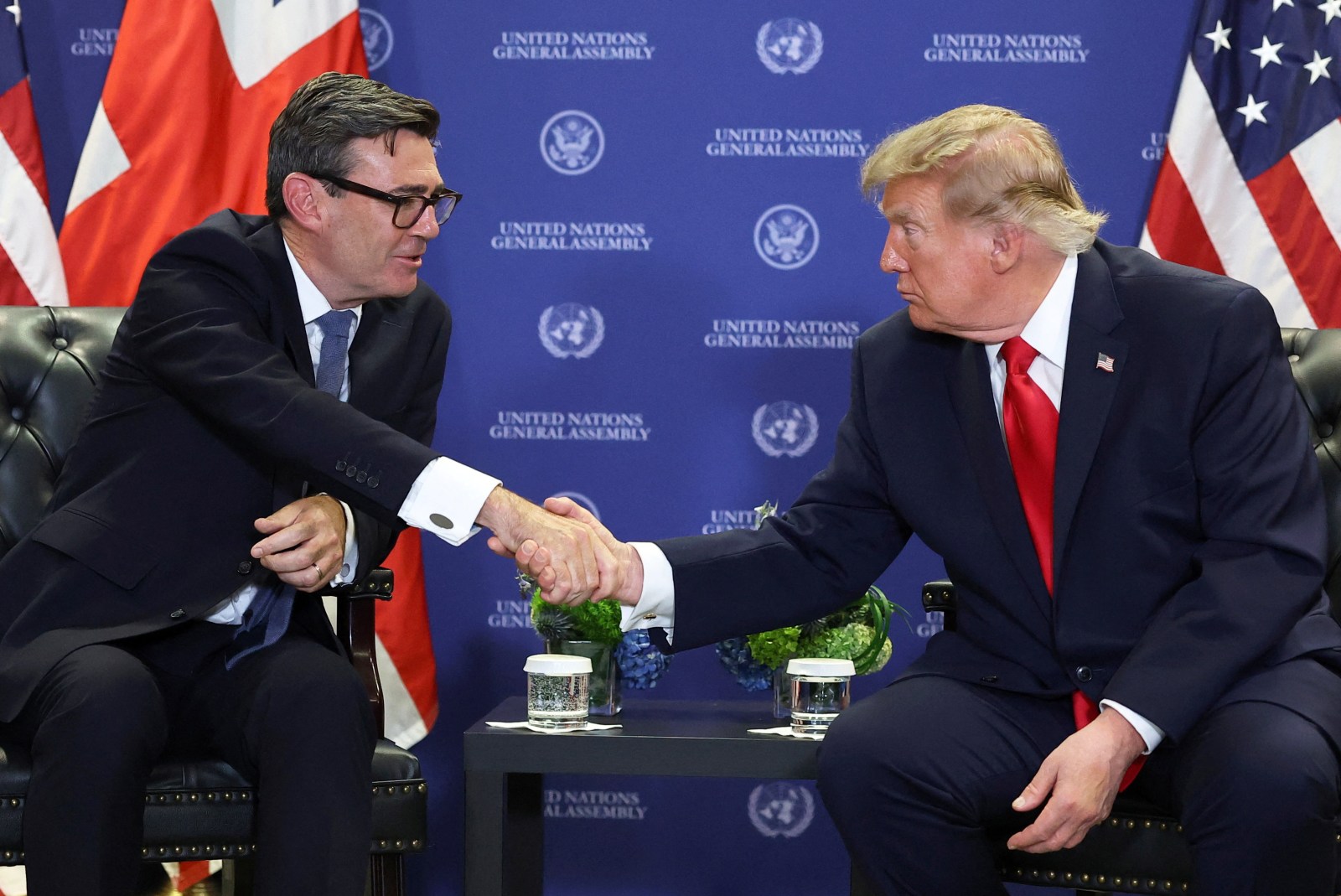
The current dynamic at Fairford contests Trump’s notion of a “one-way street.” The U.K.’s cooperation in allowing U.S. bases for defensive maneuvers demonstrates allied support, which Prime Minister Andy Burnham sustained upon taking office.
NATO’s Secretary General Mark Rutte acknowledged the crucial role of European bases in the U.S. campaign, asserting their indispensable role. Trump’s aim for a unified NATO response against Iran highlights ongoing tension. As he contemplates resuming strikes post-midterms, still unresolved diplomatic efforts might shape future strategies.
The commitments after 9/11, primarily in intelligence-sharing and operational support, provide a potential template for NATO’s response. Allies can offer various support channels without engaging directly in strikes, yet may still fall short of Trump’s expectations.