
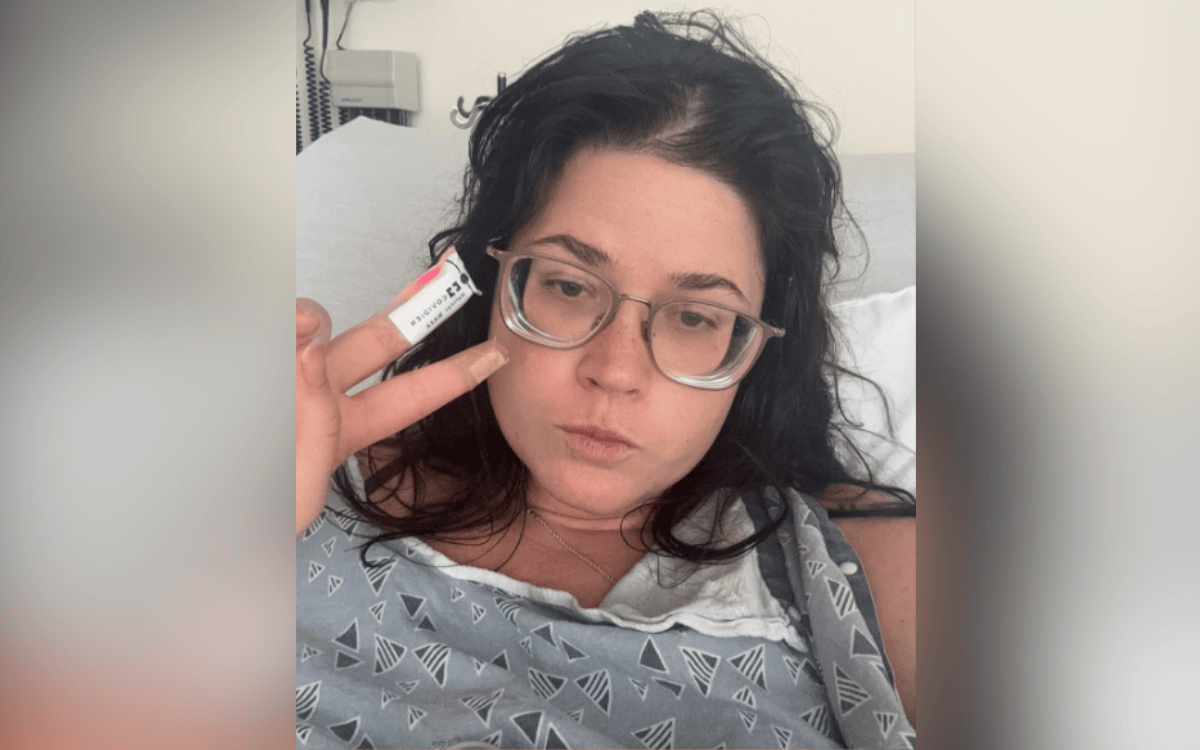
When Destiny Amos went to the emergency room, she suspected low blood sugar was behind her dizzy spells and brain fog. To her surprise, a CT scan revealed a different cause. Amos, from Jacksonville, Florida, can’t recall when her symptoms began but noticed they worsened in June.
“I began feeling very dizzy and swaying even when standing still. I had constant brain fog, pressure on the lower left side of my head, and episodes of numbness on the left side of my face,” Amos told Newsweek.
She felt unusually anxious, sensing something was seriously wrong in her body. One night, she awoke disoriented, not recognizing her surroundings.
“I was extremely unsteady and dizzy, felt nauseous, and my heart raced,” she said. Her mother called 911, and Amos was taken to a nearby ER.
Explaining her symptoms to her doctor, Amos mentioned “episodes of low blood sugar,” wondering if her dizziness and nausea were related. Her doctor ordered CT scans of her abdomen and brain. Upon returning with the results, he told her, “This explains your symptoms.”
The CT scan showed a roughly 3 cm suspected meningioma in the posterior fossa area, pressing against her cerebellum, causing mild mass effect. Meningiomas are tumors forming in the membranes around the brain and spinal cord. They are usually noncancerous and the most common primary brain tumor in adults, accounting for about one-third to 40 percent of cases in the U.S.
According to the American Brain Tumor Association, women are more often affected by meningiomas than men, with risk increasing with age. Though classified as brain tumors, they originate from the meninges, the three thin layers covering the brain and spinal cord.
After the scan, Amos transferred to a larger hospital for an MRI, giving doctors a better look at the tumor. She stayed in the hospital for a month before undergoing surgery.
“I never left the hospital after the diagnosis,” she said. “I was shocked and scared, but many symptoms I’d experienced made sense.” Over the years, Amos faced symptoms told to be due to anxiety, low iron, or thyroid issues. She battled extreme fatigue, blurry vision, heat intolerance, brain fog, pressure headaches, and more.
“A tumor in the posterior fossa, near the cerebellum, can affect coordination and balance, and is associated with alertness and stress response pathways,” she noted.
While unsure if the tumor caused all her symptoms, its presence suggests a neurological component to some. “It was overwhelming, especially preparing for brain surgery, but finding an answer brought relief,” she said.
Amos underwent surgery on August 24. Doctors later discovered the tumor was calcified, indicating it had been present for some time and believed it was completely removed. A biopsy confirmed it was benign.
Amos described recovery as a “slow process” but felt fortunate surgery went well. “I struggle with concentration and short-term memory, experience shooting nerve pain around the incision, ringing in my ear, and headaches,” she said. “Some days are good; others feel like a step backward.” Her doctors anticipate a return to normal within three months.
Amos continues to process the rapid sequence of events. “I randomly cry when overwhelmed or reflecting on all that’s happened,” she shared. Despite this, she’s connected with others who underwent brain surgery, hoping her story comforts others.
“I’m still healing and figuring things out, but if my story eases someone else’s fear, it’s worth it,” she stated.