
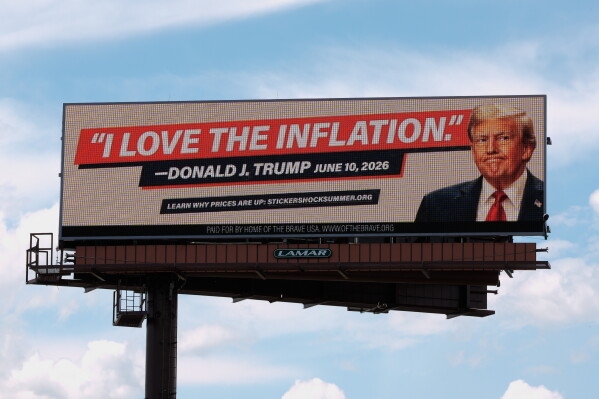
Federal Reserve Chair Kevin Warsh announced that the Fed aims to eliminate high inflation but did not outline specific future actions. He emphasized the central bank’s intolerance for sustained inflation and a firm resolve to achieve price stability. However, the rate-setting committee is divided, with some members planning to raise interest rates by year-end, while others support holding or lowering them.
Warsh addressed the House Financial Services Committee shortly after reports showed a 0.4% drop in inflation from May to June, primarily due to declining gas prices. Core inflation, excluding energy and food, remained stable, indicating a broader slowdown. Year-over-year, inflation decreased to 3.5% from 4.2% in May, and core inflation rose 2.6%, a positive sign, although above the Fed’s 2% goal.
The cooling inflation data reduces the urgency for interest rate hikes. However, renewed Middle East conflicts have increased oil prices, potentially reversing inflation progress. Warsh cautioned against viewing recent data as a victory, stressing that inflation is not yet controlled.
“There might be some that look at this morning’s data and say, ‘mission accomplished,'” Warsh said. “That is not my view.”
Warsh refrained from giving guidance on interest rates, maintaining his policy of reduced communication. The Fed’s rate-setting committee will meet again on July 28-29 to discuss further actions. Under questioning, Warsh elaborated on pulling back from “forward guidance,” indicating transparency about future methods to address issues when decisions are made.
On potential political pressures from President Donald Trump, Warsh expressed his commitment to following the law, data, and prudent judgment. He referenced the Supreme Court’s decision supporting Fed independence by allowing Fed Governor Lisa Cook to remain on the board despite Trump’s attempts to remove her, reinforcing the bank’s autonomy.
The ongoing Iran conflict has driven up oil prices after declines to near pre-conflict levels, with gas prices increasing by about 35% since the U.S. attacked Iran on February 28. Some Fed officials suggest sustained underlying inflation necessitates higher interest rates.
The significant investment in artificial intelligence by major tech companies like Alphabet, Microsoft, Amazon, and Meta is another factor potentially increasing inflation. Rising demand for memory chips and processors has increased costs for electronics. Warsh noted AI as a key economic driver and assured monitoring its inflationary and employment effects.
While Warsh withheld specific guidance, other Fed leaders have voiced opinions. Fed Governor Christopher Waller indicated that another strong inflation report could prompt near-term rate hikes. Yet, John Williams of the Federal Reserve Bank of New York suggested that maintaining a 0.2% monthly core inflation could allow stable rates while monitoring the evolving data.