
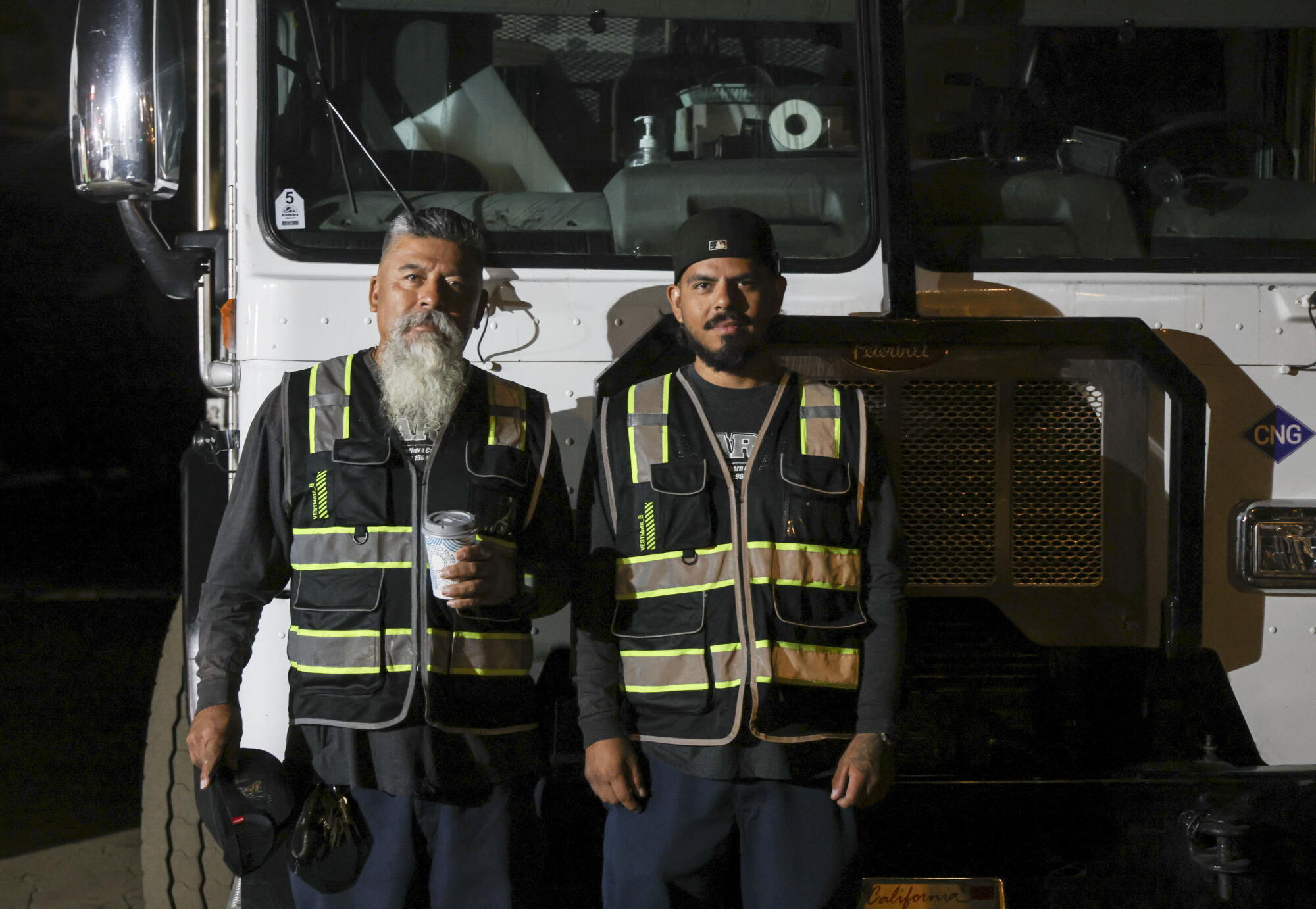
In Escondido, California, at 4 a.m. on a Thursday, Salomon Olea set off for another workday. He took a packed lunch of a ham-and-cheese torta and a white peach. Salomon kissed his wife goodbye and left the home he had owned for nearly 30 years. He drove briefly to a nearby apartment to pick up his son, Angel, while Angel’s three children were still asleep. The two then drove in silence for thirty minutes, their car lights piercing the darkness of empty streets.
Both Salomon and Angel drive commercial trash trucks for a private company. They spend a dozen hours daily on the same route around San Diego’s northern suburbs, collecting recycling and trash from various locations like schools, restaurants, and even a church. Despite being exhausting, this work has provided Salomon, now 55, with a stable life. For his generation, such laborious jobs offered paths to the American dream.
Shifting Opportunities
During the 1980s and 1990s, men without college degrees saw incomes rise relative to the average U.S. worker. In that period, more than two-thirds of construction workers and mechanics managed to own homes. However, recent times have proven different. Wages have stagnated while home prices have surged, and under half of laborers now own homes. Angel, 33, remains a renter while saving for a future home. He sees the life his father achieved and wonders why similar efforts seem insufficient today.
Starting the Day Early
Angel and Salomon arrived at the truck depot before sunrise. They wore uniform long-sleeved shirts and striped vests like the other drivers, many of whom traveled from Tijuana the previous night. As they prepared for their day, they watched a safety video before receiving their routes, written on paper.
Angel got into the cab of his Mack truck, ensuring all was in order before he started. As 5:30 a.m. approached, the engines roared to life, marking the beginning of another workday through San Diego’s streets.
A Childhood Dream
As a child, Angel dreamed of being a trash man, inspired by his father’s work. Salomon began in sanitation at 23, seeking steady employment after a series of odd jobs. His wife’s cousin introduced him to the industry, where he worked diligently, eventually obtaining his commercial driver’s license. In four years, through hard work and overtime, Salomon bought a home for his family in Escondido.
During Angel’s childhood, they lived in a complex where an incident with a property manager pushed Salomon to ensure his son had a yard. His own parents died young, and Salomon, raised by an older sister, immigrated to the U.S. as a teenager. In a decade, he became a U.S. citizen and fulfilled the dream of homeownership.
Challenges Along the Route
Angel’s route often starts at businesses like McDonald’s, where he carefully checks for people sleeping in trash bins. With over 5,100 people unsheltered in San Diego County, such encounters are common. Many, Angel notes, sleep in their cars, indicative of the prevalent housing crisis. In the county, 38% of households spend over a third of their income on housing, highlighting a burdensome cost.
Angel, with his family of five, pays $2,800 monthly for a two-bedroom apartment. Saving for a home proved challenging, especially with life’s unexpected expenses such as car repairs and dental bills depleting their savings. As home prices climbed, they contemplated relocating further from work, allowing dreams of homeownership to fade.
End of the Workday
As the day progresses, trash pickups become more challenging under the sun. Salomon and Angel finish their routes, with each depositing the trash and recycling at different locations before returning to the truck yard. After a thorough clean-out, they head back, wrapping up another 14-hour day.
Upon reaching home, Angel’s children rush to greet him. Salomon then returns to his own home. Both men end the day with their families, savoring moments reminiscent of their own pasts. Salomon often reassures Angel that many face today’s homeownership challenges, reminding him that times have changed.