
California’s Central Valley is a crucial farming region. It benefits from fertile soils, sunny days, and an extensive irrigation system. However, as climate change progresses, droughts worsen, and water restrictions increase, farmers face reduced water supply.
Many growers receive less water for crops and new limits on groundwater pumping may force abandonment of large acreage in the future. To adapt, some farmers are adopting an unexpected solution: solar energy.
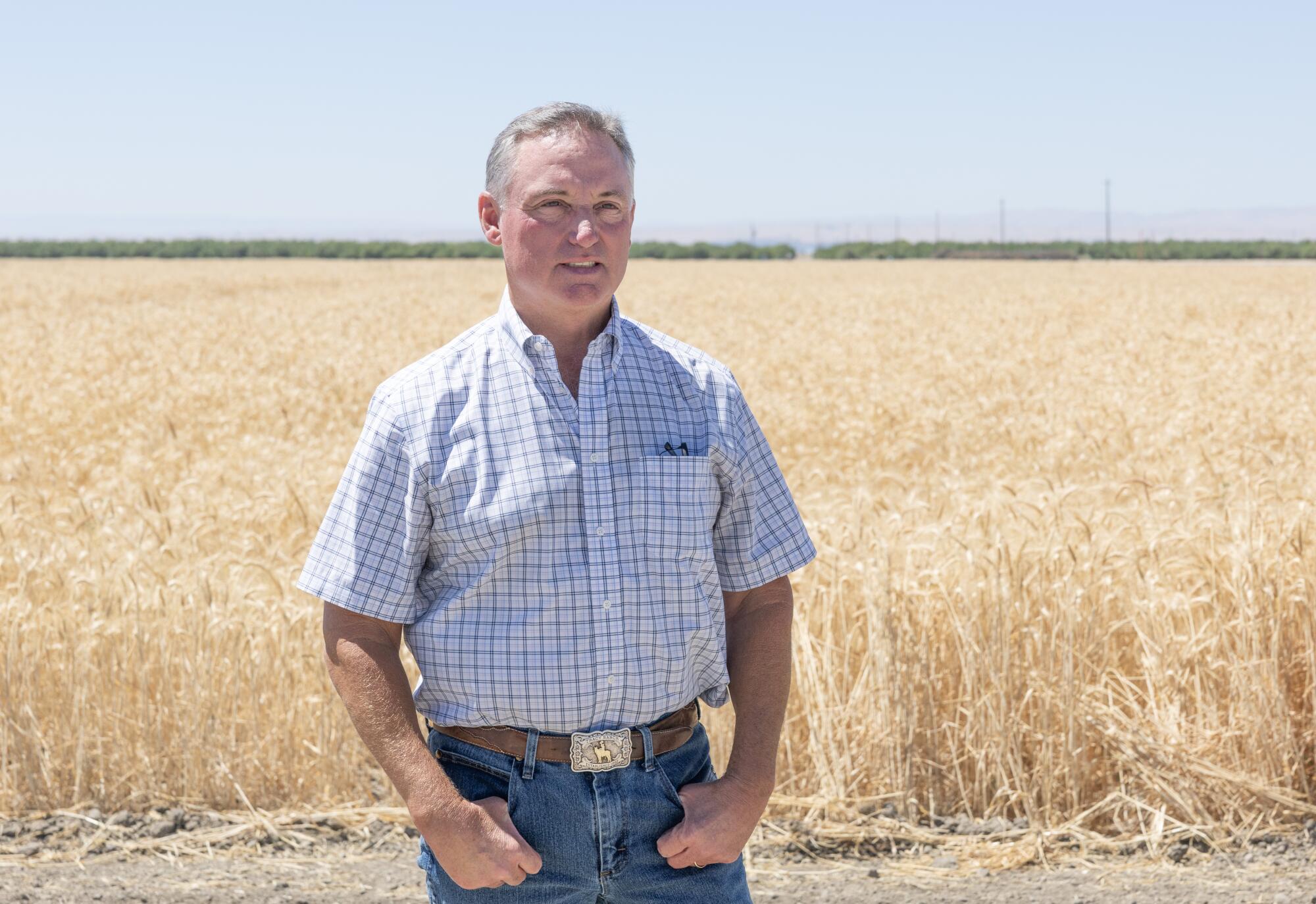
Todd Tracy, a fifth-generation farmer, opted for solar development on his land. By 2021, he allocated a third of his 8,600-acre farm to a solar developer, Avantus. The project, named Buttonbush, is set to become the largest solar-plus-storage project in the U.S. It will cover nearly 12,000 acres and provide two gigawatts of electricity, enough for a million homes.
Tracy expressed that although his family was initially hesitant, they needed a viable use for their land. Their farm grows a variety of crops, but water shortages have left some areas fallow.
Approximately half the farm’s water comes from Northern California through aqueducts, but this supply has been dwindling. The remainder relies on groundwater, which faces reductions due to the Sustainable Groundwater Management Act.
This legislation, enacted in 2014, addresses overpumping issues that result in dry wells and land subsidence. Water availability concerns have prompted many farmers to resort to solar panels on unused land.
Solar energy aligns with California’s aim for 100% clean electricity by 2045. The state needs an additional 10 gigawatts of green energy annually. Farmland conversion to solar could significantly contribute, potentially adding 30 gigawatts.
While some areas historically resisted solar, opinions are shifting. The Westlands Water District, once opposed, has now approved large-scale solar projects. The district plans to convert 135,000 acres into solar farms, as some lands are unsuitable for agriculture.
Advocates claim retired farmlands are ideal for solar due to quicker permitting compared to ecologically sensitive areas. Additionally, solar farms can potentially revert to farming after 30 years.
A 1965 law offers tax breaks to preserve farmland, yet some oppose changes that allow contract termination for solar. Despite differing views, regions like Kern County support solar development as an alternative to water-dependent farming.
The Westlands Water District is urging state grid operations to enhance transmission in the Central Valley. Such actions could lead to one of the global largest solar complexes being built within five years.