
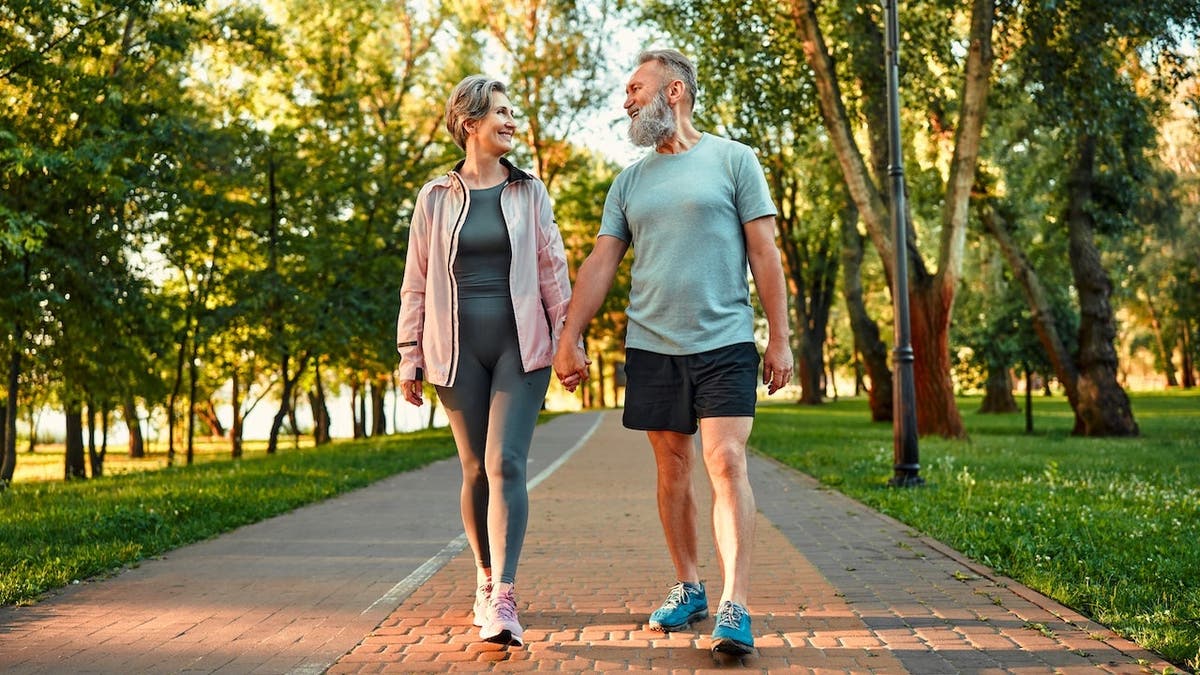
Dr. Courtney Conley and Dr. Milica McDowell, authors of “Walk,” emphasize the significant benefits of walking for both physical and mental health. Joining Steve Doocy, they highlight “Vitamin W” as an easily accessible activity, encouraging individuals to increase their daily steps and aim for a brisk pace of 130 steps per minute to enhance longevity. They introduce the concept of “movement snacks” as part of overall wellness strategies.
Recent research suggests that walking speed can provide insights into overall health and longevity. A study in JAMA Network Open tracked 4,067 adults in the U.K., averaging 69 years old, to evaluate how their usual walking pace might correlate with their mortality risk over time. Participants completed a walking test at their natural pace and wore wrist activity trackers for nine days to monitor their everyday walking speed.
Over nearly 12 years of follow-up, researchers found that faster walking correlated with a decreased risk of death, even when accounting for other health and lifestyle factors. During the study period, 739 participants passed away. Beth Templin, a geriatric clinical specialist and CEO of HouseFit Physical Therapy & Fitness, noted that walking speed serves as a “sixth vital sign,” providing a snapshot of various bodily systems’ efficiency. Although not involved in the study, Templin shared her insights with Fox News Digital.
Templin explained that brisk walking requires strong legs, a healthy heart and lungs, good balance, and a coordinated brain and nervous system. She noted that when walking speed declines, it might signal that one of these systems is deteriorating, often before lab tests reflect the change. Therefore, adjusting walking speed can offer clues to an individual’s health.
For older adults aiming to enhance their walking speed and overall fitness, Templin advised building not just the habit but also the “engine.” She suggested strengthening the legs through exercises like standing up from a chair without using hands and performing heel raises while holding onto a counter. Templin recommended incorporating short bursts of faster walking, where individuals walk briskly for one minute, slow down for two, and then repeat, gradually lengthening the faster intervals.
While the findings indicate an association between faster walking and longevity, experts underline that walking faster alone doesn’t guarantee a longer life. The study involved participants who were generally healthier than the broader population, and there’s no universal method for measuring everyday walking pace with wrist activity trackers. Further research is required to assess if the results are applicable to different demographics.