
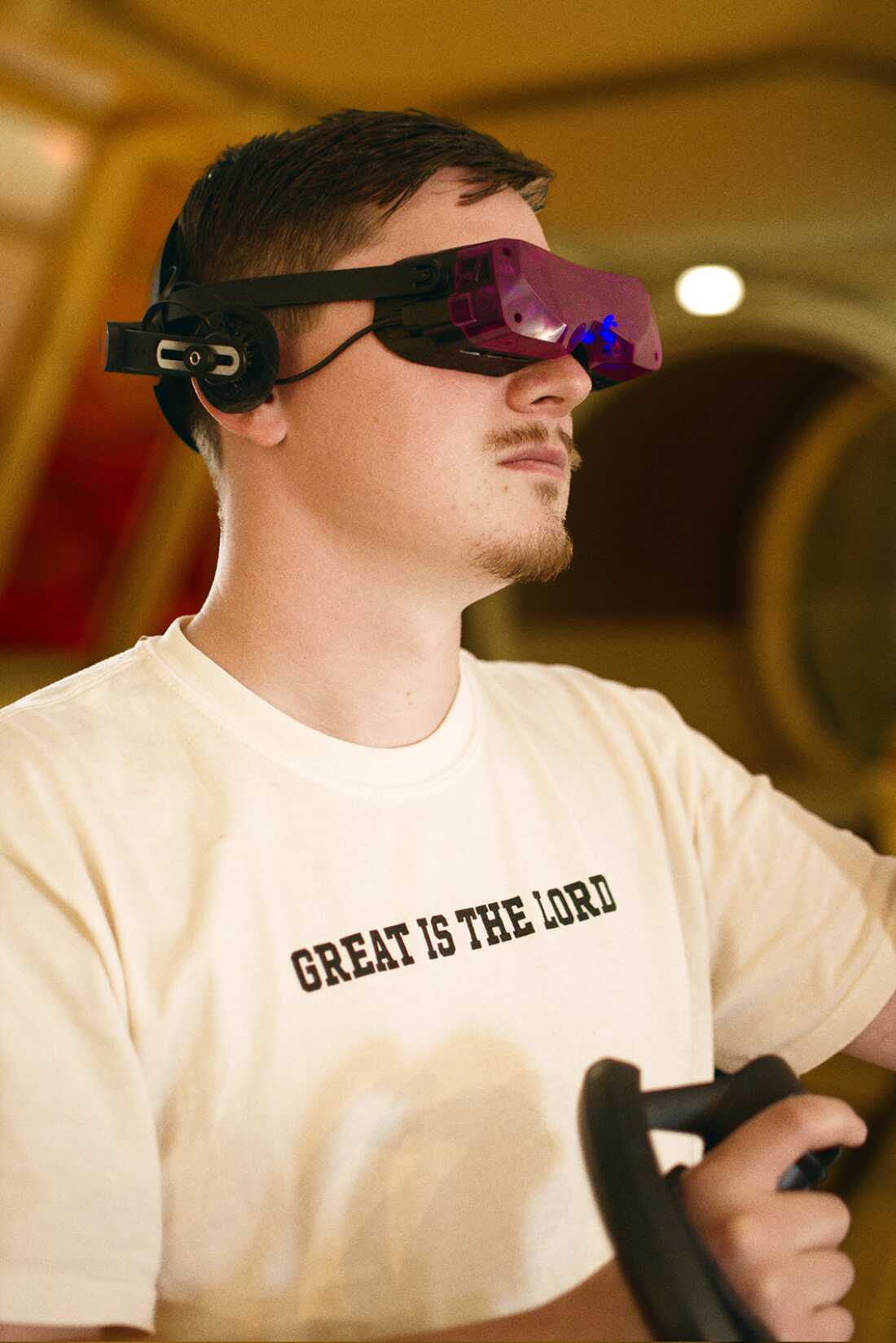
Geoffery Powell, a 28-year-old multimedia artist and computer scientist, felt captivated by VRChat due to its creative potential. He embraced the platform to explore imaginative worlds and connect with others.
Ten avatars gather in a circle within a virtual Japanese-style penthouse. The dim lighting enhances a solemn atmosphere. A stormtrooper avatar crouches beside a large, orange cat. The cat, voicing Christian missionary Curt Curtis from Texas, starts a prayer: “Father God, thank you for this opportunity to reach out to people in need.” Though the setting is virtual, the prayer holds real significance. Curtis asks for guidance to connect with those who seek spiritual support.
For the past three years, Christian missionaries from the evangelical organization Cru have met every Friday in VRChat, a social platform where millions worldwide connect through diverse avatars. Users explore a multitude of virtual worlds, engaging in discussions and activities. For Cru missionaries, it offers a unique avenue to spread their faith as virtual interactions increasingly become a part of life.
“Initially, we pondered the platform’s dynamics: who visits, and why?” said Frank Kuligowski, Cru’s digital strategist who pioneered the use of VR headsets for their missionaries. After prayers, they consult virtual maps to pick a world to enter. “Twenty users per world is ideal,” Kuligowski advises, providing enough interaction without too much chaos.
Once inside a world, the missionaries branch out, engaging small groups in secluded areas. Kuligowski might start with a simple compliment, “Cool avatar. Did you create it?” Gradually, conversations shift toward faith, with questions like “Is faith part of your life?” or “I read something interesting in the Bible today.”
In one narrative of success, Kuligowski recounts meeting a woman from China in a virtual world. She expressed a desire to attend church, prompting an invitation to a virtual service. A silent listener joined them, which ultimately led to a connection with a real-life ministry. “That’s one of my cherished memories,” Kuligowski reflected.
Founded in 1951 as Campus Crusade for Christ, Cru traditionally focused on evangelism among college students. Recently, they have expanded into digital spaces like video games and virtual reality. Heidi Campbell, a Texas A&M professor studying digital religion, notes that efforts like Cru’s trace back to the 1990s, when online chat rooms became forums for evangelism.
Yet not everyone welcomes this approach. A VRChat subreddit thread questioning the “influx” of Christians garnered almost 200 comments. Some users worry that missionaries could bring anti-LGBTQ+ views into VRChat, a platform known for its acceptance of diverse identities. Campbell acknowledges these concerns, emphasizing the need for missionaries to adapt respectfully to digital cultures, akin to foreign missions.
Cru’s missionaries range from seasoned VRChat users like Geoffery Powell to newcomers like Curtis, who primarily engage for evangelization. Powell appreciates VRChat’s imaginative freedom but recognizes challenges within its community, such as loneliness and exposure to explicit content.
Stewart Freeman, a VRChat user, shares how meeting a pastor in the virtual space transformed his life. Following the end of a lengthy relationship, Freeman spent extensive hours in VRChat’s darker areas. His encounter with Jason Poling, a California pastor, who read the Bible with him weekly, reshaped his spiritual outlook. “God utilized virtual reality to bring the gospel to me fully,” Freeman shared, reigniting his faith.
Inspired by his transformation, Freeman followed his calling to minister, eventually joining Cru’s Jesus Film Project to help others in VR find spiritual guidance. “Connecting with people in challenging spaces and guiding them toward answers is my passion,” he expressed.
This article was created through a collaboration between NPR and Religion News Service.