
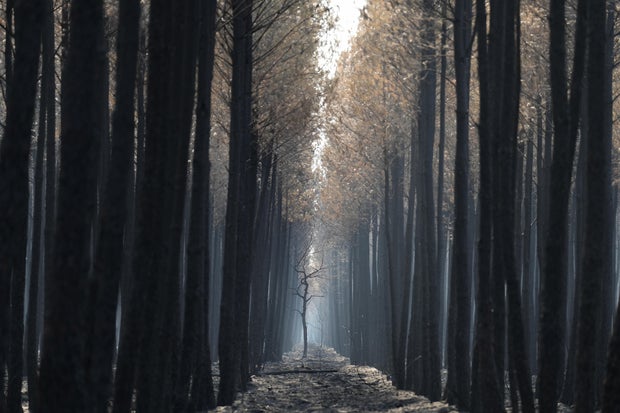
By August 1, 2026, the wildfire emergency in much of western Europe had diminished, yet the focus shifted to Greece. Here, gale-force winds fueled a fire in a seaside resort, leading to a mass evacuation by sea and hindering firefighting efforts.
Greece’s Ongoing Battle with Wildfires
The fire in Greece evoked memories of the tragic 2018 blaze in Mati, near Athens, which left 104 people dead, marking the deadliest wildfire in Europe this century. In Porto Germeno, a resort by the Gulf of Corinth, nearly 500 firefighters battled flames spreading through pine forests, with smoke obscuring the sky.
The fire began near Agios Vasileios on Friday. Around 300 people were evacuated by sea while new evacuation orders were issued. Theodore Giannaros, a wildfire meteorologist at the National Observatory of Athens, estimated the blaze affected 40 to 50 square kilometers.
Efforts included specialized teams and support from France and Romania, with water-dropping planes and helicopters deployed. New fires were reported, including one near Nafpaktos, prompting evacuation alerts for multiple villages.
Minister Evangelos Tournas highlighted difficult conditions due to strong winds, impeding firefighting efforts by aircraft.
Improvement in Western Europe
In southwestern France, the major fire in Gironde was contained, allowing 198,000 people to return home. Interior Minister Laurent Nunez confirmed the fire was under control with specific vigilance points remaining.
In southeastern France’s Var region, firefighters continued working to control another blaze. In Spain and Portugal, fires were not advancing and were under control.
A secondary fire in France had stopped expanding overnight, yet remained active as of Saturday, leaving 2,500 people unable to return to their homes. Despite improvements, challenges remained notable during peak crisis time, with fires affecting large populations and stretching emergency services across Europe.
Climate Impact on Wildfire Risks
Europe has warmed over two times the global average since the 1980s, as reported by the European Union’s Copernicus climate service. Rising temperatures and drought conditions increase fire risks by drying vegetation, leading to quickly spreading and intense fires.
Challenges in France’s Var Region
In Var, the Gros Bessillon fire remained active, with defensive lines holding overnight despite high temperatures and mistral winds reigniting embers. As of Saturday, 1,300 firefighters were deployed, with 2,500 residents still unable to return home.
Twenty departments in France faced an orange heat warning, with a high forest-fire risk in eight, particularly in the east and southeast.
The Aftermath for Fire Survivors
For residents in Gironde, the return home meant facing the extent of destruction. In Le Porge, Matthieu Plessis saw his ancestral home in ruins. Returning under clear skies, Plessis found his bicycle-repair business reduced to ashes.
Reflecting on loss, Plessis expressed determination, “I don’t want to spend the next 10 years feeling sorry for myself.”