
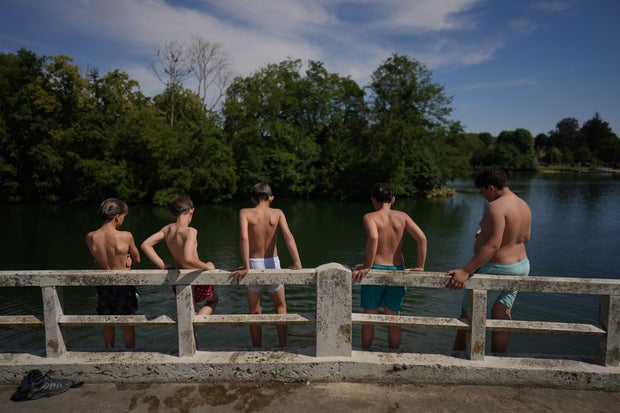
France has mobilized its emergency services and military forces to combat a severe heatwave affecting Europe. The nation has imposed restrictions on public alcohol consumption and canceled some outdoor sports events to manage the heat’s impact.
A third of France faces a heat red alert, with temperatures predicted to hit 104 degrees Fahrenheit in some areas. The situation is expected to worsen, with even higher temperatures on Monday.
Europe Implements Precautionary Measures
Authorities across Europe are taking steps to mitigate the risks posed by the heat. In Paris, misting stations have been set up at landmarks like the Eiffel Tower to cool crowds. Tourists in Rome are using fountains for relief. Spain’s Basque Country has canceled certain sports and cultural events.
France’s annual Music Day on Sunday is a particular concern. This celebration, marked by numerous concerts across the country, draws large domestic and international crowds. In response, the government has banned public drinking in ‘red alert’ zones and urged event organizers to curb alcohol use to help preserve emergency services and focus medical care on vulnerable populations.
High Temperatures Endanger Lives
Regions without widespread air-conditioning face deadly risks from such heat. The World Health Organization reported that over 200,000 people in Europe died from heat-related causes over the past four years, with many deaths deemed preventable.
Climate change has been linked to increasing extreme weather events. According to U.N. climate projections, the following years will likely set more heat records. A recent study indicated that human-induced climate change contributed to about 1,500 deaths in an early European heatwave last month.
Authorities are especially concerned about people’s safety on city streets and the elderly in homes. The 2003 heatwave in France, which resulted in around 15,000 elderly deaths, remains a somber memory. In response, the French government has enhanced wildfire readiness and increased water supply monitoring for nuclear reactors. They have also closed 845 schools on Monday.
Train services in France have been disrupted, with several cancellations, and additional staff have been deployed to manage issues as the heat threatens rails and electrical cables.
French Prime Minister Sebastien Lecornu convened a heat crisis meeting, directing ministers to improve heatwave adaptation measures for the future, including the potential introduction of air conditioning.
Heatwave Hits Southern Europe
Spain is also on high alert, with temperatures expected to reach 104 degrees in various regions, including the typically cooler northern Basque Country. Outdoor sports and cultural activities have been halted, with the heat expected to persist until at least Wednesday.
Italy raised heat warnings, known as ‘red flags,’ in eight cities across northern and central areas. Temperatures range from the high 90s to low 100s, leading farm owners near Milan to use fans and sprinklers for cattle. In Rome, tourists cool off in renowned fountain pools.
Thunderstorms are expected in several areas across the continent.
The UK’s weather authorities issued an ‘extreme heat’ warning for southern England and parts of Wales, predicting temperatures over 95 degrees. This is just below the June record set in 1976. Germany faces similar challenges, with temperatures in the mid-90s. A tragic incident occurred with a 23-year-old man drowning in a lake near Rheinstetten, Baden-Württemberg. In addition, three people are missing after swimming in the Rhine River, known for its strong currents.
French media reported that four children drowned on Saturday, indicating the severe consequences of the ongoing heatwave.