
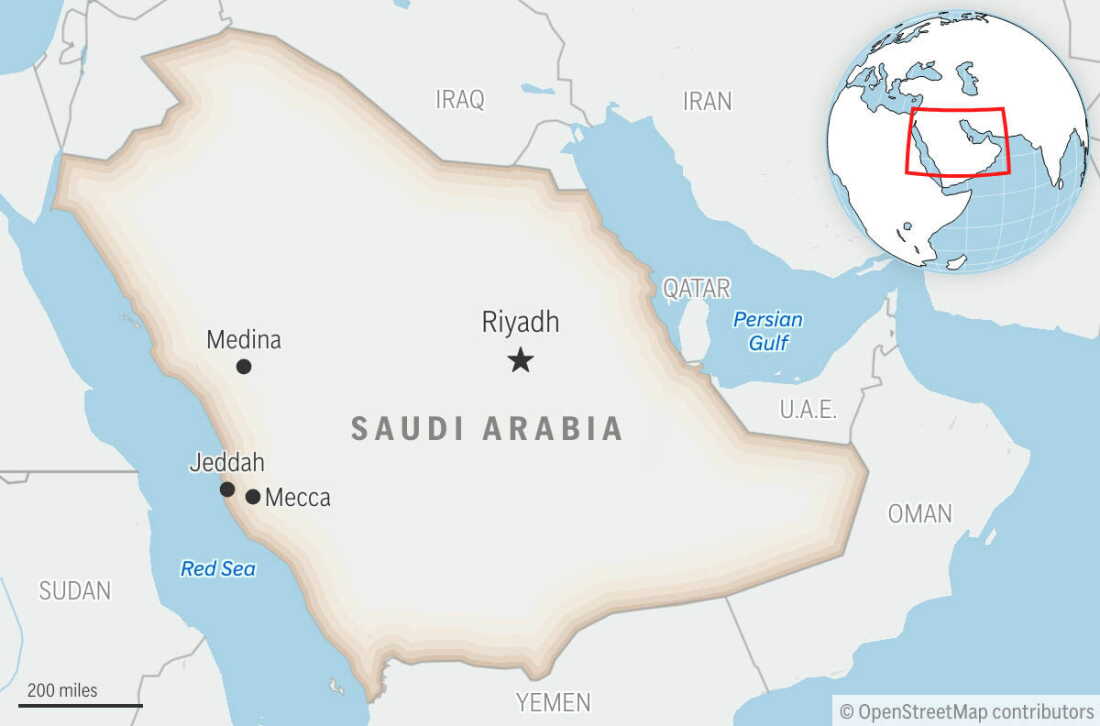
The recent wave of Houthi attacks on Saudi Arabia has resulted in over 70 injuries and ignited fires at various oil facilities and utilities. These incidents mark a significant escalation in the ongoing conflict between this key U.S. ally and the Iranian-backed rebels in Yemen.
Renewed Conflict in the Region
The attacks follow weeks of increasing clashes between the Houthis and Saudi-supported government forces in Yemen, which disrupted a four-year truce in the civil war. This escalation contributes to the instability in a region already unsettled by years of conflict and introduces more unpredictability to the global economy.
The conflict threatens to disrupt shipping through the Bab al-Mandeb strait, a critical route for oil and global trade. Additionally, the Iran war has limited shipments through the Strait of Hormuz, affecting global oil movement.
Attack Details and Impact
The attacks early Tuesday hit civilian and economic facilities,” said Maj. Gen. Turki al-Malki.
Early Tuesday, attacks targeted civilian and economic facilities in Saudi cities, including Abha, Jazan, Najran, and Khamis Mushait. Fires broke out at multiple oil facilities, temporarily halting operations. A 400,000-barrel-per-day refinery in Jazan, one of the largest in Saudi Arabia, was among the affected sites.
Maj. Gen. Turki al-Malki described the incidents as a serious escalation, violating the kingdom’s sovereignty. Al-Malki promised retaliation from the Saudi-led coalition. The Houthis took responsibility, stating the attacks were in response to previous Saudi offensives in Yemen.
Houthi Claim and Response
Brig. Gen. Yahya Saree reported that dozens of ballistic missiles and drones targeted oil and economic facilities, as well as an airbase in southern Saudi Arabia. Saree warned of firm retaliation against Saudi aggression.
Nasruddin Amer used social media to assert that Saudi Arabia would face retaliation for its actions. The Houthis also blamed Saudi Arabia for an airstrike in Yemen’s Jawf province that resulted in civilian casualties.
Humanitarian Impact and Background
The conflict has displaced about 18,500 people in Taiz and Hodeida, exacerbating a humanitarian crisis. Many displaced lack basic necessities such as shelter and food. This escalation stems from a thwarted Houthi attempt to fly from Tehran to Sanaa, which was blocked by Saudi airstrikes.
Yemen’s civil war began in 2014 when the Houthis seized the capital, Sanaa. The Saudi-led coalition intervened in 2015 to restore the government, leading to a devastating conflict with over 150,000 fatalities according to U.N. estimates.