
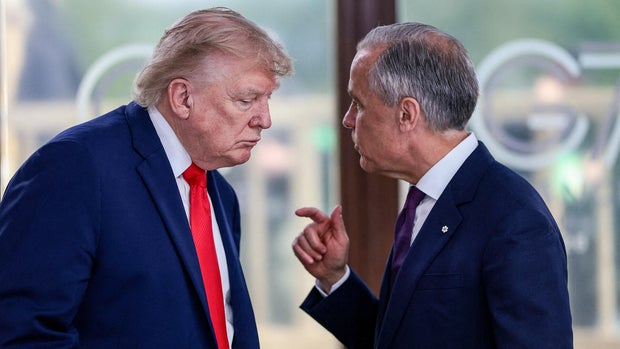
Washington — U.S.-Canada relations face further strain following the U.S. decision to ban approximately $1 billion worth of Canadian imports. This includes alcoholic beverages, dairy products, and motorcycles. The ban, enacted early Tuesday, is a response amidst President Trump’s intensified trade war during his second term.
The ban represents a minor fraction of the $880 billion annual trade between these nations but highlights growing tensions. Trade attorney Patrick Childress from Holland & Knight remarked that this development does not aid trade relations. The tensions extend from Trump’s summer imposition of 50% tariffs on $20 billion worth of Canadian imports, accusing Canada of discrimination against U.S. industries. Canada retaliated with tariffs ranging from 15% to 50%, matching U.S. imports dollar for dollar.
To counteract Canada’s response, President Trump imposed the ban, effective at 12:01 a.m. Eastern time on Tuesday. Childress noted that many products listed were already affected by tariffs, making importation uneconomical. Jacob Jensen, director at the American Action Forum, estimated the ban affects $967 million worth of Canadian imports, with 87% being alcoholic beverages. Canadian provincial responses included banning U.S. alcohol from store shelves.
The ban also targets dairy products such as whey. Historically, Canada’s protection of its dairy industry through quotas and tariffs has been a point of contention. Bombardier Recreational Products in Quebec confirmed its Can-Am Spyder and Canyon motorcycles are excluded from U.S. importation, but significant impacts might arise next year due to completed production and shipments.
Jensen warned of further Canadian retaliation and expects impacted exporters and importers to press for resolution. This standoff jeopardizes efforts to renew the U.S.-Mexico-Canada Agreement, initially pressured by Trump in his first term. Recent U.S. tariffs obscured future trade prospects.
Trump’s focus on Canada includes urging Canadian manufacturing to the U.S. and inflaming Canadian public opinion by suggesting statehood. Canadian Prime Minister Mark Carney, elected last year to resist Trump’s pressures, aims to reduce Canada’s overdependence on the U.S., accounting for over 70% of exports. Carney plans to double non-U.S. trade within a decade and anticipates Canada becoming an EU associate member. Progress is also noted in trade talks with India.
In response to Trump’s tariffs, Carney struck an agreement with China to import Chinese electric vehicles at reduced tariffs, reciprocated by lower Chinese tariffs on Canadian canola. Gabriel Brunet, spokesman for Canada-U.S. Trade Minister Dominic LeBlanc, emphasized Canada’s focus on supporting workers and diversifying partnerships.
President Trump expressed confidence that Canadians would seek resolution, criticizing past treatment towards the U.S. Childress predicted the standoff may persist for months without forcing negotiation.