
An estimated 30,000 Fulani militants operate in Nigeria, contributing to growing insecurity and violations of religious freedom. A report by the U.S. Commission on International Religious Freedom (USCIRF) highlights that Fulani-associated violence led to the highest deaths among all religious groups in Nigeria over the past year.
Targeting Christian Communities
The Fulani, often identified as livestock herders, have primarily targeted Christian communities in Nigeria’s Middle Belt and increasingly in the South. These actions include burning homes and churches, kidnapping, raping, and murder.
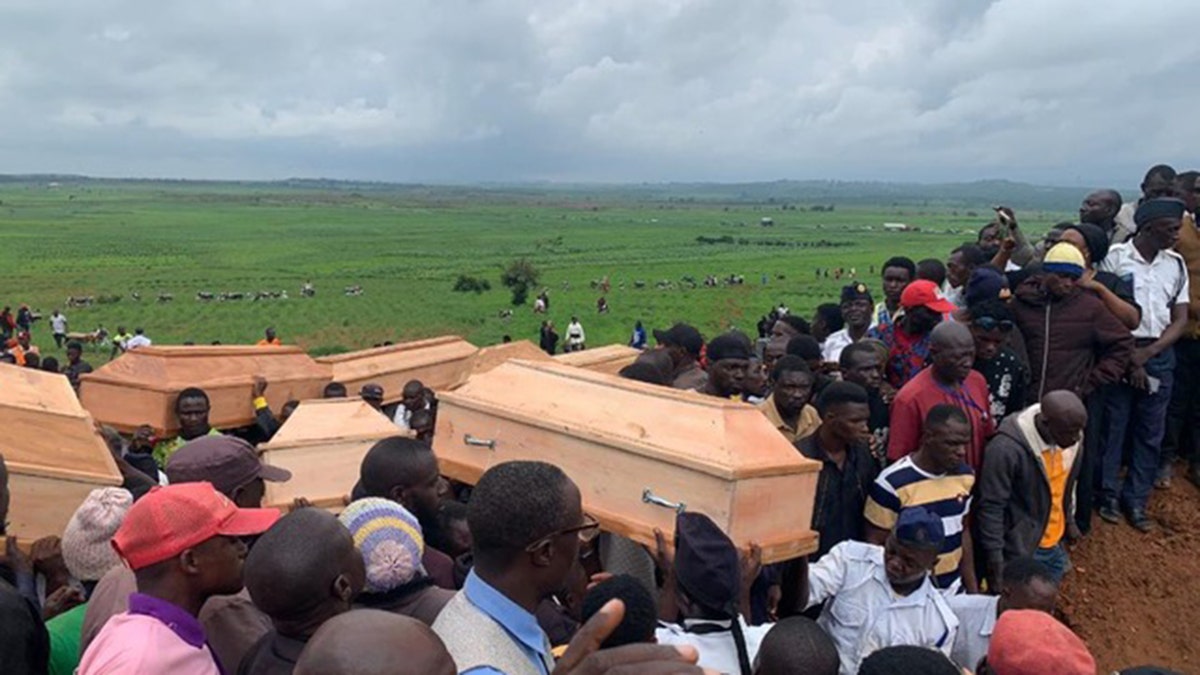
Funerals were held for approximately 27 Christians reportedly killed by Fulani tribesmen in Bindi village, Plateau State, Nigeria.
Military interventions from the U.S., in collaboration with Nigerian forces against Islamist groups like Boko Haram and Islamic State, prove ineffective against the complexities of the Fulani-herder conflict. Sterling Tilley, a former counterterrorism expert, advises against military responses that may escalate instability. Tilley stresses the need for political will within Nigeria to address the violence.
Political Considerations
Fulani militants have often executed operations during Christian religious holidays such as Christmas or Easter, aiming to maximize psychological impact. While Christians face significant danger, Muslims also suffer attacks. Fulani militants have raided herders’ cattle and attacked non-Fulani Muslim communities.
Henrietta Blyth, CEO of Open Doors UK & Ireland, emphasizes that Fulani-related violence surpasses that from other militant groups. She recounts tragic stories of families witnessing loved ones murdered or enslaved. Blyth acknowledges that motivations underpinning the violence are complex, noting that not all perpetrators act from religious motives, though Christians remain highly vulnerable.
Lack of Adequate Responses
The USCIRF report criticizes both federal and state authorities in Nigeria for their responses to Fulani militant violence, often deemed unsatisfactory or complicit. As Nigerian elections approach, political considerations play a substantial role. The Fulani hold significant influence as a voting bloc, leading to government reluctance to take decisive actions that might alienate their support.
Nigerian government officials were contacted for comments, but no response was received before publication.
Paul Tilsley, a seasoned correspondent from Johannesburg, reports on these developments.