
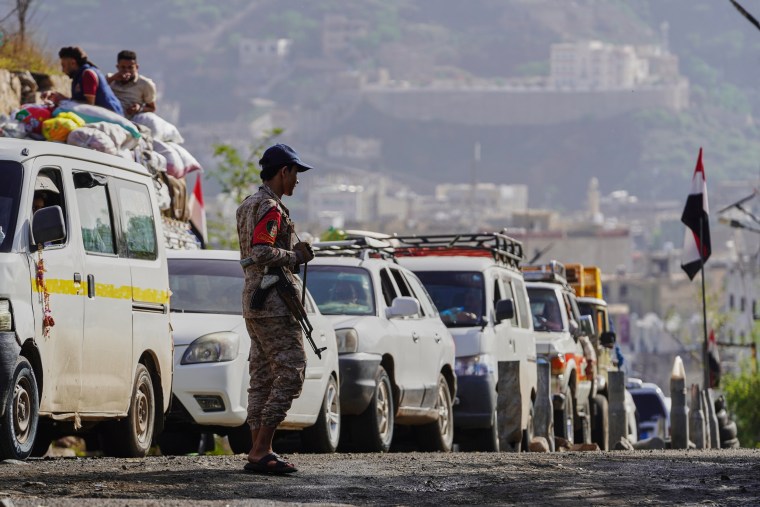
On Thursday, attacks by Iran-backed Houthi rebels in Yemen’s central and eastern regions resulted in fatalities and injuries among government troops. Yemeni officials reported at least 30 government soldiers were killed and 50 others were wounded. The attacks primarily targeted Saudi-backed forces, according to a Houthi leader, who claimed ‘hundreds’ were either killed or wounded.
The assaults focused on military camps supporting the internationally recognized government in Marib and Hadramout provinces. Yemeni officials, who remained anonymous due to a lack of media authorization, confirmed the escalation following a ceasefire effective since April 2022. This ceasefire halted significant hostilities between the Houthis and the Saudi-led coalition aiding Yemen’s government.
While the Yemeni army acknowledged casualties following Houthi attacks, they did not disclose specific numbers. Houthi Brigadier General Yahya Saree stated the strikes, which involved ballistic missiles and drones, were a countermeasure to Saudi-supported troop buildup in eastern Yemen. Saree reported the damage included destroyed camps and military assets, reiterating a call to resist Saudi aggression.
The U.S. mission to Yemen conveyed sympathies to the bereaved families in Marib and Hadramout. Through a statement on X, they criticized the Houthi actions, labeling them a continued ‘terrorism against the Yemeni people.’
Yemen’s civil war, sparked in 2014 by Houthi control over Sanaa, led to the exile of the recognized government to Saudi Arabia. A Saudi-led coalition has engaged in conflict with the rebels since 2015, aiming to reinstate the Yemeni government. This conflict has evolved into a stalemated proxy war, with no clear victor.
The Houthis justify their recent intensification, including a naval blockade against Saudi Arabia in the Red Sea and Bab el-Mandeb Strait, as retaliation for the kingdom’s blockade on Yemen since 2015.