
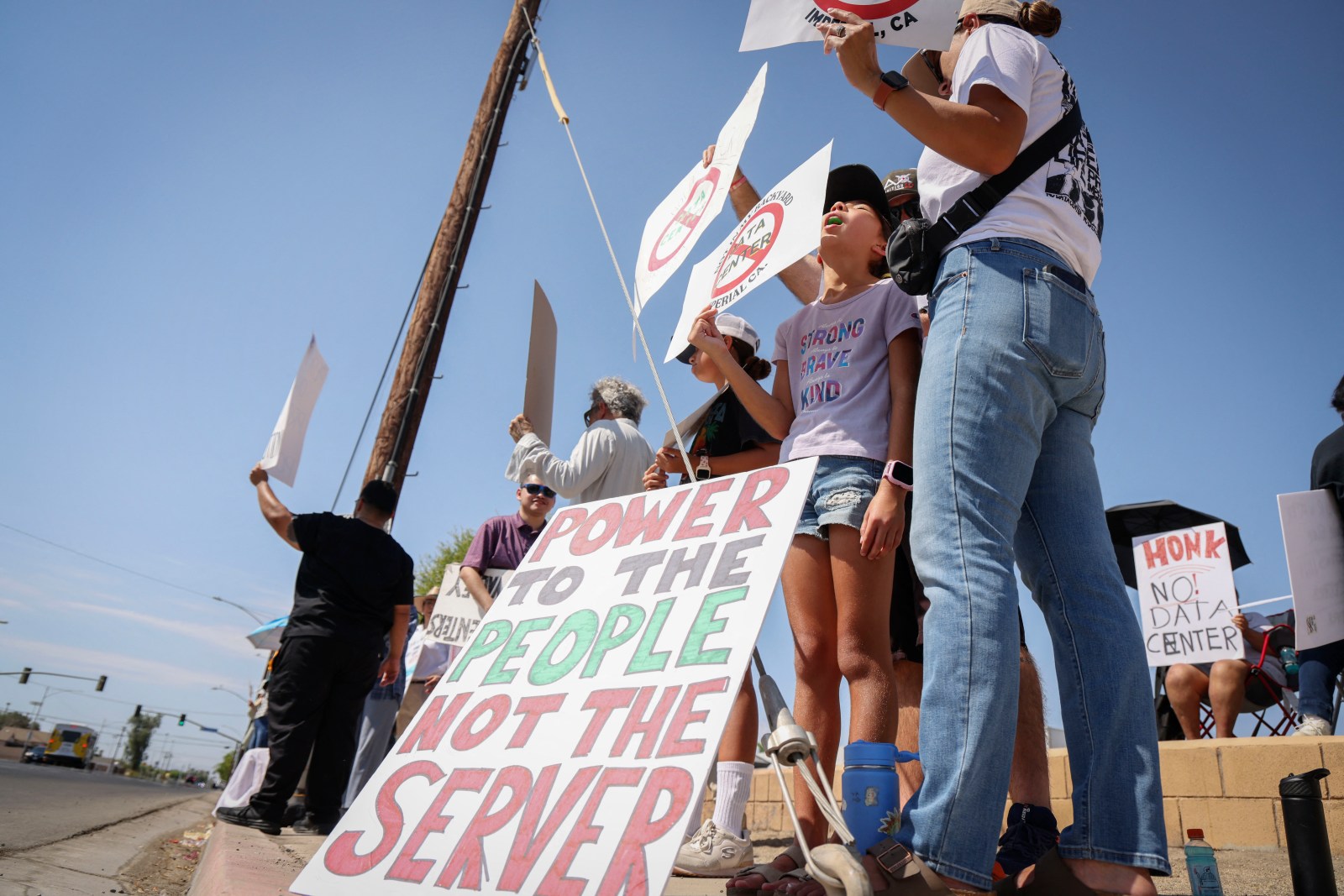
President Donald Trump has criticized Americans for opposing data centers, labeling them as the “Golden Goose” crucial for progress. His administration, however, is taking steps to limit public input on data center development. The Environmental Protection Agency (EPA) has proposed that states no longer need to notify the public or seek feedback before granting air pollution permits for data centers and similar industrial facilities. This move allows developers to begin construction without waiting for permit approval, reducing the necessity of public commentary.
Critics argue this policy removes community influence from the decision-making process surrounding new data centers. Though states could still permit public comments, this would no longer be enforced by the EPA as a binding requirement.
Impact on American Communities
If implemented, the proposal could lead to swifter approval of data centers. Many centers, particularly those involving AI, need permits for diesel generators, gas turbines, and other equipment impacting air quality standards. Developers are often burdened by the postponements arising from public hearings and comments.
The most significant effect of this proposal is shifting regulatory responsibility to individual states. It could create an inconsistent system where some states maintain robust public engagement while others expedite approvals. In regions without mandatory federal-level hearings, particularly in the South and Midwest, projects could proceed rapidly, potentially against community wishes. This is significant for areas like Virginia, Texas, Georgia, Arizona, and parts of the Midwest, which house numerous data centers.
Voices of Opposition
Nearly 200 advocacy groups and multiple states have opposed the EPA’s proposal, citing a loss of public participation. Keri Powell, a senior attorney at the Southern Environmental Law Center, emphasized the importance of citizens having a say prior to construction. Mike Koerber, a former deputy director of EPA’s air quality office, criticized the proposal for sidelining transparency principles.
Democratic attorneys general from 14 states, including Massachusetts, California, and New York, have voiced opposition, arguing that even minor sources like data centers can impact health and the environment. Notably, these states are not considered data center hubs.
EPA’s Defense
The EPA has defended its plan, arguing it is misrepresented by critics. Carolyn Holran, an EPA spokesperson, stated the proposal gives states the flexibility to set their own permitting procedures for minor pollution sources. This adjustment encompasses various industries, not limited to data centers.
Holran emphasized that the change aims to accelerate development without compromising emission or environmental standards. The focus is on supporting economic growth and energy leadership.
Newsweek contacted the EPA for additional commentary and is awaiting a response.
Midterm Elections and Public Sentiment
As public sentiment against data centers grows, locals near proposed sites express concerns about electricity, water use, land impact, noise, and pollution. If communities feel disenfranchised during permitting, it could influence voting behavior in the upcoming midterms, impacting campaigns opposed to particular projects.
This potential backlash could challenge the Trump administration and its candidates, given Trump’s vocal support for data centers and AI. The president has stated he would welcome AI plants or data centers, cautioning against opposing them.
Outlook and Legal Challenges
Environmental organizations and former EPA officials have already criticized the proposal. Further legal challenges are anticipated if the rule is finalized, suggesting its outcome remains uncertain.
John Fitzpatrick and James Debens of Newsweek continue to report on this evolving narrative.