
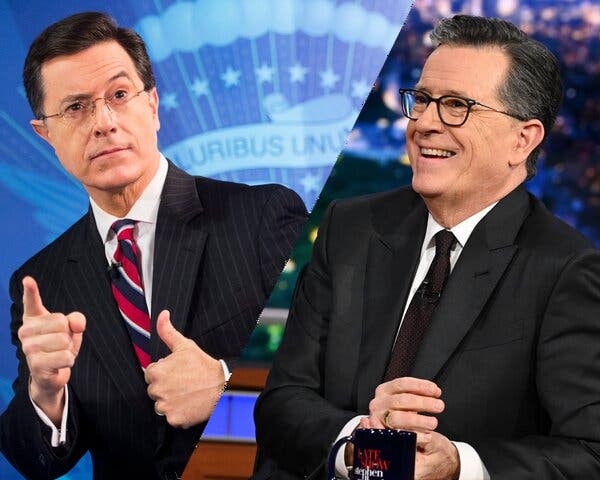
The CBS “Late Show” will end on May 21, marking the end of Stephen Colbert’s long tenure as a late-night host. With over two decades in the role, his departure feels like the closing of a cultural era. Yet, defining this specific era is challenging. Some might suggest this signals “the death of late night,” but that narrative has persisted for years. The once-prevailing monoculture has faded. Ratings are lower, and production costs remain high. Despite these changes, the show’s conclusion does not drastically redefine the landscape that existed before David Letterman’s start in 1993.
Stephen Colbert began “The Colbert Report” in 2005, where he satirized the political-media industry by portraying a bold, over-the-top character. Throughout his time hosting, Colbert achieved high ratings, often leading his time slot. Though CBS claims financial reasons led to the show’s end, such a decision draws parallels to the Smothers Brothers’ political comedy show, which was replaced by “Hee Haw” back in 1969, despite its popularity. Hence, Colbert’s exit might symbolize the end of an era, or conversely, suggests that the era had run its course.
During his tenure, Colbert navigated a time when political TV comedy not only took a stand but often thrived. This period spanned two distinct phases corresponding to his two primary shows: one that mocked politics and another where politics itself became a subject of parody.
Colbert launched “The Colbert Report” on Comedy Central in October 2005, entering the scene with an unmistakable presence and a clear mission. His approach to satire reflected broader themes in political comedy during his era, highlighting the evolving relationship between media and politics.