
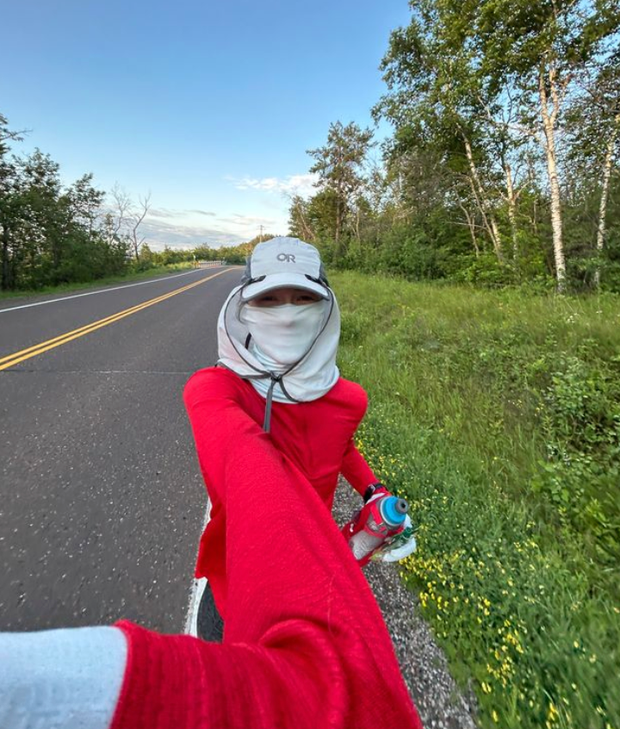
Emily Pearson was just 8 years old when she began experiencing severe pain from sun exposure. Her hands and feet would ache as if they had been burned and poked with needles. Despite numerous efforts, her family struggled to uncover the cause of her suffering.
Throughout her youth, Pearson’s parents sought answers. Sunblock offered no relief, so she wore protective clothing and stayed indoors whenever possible. Family vacations in Minnesota became challenging, as too much sun exposure led to extreme discomfort.
It was insufferable pain. I would never wish that pain upon anyone, because it’s so horrible,” Pearson said.
Everything changed when Pearson turned 17. A doctor diagnosed her with erythropoietic protoporphyria (EPP), a rare condition causing intense sensitivity to sunlight. Finally having a diagnosis provided relief, but it also meant she had limited solutions.
Running became a sanctuary for Pearson. After a long history of competitive swimming, she transitioned to half-marathons despite needing to run during low-light hours to avoid reactions. Running provided joy even with the challenges she faced.
In college, Pearson’s condition still required constant vigilance. Acts as simple as going to the grocery store without protection resulted in excruciating pain later.
It was really hard, and it was really, really stressful. It was a big mental load, and it was never-ending,” Pearson shared.
In 2025, an opportunity arose at Sun Escape, a camp for children with EPP-like conditions. Pearson learned of a clinical trial for bitopertin, a drug targeting protoporphyrin IX, a molecule triggered by sunlight.
The trial was in its second phase, involving a few hundred participants, aimed to evaluate the drug’s effectiveness and possible side effects. Dr. Sioban Keel, a porphyria expert, noted how bitopertin’s daily dose reduced painful reactions in EPP patients.
Pearson joined the trial in July 2025 and noticed a significant improvement. Her sun tolerance increased, allowing her to engage in outdoor activities she had previously avoided.
Dr. Keel observed similar positive results among other trial participants.
The impact I’ve seen on my patients has been significant. Patients that previously could never go out in the sun are able to enjoy sunlight,” Keel stated.
Clinical data published by Disc Medicine supported these observations, showing reduced protoporphyrin IX levels and improved sun tolerance without serious safety issues.
By October 2025, Pearson ran her first marathon. With shorts and a T-shirt, she felt proud to participate in such an event without debilitating pain.
I was outside the whole day, running and having fun,” Pearson said. “I just got to wear shorts and a T-shirt.”
Pearson’s enthusiasm for running grew as she continued training. By July, she enjoyed outdoor activities at her family’s cabin without reactions, a stark contrast to past anxious visits.
Looking ahead, Pearson plans to run another marathon in June 2027 and hopes to participate in a triathlon. She embraces the freedom and possibility that her new health allows.
I’m able to feel free and live without all the worry and anxiety that I was before,” Pearson said.