
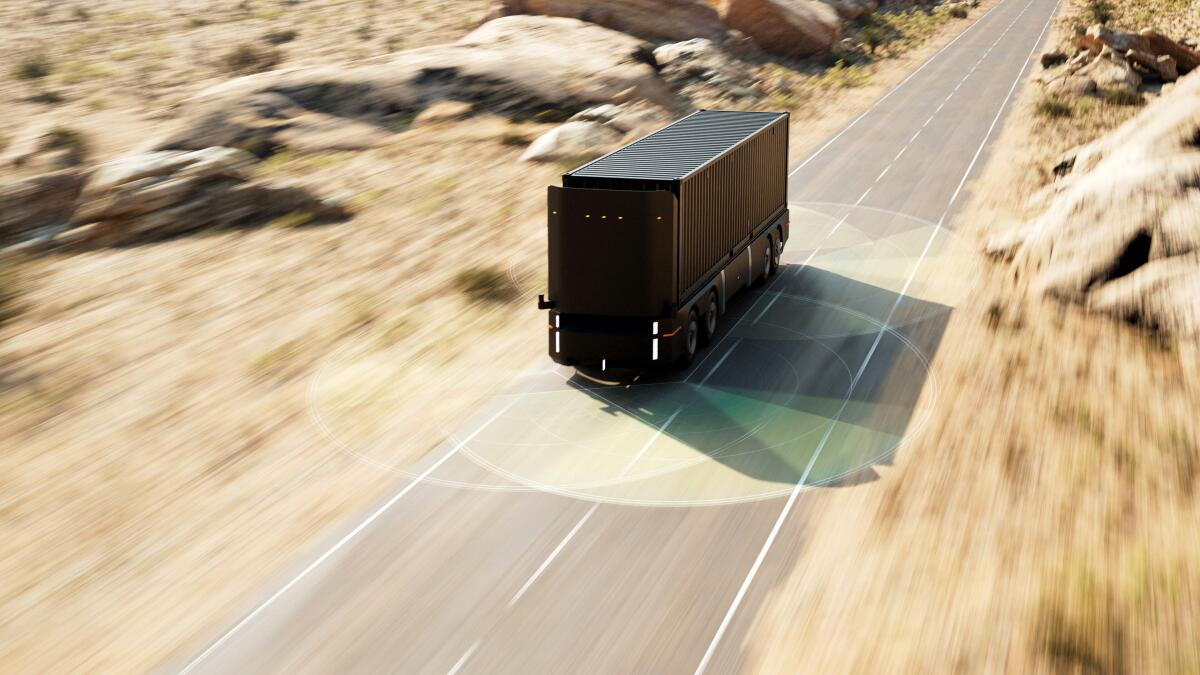
A Bay Area startup is advancing efforts to transform semitrucks into electric and autonomous giants designed for improved efficiency. Founded last year in San Francisco, Humble Robotics has secured $24 million to develop a cabless freight truck that eschews a steering wheel, gas pedal, and driver’s seat. This innovative vehicle aims to transport freight across California and other states while cutting costs and reducing carbon dioxide emissions.
Humble Robotics came into the spotlight in April with seed funding led by Eclipse Capital, a Palo Alto-based venture capital firm, alongside Energy Impact Partners. A depiction of the Humble Hauler—an electric, autonomous freight truck in development by Humble Robotics—emphasizes the company’s focus on new regulations in California that might make public roads accessible to autonomous trucks soon.
Despite these advancements, the technology faces significant challenges. Labor groups, including the Teamsters, express concerns regarding safety and potential job losses. Eyal Cohen, founder and CEO of Humble Robotics, states, “We’re building an electric autonomous platform for moving freight at the lowest possible cost.” Cohen brings nearly two decades of experience from companies like Uber, Apple, and Waabi. He anticipates customer pilot programs starting by year-end.
The California DMV recently updated autonomous vehicle regulations, lifting a ban on autonomous trucks weighing over 10,001 pounds. Heavy-duty autonomous vehicles, however, must initiate testing with a human safety driver and complete 500,000 miles of testing during each certification stage. Humble Robotics has yet to apply for a California DMV autonomous vehicle permit, initially planning tests in Texas. Cohen notes a shift back to California driven by recent regulatory changes.
Humble Robotics competes with other autonomous trucking firms such as Pittsburgh-based Aurora and Bay Area-based Kodiak. Sperling, UC Davis Transportation Studies director, remarks on regulatory challenges faced by cabless trucks. Current guideless vehicles exist in controlled environments like marine ports, but Humble Robotics aims to make public road applicability a reality.
Cohen emphasizes plans for initial deployments in collaboration with ports, terminals, and shipping companies. Humble Robotics employs fewer than 50 people and leverages technology similar to autonomous vehicles. Its trucks utilize radar, lidar, and cameras for comprehensive surround views and AI for intelligent, adaptive driving decisions.
The company refrains from disclosing vehicle production or sale prices. Identified as a Class 8 vehicle, the Humble Hauler can manage typical cargo or vast loads. It offers a 200-mile electric range and 55 mph maximum speed, primarily designed for short-haul trips. Cohen highlights difficulties in scaling long-haul electric trucks due to battery costs.
In 2024, zero-emission vehicles composed approximately 23% of new medium and heavy-duty truck sales in California. Governor Gavin Newsom’s office disclosed funds to subsidize Tesla’s upcoming electric semitruck. Cohen argues electric technology benefits freight trips between nearby points.
California’s trucking sector employs over 130,000 drivers. Teamsters California contests the DMV’s rule alterations, citing safety and employment jeopardy. Cohen asserts that automated freight won’t immediately replace human labor. He assures current truck drivers can rely on steady employment.
Acceptance of autonomous vehicles, notably Waymo and Zoox robotaxis, grows gradually. Nonetheless, Cohen believes self-driving trucks will face heightened examination. Sperling warns of public perception concerns, especially observing a driverless truck’s massive presence on the highway.