
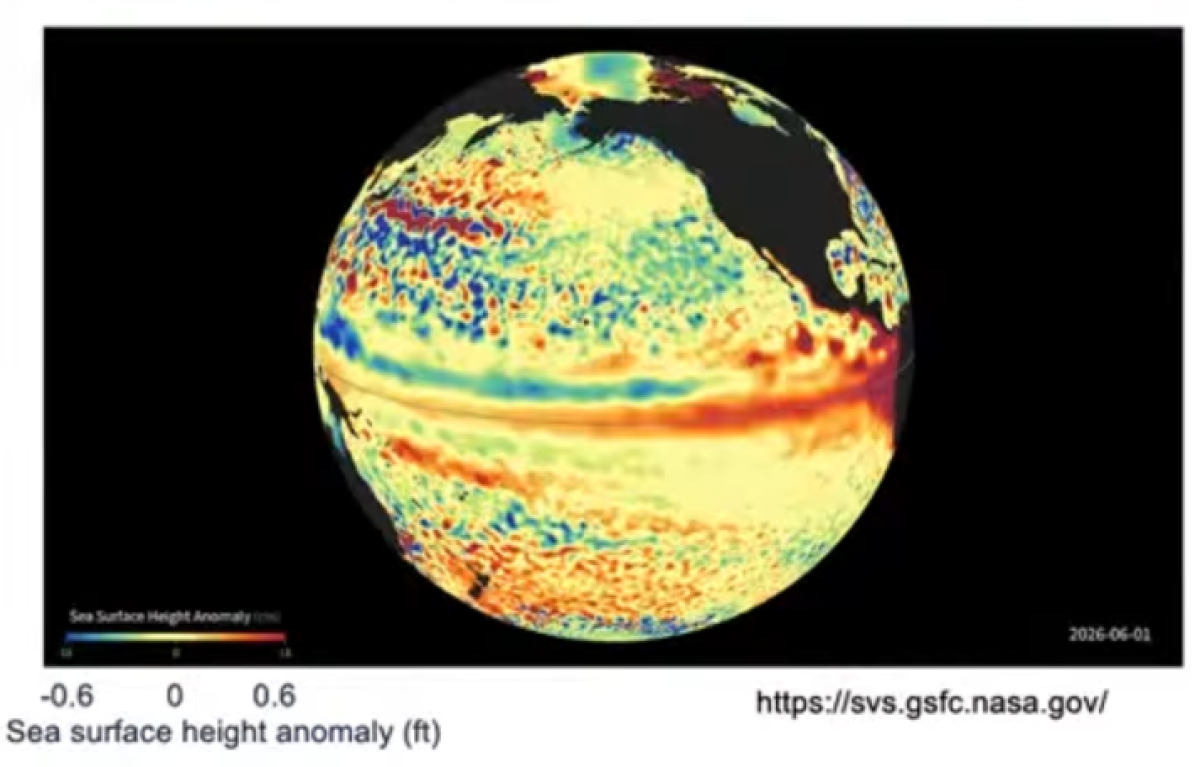
The California coast faces potential record-high sea levels this year due to a strengthening El Niño, increasing the threat of widespread and damaging flooding. This event is predicted to impact the state with powerful rainfall and high temperatures over land and sea.
Rising Sea Levels
Mark Merrifield, director of the UC San Diego Scripps Institution of Oceanography’s Center for Climate Change Impacts and Adaptation, highlighted the expected rise in sea levels during a recent online town hall. NASA satellite data shows sea levels already over six inches higher in the eastern Pacific Ocean. Predictions indicate these levels will rise even further by fall and winter.
Warmer ocean water, a characteristic of El Niño, results in expanded water volume, leading to higher sea levels. Historical data shows that these conditions generate strong waves, which erode beaches significantly. According to Merrifield, beaches in California often move landward approximately 98 feet during El Niño events.
The combination of elevated sea levels, tides, and high waves raises the risk of coastal flooding, intrusion of saltwater into groundwater, and erosion. Past events have shown these conditions lead to severe flooding, as seen in Ventura, Los Angeles, and San Diego counties.
The Broader Trend
The rise in sea levels also reflects a longer-term trend driven by human-induced climate change. For instance, in the San Francisco Bay Area, sea levels peaked during the previous El Niño seasons of 1982-83, 1997-98, and 2023-24. La Jolla Pier has similarly recorded above-average sea levels during strong El Niño phases.
El Niño’s Impact on Weather
El Niño is known for warmer ocean waters in the central and eastern tropical Pacific. This pattern can shift atmospheric conditions, potentially leading to increased rainfall in Southern California while drying other regions. This year’s event could be among the strongest on record, as highlighted by UC climate scientist Daniel Swain. Current ocean temperatures in the eastern tropical Pacific are warmer than any year recorded previously.
The World Meteorological Organization confirmed the development of a strong El Niño, with UN Secretary-General António Guterres commenting on its expanding influence. While El Niño often suggests increased rainfall in Southern California, this is not guaranteed. The 2015-16 El Niño saw little additional rain in the region despite its strength.
Experts advise state officials to prepare for a potentially stormy winter season. Swain mentions that late December through March could bring particularly wet conditions. He recommends clearing schedules to accommodate potential weather disruptions.
Extended Marine Heat and Environmental Concerns
El Niño’s warm waters might prolong the marine heatwave along the coast. This phenomenon could impact marine ecosystems and the food chain. The state of California plans to initiate domoic acid testing to monitor neurotoxin levels in the environment. Elevated levels of warming-related algae, which produce the neurotoxin, pose threats to wildlife and fishing industries.
Warmer waters already contribute to the decline in Northern California’s kelp forests and affect species reliant on these ecosystems. Additionally, weather changes bring uncharacteristic humidity, altering coastal experiences.